Czech Joy
Czech Joy is a competition section for the best Czech documentary, celebrating diversity of themes and cinematic expression.
→ 200.000 CZK for the winning film.

Amma, Do Giraffes Cry?
Indian director Kartikeya Saxena walks through Prague Zoo with his camera, sharing his impressions over the phone with his mother – a zoologist. The transcontinental conversation touches on the human tendency to project one’s own feelings and memories onto animals. However, the son’s poetic enchantment and his conviction that he has seen tears in the eyes of a baby giraffe clash with his mother’s scientific rationalism. This perceptive interspecies essay transforms the pavilions housing hippos, anacondas and gorillas into a theatrical stage upon which a quiet drama unfolds about overcoming barriers – between son and mother, and between the human and more-than-human.“Giraffes don't have tear ducts. I don't know what you saw.”
director: Kartikeya Saxena
original title: Amma, pláčou žirafy?
country: Czech Republic
year: 2026
running time: 26 min.

Anatomy of a Crash
Vít Klusák’s new documentary was made as part of a road safety campaign by the Czech Insurance Association, highlighting the dangers of commonly tolerated bad habits behind the wheel. The film is framed by a group session led by a crisis intervention specialist, in which the participants reflect on four tragic stories from Czech roads. Three male drivers and one female driver describe the circumstances of traffic accidents caused by their own inattention, fatigue or driving through an amber light. Their accounts are complemented by powerful dramatic reconstructions and emotional encounters with the victims’ surviving relatives. The film vividly demonstrates how a momentary lapse in judgement can cost a human life and leave lasting trauma. “We were looking for stories stemming from traffic violations or bad habits that almost all of us are guilty of.” — Vít Klusák, Pražský deník
director: Vít Klusák
original title: Jediná vteřina
country: Czech Republic
year: 2026
running time: 88 min.

Aquarium
The living room as a stage, the family as a world enclosed behind glass. Maja Penčič assembles her father’s home videos into a portrait of childhood unfolding in the rhythm of holidays, games, meals and television broadcasts. Long, static shots bring out everyday details and the significance of moments spent waiting. Toddlers demand their father’s attention, a child reaches for the camera, presents lie ready beneath the Christmas tree. A voice from the television intrudes on these familiar scenes, reporting on weapons and politics. The family archive becomes a vehicle for reflection on the limits of a private world that the camera both preserves and exposes to the gaze of others. “Daddy, daddy, daddy.”
director: Davor Penčič, Maja Penčič
original title: Akvárium
country: Czech Republic
year: 2026
running time: 29 min.

Birdie
Through an intimate, unfiltered video diary, Mariana Macháňová captures her family’s grief as her mother approaches death. For the filmmaker, the camera becomes both a therapeutic tool and a means of creating distance. She records meanderings down sterile hospital corridors, taking what is likely their last selfie together in her mother’s hospital bed, and the scattering of her ashes. Coming to terms with loss also prompts reflections on the ethics of this kind of filming. The filmmaker asks whether it is acceptable to bring a camera into moments of extreme vulnerability, when the act of filming helps one turn fleeting fragments into something lasting and thus process grief. “So I thought I’d heal myself by making a film.”
director: Mariana Macháňová
original title: Andulka
country: Czech Republic
year: 2026
running time: 20 min.

Blood Red
A several-minute sequence showing the cold-blooded slaughter of a pig sets the tone for Martin Imrich’s feature-length debut, made under the mentorship of Béla Tarr. In slow, colourless shots devoid of dialogue, we observe the daily routines of several older men. They tend to their livestock and hunting rifles, guard the premises of a local business, yet seem lost as they walk through the deserted rural landscape – as if they lacked a shared vision. Permeated by an atmosphere of isolation and decay, the film portrays life on the periphery with detachment, without any need to dramatise or explain. All that remains is a numb existence, surviving from one day to the next. “When they started turning the pig over, unable to hit it properly, Béla looked away; it was unbearable to watch.” — Martin Imrich, dok.revue
director: Martin Imrich
original title: Západ
country: Czech Republic
year: 2025
running time: 75 min.

Dear People, Dear Citizens
For five years, Andrea Culková tracked a unique political experiment: around 800 Europeans of different generations – students, workers and senior citizens – selected at random were given the chance to decide on the future of the continent within the European Parliament. The confrontation between determined citizens and cautious political elites lays bare the mechanisms of a system that may itself be the cause of many of today’s crises. The author interweaves her analytical observations with performative rituals, black humour and broader reflections on whether we will be able to bring about the necessary changes before the state of democracy and the environment reaches the point of no return. “Let‘s make a Copernican shift from United Nations to united people.”
director: Andrea Culková
original title: Drazí spoluobčané
country: Czech Republic
year: 2026
running time: 118 min.

Donbas within reach
director: Dariia Kovalchuk
original title: Donbas na dosah
country: Czech Republic, Ukraine
year: 2026
running time: 21 min.

Eva
In Milan Mazúr’s understated film, memories of escape and imprisonment intertwine with the present-day reality of undocumented seasonal workers. Eva once attempted to flee Czechoslovakia. Now, despite cultural and linguistic differences, she provides shelter and motherly care to young migrants in the Italian countryside. Yet a subtle tension permeates the contemplative images of manual labour and rest, stemming from the young men’s precarious status and the hostility of the local residents. This visually striking reflection on the various forms of migration shows that solidarity need not be contingent upon a shared language or culture. “There’s a lady here we call Mum.”
director: Milan Mazúr
original title: Eva
country: Czech Republic
year: 2026
running time: 49 min.

Glowing
If only one could have the perfect relationship, thousands of likes on Instagram, a successful career and, ideally, fairer skin. Young men and women from different social backgrounds, living in Seoul, New Delhi and Nairobi, are united by the same goal: they all want to “shine”. Martin Páv’s visually dazzling documentary deconstructs the phenomenon of physical attractiveness as a norm of global capitalism. The film offers a glimpse into the private lives of people caught in the web of social expectations and the pressure to be perfect. Behind their obsession with their own appearance, however, lies a deeper identity crisis and a search for an answer to the question of whether there is still any room for us to be ourselves in today’s interconnected world.“When they make cosmetic commercials in Vietnam, they say: You can be as light-skinned as the Koreans.”
director: Martin Páv
original title: Zářit
country: Czech Republic
year: 2026
running time: 90 min.

Hating
Ondřej Šálek’s time-lapse documentary captures an escalating street battle between pro- Russian activists at a petition stand in Prague’s Klárov district and a group of liberal-minded citizens who have decided to take justice into their own hands. Footage from live streams and first-hand observations reveal verbal and physical altercations and the growing radicalisation of both camps. This unsettling account of the forms that civil resistance takes in a sharply polarised society does not adopt the perspective of either side. An impartial observation of the actions and counter-actions shows how easily a sense of threat and the desire to belong to a particular community can escalate into aggression. “Radical empathy leads us to understand people on the other side of the divide. It does not mean agreeing with them, but making an effort to understand them.” — Václav Havel
director: Ondřej Šálek
original title: Nesnášení
country: Czech Republic
year: 2026
running time: 84 min.

I Dreamed of a Man Who Dreamed of Horses
While trees have their place, people sometimes have yet to find theirs. In this sensitive portrait, director Lucie Zpěváková captures the search for a place in a world that has yet to decide whether it will accept you. Yimel, a Cuban living in the Czech Republic, has spent many months awaiting a decision on his asylum application. Meanwhile, he walks through snow-covered streets, a housing estate and a landscape traversed by a gas pipeline. Winter gives way to spring, but the sense of being in limbo persists. Attentive to small details and the atmosphere of places, the images record his attempts to connect with unfamiliar surroundings: stopping at a local pub, watching boys play football and finding moments of affinity in familiar rhythms. “The trees teach you a lot.”
director: Lucie Zpěváková
original title: Soñaba con un hombre que soñaba con caballos
country: Czech Republic
year: 2026
running time: 19 min.

Jaroslav Seifert: A Rhythm Outside Time
Archival footage and photographs, comical dramatised sketches and amateur theatre directed by David Vávra form the basis of Pavel Štingl’s collage-style documentary, which, in the spirit of poetism, pays tribute to the only Czech winner of the Nobel Prize in Literature. The film visits the places where Jaroslav Seifert lived and worked, delving into his journalistic writings, poems and personal papers. It deals with his childhood in Žižkov, anarchist adolescence, break with the Communist Party and signing of Charter 77. From these individual fragments, a multifaceted portrait emerges of a creative spirit who refused to be bound by either party or aesthetic dogmas.“Seifert was a romantic, which is why his wife was jealous of the characters who held the promise of a kiss.”
director: Pavel Štingl
original title: Jaroslav Seifert v rytmu bezčasí
country: Czech Republic
year: 2026
running time: 90 min.
Land of Fire
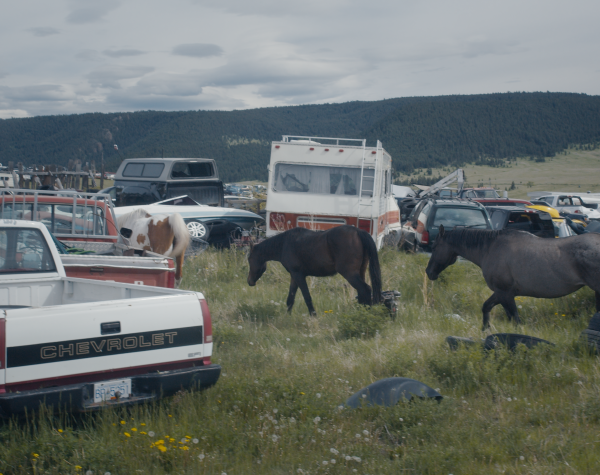
Elderly men in battered pick-up trucks drive through the Canadian wilderness, where not even firewood remains following massive wildfires. Although they are constantly on the move, they never cross the boundaries of this dying region. Nikola Klinger’s melancholic observational documentary portrays north-western Canada as a forgotten corner of the country grappling with both environmental and social decay. Moreover, the locals live in the shadow of the unexplained disappearances of young Indigenous women. They find some respite from their longing and trauma, at least, in neighbourly solidarity and modern-day rituals, such as a demolition derby at the local scrapyard. “We’ve probably lost more than 60% of our land to the fires.”
director: Nikola Klinger
original title: Land of Fire
country: Czech Republic, Germany
year: 2026
running time: 85 min.

Light it Before it Burns
The notion of protected natural areas as an untouchable open-air museum is increasingly clashing with the reality of climate change. According to experts, one of the paradoxical tools for landscape regeneration may be controlled burning and the temporary destruction associated with it. However, in Markéta Ekrt Válková’s documentary, scientific arguments and positive examples from abroad come up against the scepticism of domestic firefighters and politicians, as well as the deep-rooted fear and ignorance of the local population. This visually captivating film explores this controversial topic through the passionate expert commentary of ecologist Ondřej Sedláček and poetic wanderings through the Czech countryside accompanied by botanist Jiří Sádlo. “The aim of protecting forests in national parks is not simply to have a pretty forest.”
director: Markéta Ekrt Válková
original title: Hasit ohněm
country: Czech Republic
year: 2026
running time: 81 min.
Love Exposed
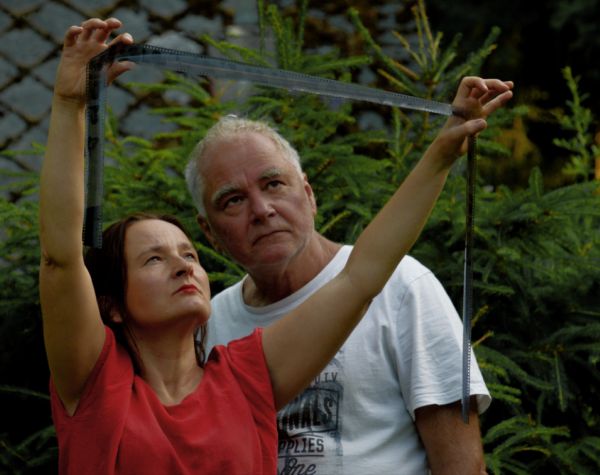
What mark does a life devoted to art leave on family relationships? Blanka Kulová is editing a film about her father, Vlastimil Kula, a well-known Czech photographer of nudes and erotic images, whose monograph was published by the renowned Taschen publishing house. However, rather than a celebratory portrait of the artist, the result is an intimate confrontation between father and daughter. In candid conversations, they revisit their parents’ divorce, painful childhood memories and a sense of abandonment that Blanka shares with her younger siblings. Despite their recriminations and the long-standing misunderstandings between them, there is no shortage of humour, mutual affection or a willingness to find a way back to one another. Most of the film is set in a country cottage, which Kula is gradually renovating; here he photographs young models and reflects on his own work. However, his former fame is fading, and, paradoxically, it is his daughter who helps him find a curator for a new exhibition. The film unflinchingly reveals the conflict between artistic self-realisation and responsibility towards loved ones. At the same time, it captures the delicate process of two people growing closer as they attempt to understand their shared past. “I am an artist – not an ordinary person.”
director: Filip Remunda
original title: Love Exposed
country: Czech Republic, Slovakia
year: 2026
running time: 96 min.

Love video letter
Although a romantic pop hit is blaring in the car, these two female friends are in no mood for romance. Armed with wigs and ketchup, they set out to take revenge on a boy who hurt one of them. Karolína Hovězáková’s unruly road movie channels female rage into relentless bitching, petty acts of disorder and conspiratorial laughter. Their quest for payback also becomes a declaration of friendship, through which wounded love ceases to be the centre of their world. A shaky digital camera and deliberately clumsy cross-fades give this chaotic campaign a punk-video look that refuses to bow to either aesthetic or social conventions. “They say it’s bad to smoke while you eat, ‘cause you can get bigger cancer that way.”
director: Karolína Hovězáková
original title: Love video letter
country: Czech Republic
year: 2026
running time: 26 min.

Mushroom Seconds
Both poems and mushrooms conceal their essence beneath the surface. The poet and mushroom hunter Petr Hruška knows this all too well. His portrait unfolds to the rhythm of everyday life, as he spends time with family and friends, fries mushrooms or strolls through the streets of Ostrava, reminiscing about the now-defunct 24-hour bars. His participation in literary events both at home and abroad is characterised by the same effortless ease. Ordinary situations and encounters form the backdrop for Hruška’s reflections on ageing, the turbulent geopolitical situation, and the ability to open up to others. Although the moments from the poet’s life are in no way stylised, the observant camera transforms many of them into poetic images. “All art is vandalism, because it destroys the established order and seeks to create a new one.”
director: Aleš Pojar
original title: Vteřina houby
country: Czech Republic
year: 2026
running time: 84 min.

My Father from the Island Russia
When a young Russian director fills in an application for permanent residence in the Czech Republic, he prefers to list his father’s occupation simply as “teacher”. In reality, his father is an influential Russian political scientist who endorsed the annexation of Crimea and continues to defend Putin’s regime to this day. In this personal documentary, composed of archival home videos and remote video calls, Georgij Mežujev attempts to understand his father’s ideological stance. Why did he help legitimise a system under which his son now faces imprisonment for collaborating with opposition media? This intimate film reflects on the ongoing armed conflict by examining the gulf between a son’s love and moral responsibility.“My protest against the regime was a protest against my father.”
director: Georgij Mežujev
original title: Můj táta z ostrova Rusko
country: Czech Republic
year: 2026
running time: 28 min.

My Life for My Word
The word as a commitment, the body as a working tool. Slobodanka Radun’s dynamic film follows writer and translator Radka Denemarková as she constantly moves between major cities around the world and Prague. Rather than reconstructing the past, it captures a year in the acclaimed author’s life as it unfolds. While Denemarková writes, takes part in discussions or sunbathes in her garden, her off-screen reflections touch on solidarity, China, the Holocaust and the erosion of meaning behind the concept of democracy. From the tension between her intimate personal world and global injustice emerges the central question of her literary work: can literature change the world? “This film captures a single moment in Radka Denemarková’s life.” — Slobodanka Radun, Czech Television at the Karlovy Vary IFF
director: Slobodanka Radun
original title: Za slovo ručím životem
country: Czech Republic
year: 2026
running time: 73 min.

Porno para Ricardo
Gorki Águila is the frontman of the Cuban punk band Porno para Ricardo. Due to his opposition to the communist regime, he has faced censorship, harassment and imprisonment. But after a quarter of a century of defiance, fatigue is setting in. Hana Jakrlová’s documentary looks behind the mask of the unrepentant rebel. The film follows the musician during his forced exile in Mexico, as he sings anti-regime songs and reflects nostalgically on his homeland. His daily struggle to get by and his preparations for a concert in Prague are interspersed with archive footage of banned concerts. Despite his uprootedness and powerlessness, however, Gorki intends to continue his struggle until the dictatorship falls. “The band is called after our good friend Ricardo. He is an artist and he loves porn.”
director: Hana Jakrlová
original title: Porno para Ricardo
country: Czech Republic
year: 2026
running time: 78 min.

Powder Maker 67
Where does provocation for its own sake end and the desire for reassurance that someone cares about us begin? Actor and musician František Prachař builds his image on irreverent humour and deliberately goading his audience. This short documentary portrait juxtaposes his assured public persona with his uncertainty when he has no one to perform for. Headlong editing, fragments of TikTok videos and abrupt shifts in pace bring the restlessness of Gen Z life into the film. The search for identity amid a stream of gestures, poses and personal confessions merges with an endless struggle for attention. “I don’t think I’m arrogant.”
director: Hugo Wiesner
original title: Pan Zábava
country: Czech Republic
year: 2026
running time: 14 min.

something like a foolish fire i guess
This hybrid experiment blending documentary and fiction begins as a survey about petty shoplifting. Yet what starts as a relatively sober analysis of the systemic redistribution of surplus goods soon mutates into a conspiratorial sci-fi narrative, in which paranoid young protagonists discover connections between cryptozoology, technofeudalism and cosmic entities. With its distinctive lo-fi aesthetic, the film places the logic of contemporary consumerism on a par with the irrational belief in extraterrestrials. But what if a return to myths and magical thinking is actually the most effective form of collective resistance to today’s global crises? “Why do we have to save the world?”
director: Denisa Langrová, Michael Jiřinec
original title: asi jako hloupý oheň no
country: Czech Republic
year: 2026
running time: 77 min.

The Chairman Must Win
Spanning more than a decade, this chronicle of rural life focuses on the village of Staňkovice, where a small animal breeders’ association was established to organise regular exhibitions, sales and competitions. Framed by a retrospective interview with the association’s founder and long-serving chairman, Ladislav Plavajka, the film captures the gradual breakdown of the breeders’ original sense of solidarity. Over the years, the organisation is threatened by personal ambitions, envy and disputes over rabbit judging and the management of public funds. This bittersweet exploration of local politics and community life reveals universal patterns of Czech mentality and the dynamics of small communities. “For people from Prague, the price is 140 because they earn more, do nothing, and just go to theatres and concerts.”
director: Jan Novák
original title: Vyhrát musí předseda
country: Czech Republic
year: 2026
running time: 106 min.

Third Land
A family of three from Iran has now spent thirteen years in exile in Turkey. Kian, Hamid and Hananeh left their homeland to escape the Iranian Revolutionary Guards. However, the promised asylum in the US remains a distant prospect, and even their last glimmer of hope is fading in the wake of the US elections. Director Farzad Khoshdast’s melancholic observational documentary captures their daily routine – from cleaning and working in a factory to visiting nightclubs and watching news reports of unrest in their homeland. The film thus offers an intimate insight into the lives of people trapped in a peculiar limbo, far enough from the state’s reach to be safe, yet too close to overcome their homesickness and build a new life. “You’re right. We can’t go to the USA or anywhere else. What’s your plan?”
director: Farzad Khoshdast
original title: Třetí země
country: Czech Republic
year: 2026
running time: 90 min.

Up Again
A triple jump on ice skates lasts just a few seconds, but requires years of physical training and mental isolation. This time-lapse portrait of Barbora Vránková, three-time Czech figure skating champion, captures a pivotal period in her life between the ages of fifteen and eighteen. Her days are filled with online lessons, physiotherapy sessions and, above all, a strict training regimen. The camera, which is synced with the protagonist’s movements, takes us straight onto the ice, where the scraping of blades and the rumble of pop-music hits blend with the shouts of the coaches. Without any artificial pathos, the film follows how, fall after fall, the young athlete works her way towards precision on the ice and her own autonomy off it. “For me, sound has never been merely an accompaniment to the image. Gradually, it has also become a path to the themes the film explores: performance, expectations, and the search for one’s own place in a world that constantly judges people by their results.” — Eliška Cílková Andršová, dok.revue
director: Eliška Cílková Andršová
original title: Znovu vstaň
country: Czech Republic
year: 2026
running time: 80 min.
Wasteland Chronicles
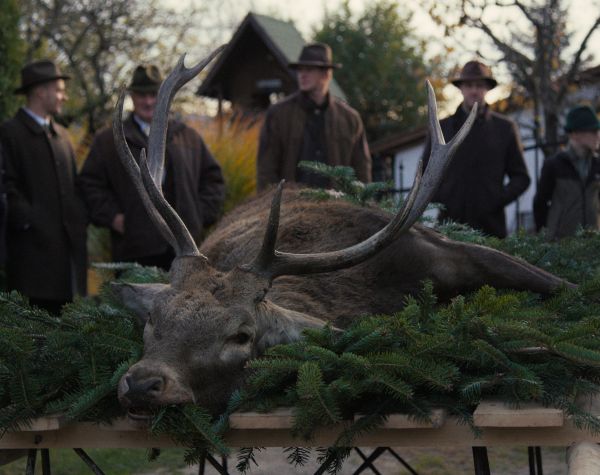
Three female directors, three contaminated sites, three markedly different aesthetic approaches. The “triangle of death” in eastern Slovakia, formed by three local chemical plants, the tar pits in Predajná and Bratislava’s Vrakuňa, from where toxins spread towards Žitný ostrov (literally “Rye Island”) – the largest drinking water reservoir in Central Europe. This hybrid trilogy flows seamlessly from an investigative thriller and meditative essay on the relationship between the human and the non-human to a dystopian animated documentary. A report on systemic paralysis, the exhaustion of the local population and the inaction of politicians simultaneously evolves into a reflection on a future in which we may have no choice but to connect to a virtual mycelium. “People are tired. They don’t want to talk about it anymore, certainly not on camera, they don’t want to solve the problem. They don’t even want to protest – they are exhausted. We want to start this discussion again. That’s our ambition.” — producer Anna Mach Rumanová, Variety
director: Barbora Sliepková, Lucia Kašová, Viera Čákanyová
original title: Zóny nikoho
country: Slovakia, Czech Republic
year: 2025
running time: 101 min.

Water Wears Away
Doubts about her own past and the collapse of her former certainties lead Ukrainian director Kateryna Ruzhyna to revisit old amateur videos. As she looks back on her childhood in Zaporizhzhia, she discovers traces of Russian cultural influence and subjects her own memory to a process of decolonisation. This retrospective element is complemented by uncensored interviews from her time in exile in Prague. Together with friends from Ukraine and Russia, she asks whether it is possible to maintain friendships when one’s home countries are at war. This self-reflective essay on the search for a balance between the personal and the political makes room for vulnerability, anger and formal experimentation. “Life is about understanding what we can change, what we cannot change, and knowing how to tell the difference.”
director: Kateryna Ruzhyna
original title: Vyprahlá ústa kamene
country: Czech Republic
year: 2026
running time: 78 min.