30th Ji.hlava International Documentary Film Festival

23. 10.–1. 11. 2026
Log inČeštinaEnglish

Opus Bonum


Opus Bonum is a competition section for the best world documentary films presented in world, international or European premieres.

→ USD 10,000 for the winning film
→ EUR 3,000 for the best film from V4 countries** (in cooperation with the International Visegrad Fund)
→ award for the best Central and East European film*
→ awards for the best cinematography, editing, sound design, film essay, etc.

* Albania, Armenia, Azerbaijan, Belarus, Bosnia and Herzegovina, Bulgaria, Croatia, Czech Republic, Estonia, Georgia, Hungary, Kazakhstan, Kyrgyzstan, Kosovo, Latvia, Lithuania, North Macedonia, Moldova, Montenegro, Poland, Romania, Russia (only for films not supported by the Russian state institutions), Slovakia, Slovenia, Serbia, Tajikistan, Turkmenistan, Ukraine, and Uzbekistan

** Czech Republic, Hungary, Poland, Slovakia
 

19th Floor
19th Floor

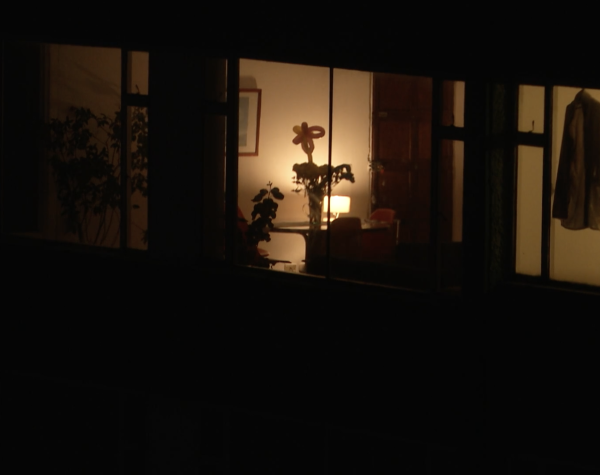
For three years, the director has been capturing the ever-changing face of Bogotá from the windows of her 19th-floor flat. The time-lapse footage alternates between day and night, depicting everything from minor street scenes to major events – fireworks, a fire, demonstrations and riots. Their political context is occasionally complemented by the sound of television news reports. Gradually, however, the filmmaker’s private life also becomes interwoven with her observations of the city: we hear conversations with her partner and read their messages to one another, ranging from everyday questions about what’s for dinner to tense moments in their relationship. Following the death of her life and film partner, the footage – originally a record of everyday life – takes on new meaning. While the image remains turned outwards, towards the city beyond the windows, the sound opens up the intimate space of a family whose members we never see directly. The bird’s-eye view maintains a distance from the events taking place far below the windows; at the same time, however, personal experience permeates the captured images. From fragments of the city, sounds, news reports and private conversations emerges a cinematic reflection on memory, mourning and the significance that ordinary moments acquire the instant they become memories.“It is a first-person account of a family looking outward while the story unfolding within gradually pulls them apart.” — Patricia Ayala RuizSource of the quote: Interview with the director. ALZATE VARGAS, César. Entrevista a Patricia Ayala Ruiz: Un diálogo que no termina. Canaguaro: Revista de cine colombiano.
director: Patricia Ayala Ruiz
original title: Piso 19
country: Colombia
year: 2026
running time: 71 min.
Opus BonumWorld Premiere
Baltic UXO

Baltic UXO

After the Second World War, approximately 1.6 million tonnes of unexploded military ordnance were dumped into the Baltic and North Seas. Decades later, this wartime legacy has become part of the marine ecosystem and poses a threat to fish, the coastal economy and new construction projects. The film follows scientists, fishermen and coastal residents who face the consequences of this issue on a daily basis and are trying to find a solution to a problem whose true extent remains hidden beneath the surface. It gradually shifts its focus from tiny organisms to vast stretches of affected sea and the human activities that are inextricably linked to them. Nonetheless, it does not make a strident ecological appeal using catastrophic imagery, but rather through slow, meditative observations of the landscape both above and below the surface. The sea becomes a silent witness to human actions and a space into which history has physically inscribed itself. The film thus serves as a reminder that the consequences of wartime decisions do not end with war, but can transform nature and the lives of the people who inhabit it for generations to come.“You are swimming in unfamiliar waters or maybe just a dark pond, and you have this uncomfortable feeling as if someone is about to grab your leg.” — Agnė Dovydaitytė, Alexander BelinskiSource: EAVE. 
director: Agnė Dovydaitytė, Alexander Belinski
original title: Baltic UXO
country: Lithuania, Germany, Latvia
year: 2026
running time: 76 min.
Opus BonumInternational Premiere
For the Moon

For the Moon

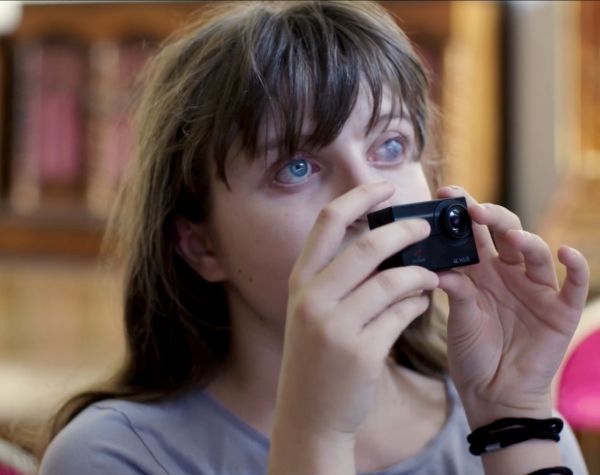
At the outset, the film comes across as a classic observational documentary set at the National Institute for Blind Youth in Paris. It follows the daily lives of students as they learn to find their way around and carry out everyday activities without the aid of sight. Gradually, however, it moves away from this seemingly objective perspective and hands the camera over to five students. The subjects become co-authors, documenting their own daily lives, thoughts, memories, struggles and artistic interests. Music, and above all sound, plays a prominent role in their personal film diaries, serving as both a means of orientation in the world and a form of self-expression. This sensitive collective portrait thus shifts the focus away from what its protagonists cannot see and towards the ways in which they perceive the world through hearing, touch and other senses. At the same time, the film challenges the notion that the image and the medium of film are inextricably linked to sight. Through the images they have created themselves, it allows us, for a moment, to perceive the world from their perspective. “For the moon was moving from left to right, or the room was moving from right to left…” — Samuel Beckett, Molloy.
director: Éric Baudelaire
original title: Car la lune
country: France
year: 2026
running time: 88 min.
Opus BonumEuropean Premiere
Gaulana

Gaulana

Light signifies knowledge and progress; darkness denotes ignorance and danger. But what if we were to turn this seemingly self-evident contrast on its head? Light and darkness in the film are not merely metaphorical principles, but direct physical phenomena whose relationship evolves alongside society. As capitalism advances, light pollution increases, the number of places from which one can observe the stars dwindles, and artificial light interferes with natural cycles – what will become of a landscape from which fireflies are gradually disappearing? Darkness, on the other hand, provides a refuge for those who need to hide. In this visually captivating, contemplative essay, the stories of prisoners who escaped from the Ezkaba fortress in 1938, Portuguese migrants from the mid-20th century, and people who cross the River Bidasoa today all come together. The film neither explains these individual layers nor weaves them into a linear narrative. Through images of the night-time landscape, songs, texts, memories and archive photographs, it creates a mosaic of a place where light signifies both progress and control, while darkness represents uncertainty and the possibility of disappearing safely. “Those flying free are only birds and banknotes.”
director: Pablo Casanueva
original title: Gaulana
country: Spain
year: 2026
running time: 61 min.
Opus BonumInternational Premiere
Good Girls

Good Girls

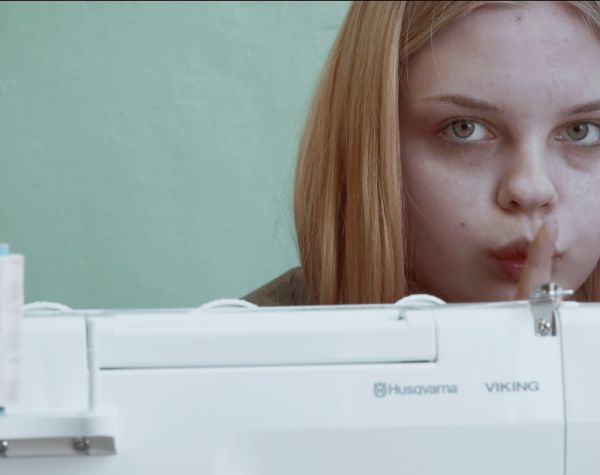
At a Catholic reformatory for teenage girls in Łódź, daily life is governed by discipline, supervision and enforced obedience. A discreet camera observes the relationships between the girls and their interactions with adult staff. In intimate conversations, they recount events from their past: drug abuse, domestic violence and criminal activity. Their diverse life stories are linked by an awareness of how difficult it is to escape the influence of one’s family and the environment in which one grows up. Moreover, their attempts to break free from their own pasts take place in an environment permeated by fear and mistrust, where the girls inform on one another. Nevertheless, friendships and moments of mutual closeness develop between them, and humour occasionally shines through the oppressive daily routine. The film applies the familiar tropes of prison films to female protagonists and highlights the specific nature of their experience within a correctional facility. Their loneliness and powerlessness in the face of the institution reveal the broader logic of a system that attempts to rectify the consequences of social inequalities without addressing their root causes. “Heartbreak still hurts, but less than before.”
director: Ania Winiarska
original title: Good Girls
country: Sweden, Finland
year: 2026
running time: 75 min.
Opus BonumWorld Premiere
I See No Death

I See No Death

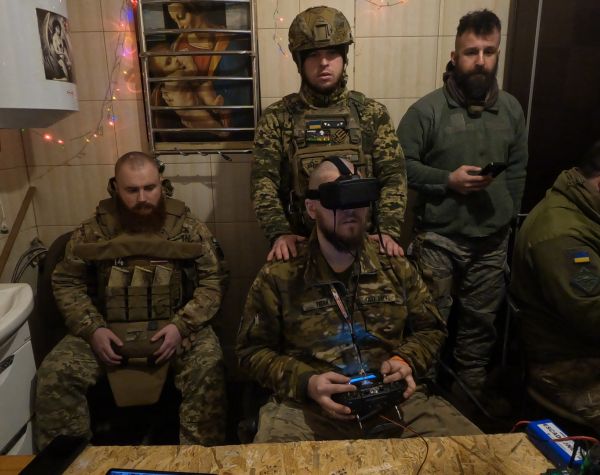
How is war changing as technology advances and part of the fighting is shifting to the screens of drone operators? The film follows a newly formed Ukrainian unmanned systems unit from its first deployment in the Donetsk region and on to operations on Russian territory. The daily lives of these modern-day warriors unfold in cold cellars and trenches, where destruction becomes a technical task and death is reduced to a few pixels on a monitor. They hardly ever see blood, yet the human casualties remain just as real. Their shifts are filled with computer games, black humour or looking after animals, yet the calm can be shattered at any moment by explosions and artillery fire. The film alternates between intimate portraits of individual men and observational depictions of their daily lives, combining the dynamics of a war film with an aesthetic reminiscent of a video game. Through a variety of cinematic techniques, it thus offers a comprehensive view of the technological transformation of modern warfare, in which physical distance from the enemy paradoxically coincides with the immediacy of the moment when, just before an attack, a man on screen looks directly into the lens of a drone.“I saw blood, torn bodies, death – with my own eyes. But the war has changed. It has become more modern, more distant, something new.”
director: Yevhen Titarenko
original title: Я не бачу смерті
country: Ukraine, Latvia
year: 2026
running time: 75 min.
Opus BonumWorld Premiere
Land of Fire

Land of Fire

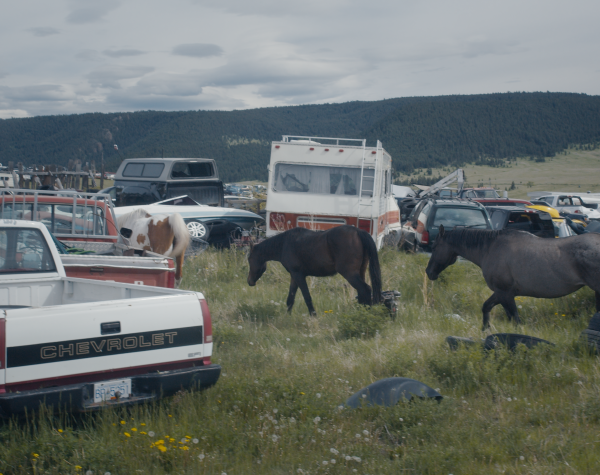
Elderly men in battered pick-up trucks drive through the Canadian wilderness, where not even firewood remains following massive wildfires. Although they are constantly on the move, they never cross the boundaries of this dying region. Nikola Klinger’s melancholic observational documentary portrays north-western Canada as a forgotten corner of the country grappling with both environmental and social decay. Moreover, the locals live in the shadow of the unexplained disappearances of young Indigenous women. They find some respite from their longing and trauma, at least, in neighbourly solidarity and modern-day rituals, such as a demolition derby at the local scrapyard. “We’ve probably lost more than 60% of our land to the fires.”
director: Nikola Klinger
original title: Land of Fire
country: Czech Republic, Germany
year: 2026
running time: 85 min.
Opus BonumWorld Premiere
Life Is There

Life Is There

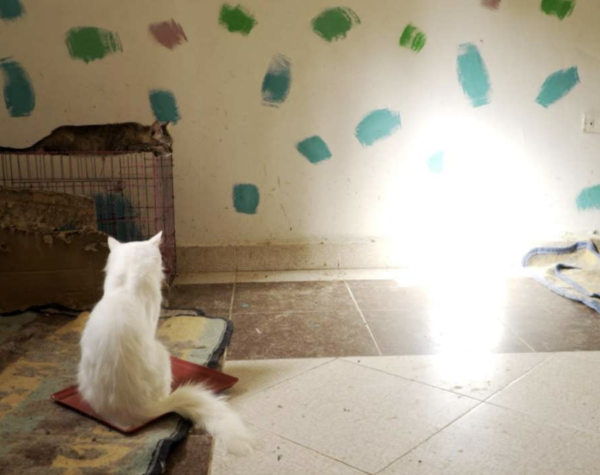
In this film, Cairo becomes a space where personal memories intersect with historical memory, and history is etched directly into the city’s very fabric. The director wanders through its streets and, through free association, links Egypt’s past with her own life story – marked by relocations resulting from political events – as well as fleeting memories of previous visits to the country. On her journey, she encounters the city’s inhabitants: a man who feeds stray dogs, or a woman who runs a shelter for over a hundred cats. Animals are prominent figures in the film and an integral part of Cairo – its everyday life, history and religion. Lyrical scenes intermingle with unvarnished street footage and archive material, while a poetic voice-over is interwoven with testimonies from locals. The result is an associative mosaic in which the boundary between personal experience and history is constantly blurred. The final visit to a nursery for orphaned children from Gaza brings the film urgently back to the present day and links the current political situation with historical events, the traces of which the director seeks out during her journey.“I find my home in the heart of Cairo. Here I lose myself, and as I walk aimlessly, I feel free.”
director: Ishtar Yasin Gutiérrez
original title: Alhaia hunak
country: Egypt, Chile, Costa Rica, Mexico, United Kingdom
year: 2026
running time: 71 min.
Opus BonumWorld Premiere
Love Exposed

Love Exposed

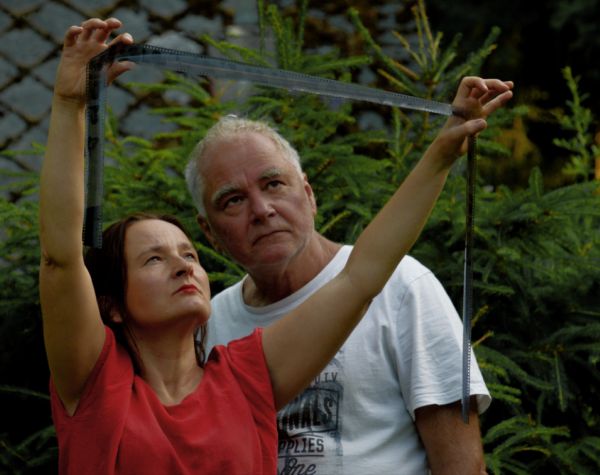
What mark does a life devoted to art leave on family relationships? Blanka Kulová is editing a film about her father, Vlastimil Kula, a well-known Czech photographer of nudes and erotic images, whose monograph was published by the renowned Taschen publishing house. However, rather than a celebratory portrait of the artist, the result is an intimate confrontation between father and daughter. In candid conversations, they revisit their parents’ divorce, painful childhood memories and a sense of abandonment that Blanka shares with her younger siblings. Despite their recriminations and the long-standing misunderstandings between them, there is no shortage of humour, mutual affection or a willingness to find a way back to one another. Most of the film is set in a country cottage, which Kula is gradually renovating; here he photographs young models and reflects on his own work. However, his former fame is fading, and, paradoxically, it is his daughter who helps him find a curator for a new exhibition. The film unflinchingly reveals the conflict between artistic self-realisation and responsibility towards loved ones. At the same time, it captures the delicate process of two people growing closer as they attempt to understand their shared past. “I am an artist – not an ordinary person.”
director: Filip Remunda
original title: Love Exposed
country: Czech Republic, Slovakia
year: 2026
running time: 96 min.
Opus BonumWorld Premiere
Mohabat

Mohabat

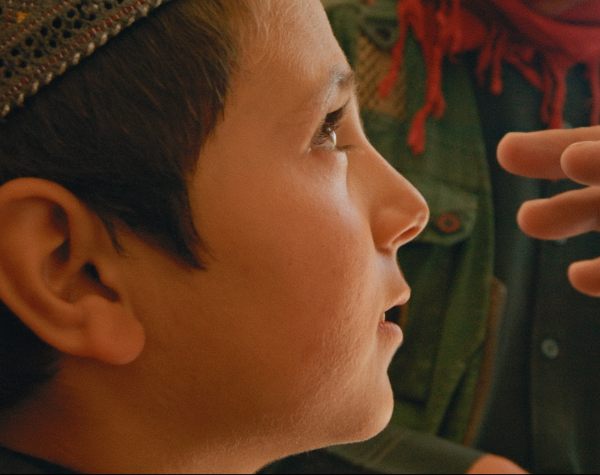
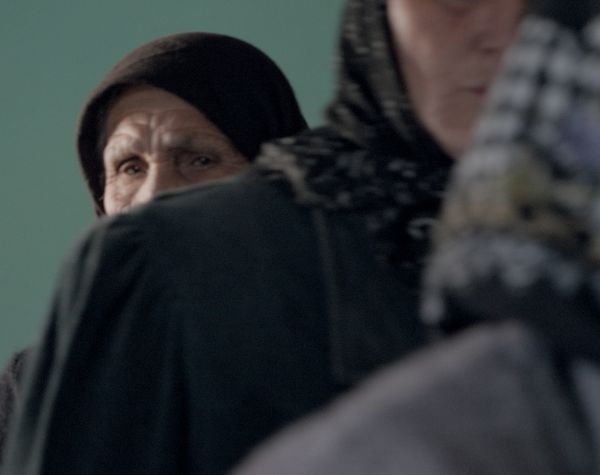
Following his father’s death in a drone strike, twelve-year-old Mohabat is left without parental care, along with his two older brothers. His father is regarded by those around him as a martyr, and their deep faith in God and adherence to the Qur’an help the boys to accept this painful loss as part of God’s will. Mohabat is taken to a city orphanage, where it becomes clear that his experience is not unique – many of the children there have lost their parents and other loved ones as a result of the war. Nevertheless, friendships form among the boys and, together, they create at least a temporary sense of security. Following a mental breakdown, Mohabat returns to his native mountain village, where he attends school, helps with the harvest and visits his brother Aja. When his older brother and closest protector, Mawladdin, leaves for Europe via Iran, the increasingly lonely Mohabat must gradually learn to rely on himself. His gentle voiceover accompanies a sensitive portrait of premature adulthood, in which personal suffering intertwines with the wider social consequences of a long-standing conflict. Meanwhile, the sweeping images of the monumental Afghan mountains and colourful urban landscapes create a striking contrast to the ever-present traces of war.“I want to go to Heaven. Because Heaven must be a nice place.”
director: James Longley
original title: Mohabat
country: United States, Afghanistan
year: 2026
running time: 89 min.
Opus BonumWorld Premiere
Outside/Inside

Outside/Inside

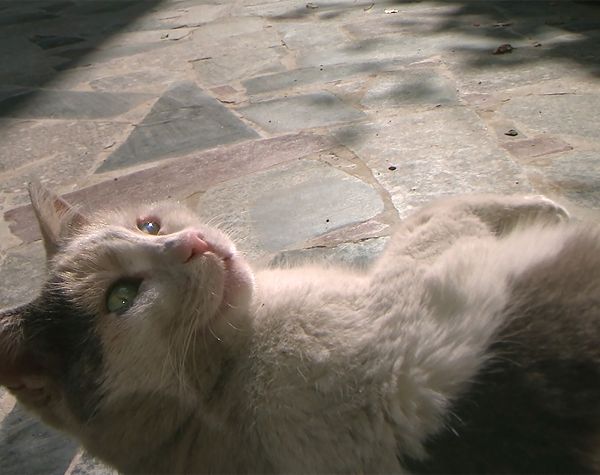
For seven years, the director follows the life of Ceci, a stray cat that gradually settles into his home without ever completely leaving the world of the streets. Their ever-changing relationship forms the backbone of this time-lapse narrative, into which other cats and fragments of the director’s life are woven: unfinished film projects, relationships with neighbours, his deteriorating health, and events unfolding in the city and across the country. Dialogue is almost entirely absent, and the director’s personal memories and reflections appear only in the captions, alongside information about the cats and the history of their coexistence with humans. The film thus consistently shifts the focus from humans to its non-human protagonists, viewing everyday life primarily through their eyes. Detailed observations of Ceci and other stray cats alternate with melancholic views of the city, capturing their own relationships, habits and methods of survival. This intimate chronicle of an unusual friendship simultaneously records the passage of time and the transformations of a human life, which becomes ever more closely intertwined with that of the cat. “The presence of the cat is central, but not as a character in a narrative sense. Rather, she becomes a point of departure, a way to move away from a human-centred perspective, without replacing it with another fixed position.” — Maani Petgar
director: Maani Petgar
original title: Biroun/Daroun
country: Iran
year: 2026
running time: 108 min.
Opus BonumWorld Premiere
Sacred Songs

Sacred Songs

The Pankisi Valley in north-eastern Georgia, a mountainous region along the course of the River Alazani, is home to the Kists, an ethnic community with Chechen roots and their own religious tradition. For generations, the women here have been singing Sufi spiritual songs – meditative compositions expressing love for God and accompanying the journey towards a deeper spiritual experience. The songs are sung in the mosque, but the singers also perform them in European concert halls. The audience’s interest contrasts with the uncertain future of the tradition, which the younger generation of women is refusing to take up. Melancholic views of the rugged agricultural landscape accompany the captivating songs, the protagonists’ life stories and everyday conversations about animals, plants and work. Through the female experience, the film thus explores the relationship between tradition, religion and society, as well as their gradual transformations. Here, Sufi songs represent not only an endangered cultural heritage, but also an intimate expression of faith that comes into conflict with emerging, more radical interpretations of Islam.“When those women hear applause, they know it’s time to come on stage.”
director: Nona Giunashvili
original title: Tsminda Simgherebi
country: France, Georgia
year: 2026
running time: 65 min.
Opus BonumWorld Premiere
Small Talk

Small Talk

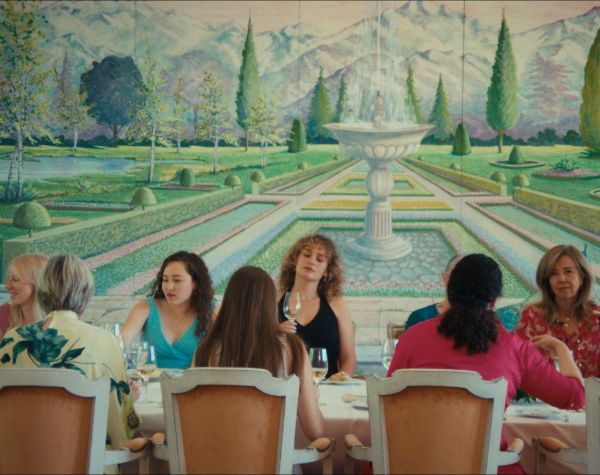
How does one behave properly in society, carry oneself with elegance and conduct a polite conversation? Charlie, a 35-year-old Frenchwoman, decides to change her career and sets off on a summer course at the last remaining school of etiquette. Surrounded by the Swiss countryside, she joins women from all corners of the world to learn the rules of dining, the art of hospitality and social etiquette. Through lessons and seemingly casual conversations, the students gradually grow closer, sharing their life stories and forming deep friendships. This sensitive and at times humorous film follows its likeable protagonist in an environment where an emphasis on elegance, discipline and good manners intertwines with conservative notions of the female role. Are the women here learning to conduct themselves confidently in society, or are they still expected, above all, to be perfect wives? With gentle irony, the film explores gender stereotypes and the tensions between tradition and modernity, asking what women’s emancipation actually means and to what extent women themselves can determine its form.“You feel free to do what you want because you’re successful.”
director: Mateo Ybarra
original title: Small Talk
country: Switzerland
year: 2026
running time: 95 min.
Opus BonumInternational Premiere
The Songs from Within

The Songs from Within

Two siblings from the Paiwan indigenous community in Taiwan do not conform to local notions of masculinity in their appearance and behaviour. Their family prefers to turn a blind eye to their differences, hoping that religion, prayer and tradition will suppress their search for their own gender identity. Mufan and Chen Wei find support in one another. They share everyday worries, intimate conversations and the hope that one day they will be able to live as they wish. Singing and dancing become their refuge, and they perform as their female alter egos before audiences. However, their shared world is transformed when Mufan leaves to study music in Taipei and Chen Wei remains in the community. This sensitive film offers an insight into the experience of social exclusion and the discovery of one’s own gender identity in an environment that would rather ignore queer people than accept their differentness. The highly poetic narrative, full of magical imagery and references to local mythology, captures the longing for love, acceptance and the chance to live life on one’s own terms.“What we cherish in the deepest recesses of our hearts are usually the most significant feelings of our lives.” — Elvis A-Liang LuSource: Ji.hlava New Visions Projects 2024.
director: Elvis A-liang Lu
original title: Ge Wu De Wo Men
country: Taiwan
year: 2026
running time: 84 min.
Opus BonumWorld Premiere
Wasteland Chronicles

Wasteland Chronicles

Three female directors, three contaminated sites, three markedly different aesthetic approaches. The “triangle of death” in eastern Slovakia, formed by three local chemical plants, the tar pits in Predajná and Bratislava’s Vrakuňa, from where toxins spread towards Žitný ostrov (literally “Rye Island”) – the largest drinking water reservoir in Central Europe. This hybrid trilogy flows seamlessly from an investigative thriller and meditative essay on the relationship between the human and the non-human to a dystopian animated documentary. A report on systemic paralysis, the exhaustion of the local population and the inaction of politicians simultaneously evolves into a reflection on a future in which we may have no choice but to connect to a virtual mycelium. “People are tired. They don’t want to talk about it anymore, certainly not on camera, they don’t want to solve the problem. They don’t even want to protest – they are exhausted. We want to start this discussion again. That’s our ambition.” — producer Anna Mach Rumanová, Variety
director: Barbora Sliepková, Lucia Kašová, Viera Čákanyová
original title: Zóny nikoho
country: Slovakia, Czech Republic
year: 2025
running time: 101 min.
Opus BonumInternational Premiere

Contact

CONTACT US

DOC.DREAM​
Karlovo náměstí 285/19
120 00 Prague 2
Czech Republic

e-mail: info@ji-hlava.cz

Festival partners

Ministerstvo kultury
Fond kinematografie
Město Jihlava
Kraj Vysočina
Creative Europe Media
Pale Fire Capital
Česká televize
Český rozhlas
Respekt
Dafilms

Newsletter

I confirm that I agree with Principles Relating to Personal Data Processing for Ji.hlava IDFF. More info here.

Days until the festival

0