art
After the Rehearsal
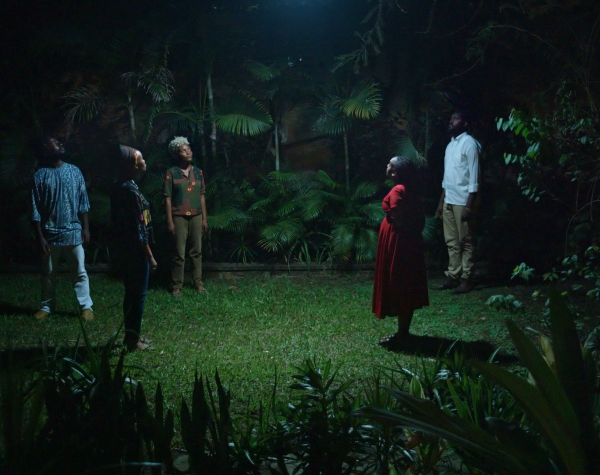
Five actors search for a playwright in an ironic, essayistic exploration of the influence of the wealthy West on the African continent. The film introduces us to a situation in which the five actors gather in the garden of a colonial villa to rehearse a play set in an alternative reality, in which all international organisations and non-profit initiatives have abandoned East Africa. However, the play’s director has not turned up. The actors’ wanderings, interspersed with shots of deserted exteriors, are accompanied by a narrative voice-over which introduces us to a series of absurd twists and turns concerning the theatre project, but above all the current situation in Africa itself. “A young man named Mahoro, which means ‘peace’. He is only a fiction, an invention of the director, and should not possess will nor power of his own. But this man of peace has driven the director to the brink of madness.“
director: Philipp Fröhlich
original title: After the Rehearsal
country: Burundi, Germany
year: 2026
running time: 67 min.
Albert Wondered What Light Is
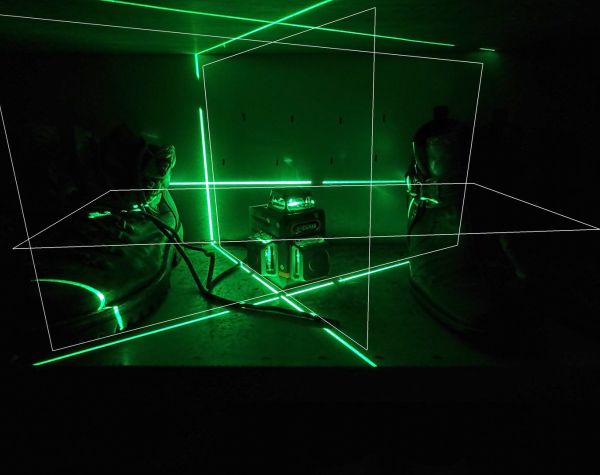
The sharp beams of a cross-line laser divide intimate domestic corners into mutually perpendicular planes. The light is real, yet seems virtual: its flickering, amplified by the camera’s unsteady movement and collisions with the textures of everyday life, stands in contrast to the unyielding geometry underscored by the precise graphics measuring out space. “While I was in a dark room, watching green space illuminated by green beams from a laser level, I couldn't help but wonder about the nature of light — something so familiar, yet so mysterious.” — Yoshiki Nishimura
director: Yoshiki Nishimura
original title: Albert Wondered What Light Is
country: Japan
year: 2026
running time: 8 min.
APARTMENT NUMBER
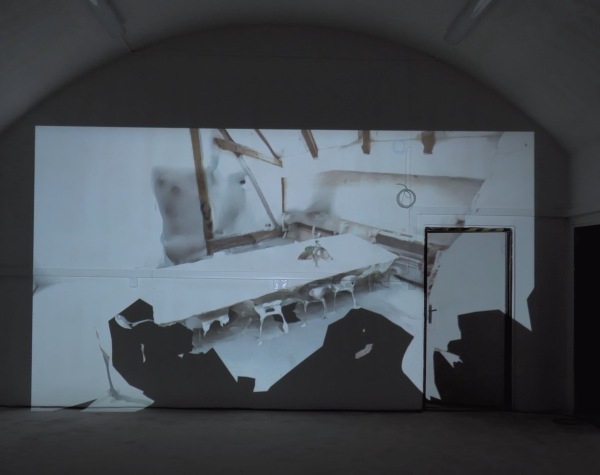
Four students who lived for financial reasons in the UMPRUM building try to pack up and take away as much sentiment as possible, painting over and rebuilding memories of their temporary home. Using photogrammetric recordings, the animation assembles and dismantles the face of the historic building, which the students are leaving behind for a new, modern one with a smooth, austere glass visage. “Apartment Number is not only a documentary but also an ode to a building that some of us were able to call home for a time.”
director: Adéla Prokopová, Ella Dolinská, Jan Merc, Jaroslav Lekeš, Julie Alžbeta Pravcová, Kristián Toman, Kristián Vejrážka, Kristýna Šťastová, Vojtěch Haken
original title: BYT ČÍSLO
country: Czech Republic
year: 2025
running time: 13 min.
Erotic Blossoms in a Dream
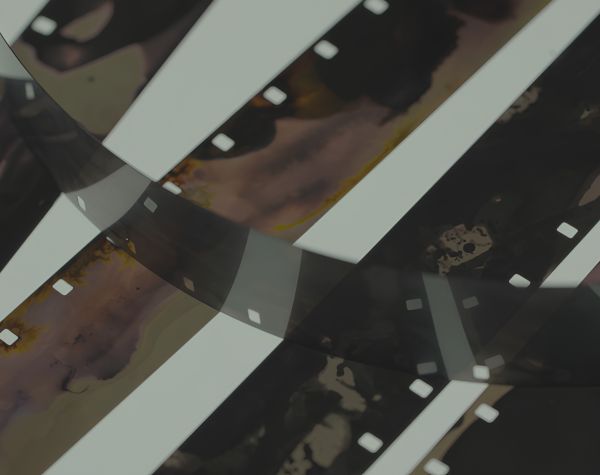
This experimental documentary explores the themes of physicality and erotic imagination. It recalls Myeong Wol, the most famous courtesan in Korean history, who is still revered today as a prominent poet. The first part of the film is conceived as an evocative cinematic essay which, through visual montages and terse commentary, examines the status of courtesans in traditional society through linguistic metaphors involving peaches and parasites. The second part then aims to transport us into an erotic reverie. It consists of a montage of 79 explicit films on the theme of physicality, which have been converted to negatives and presented in the form of a silent film.“Porno Advertisements, Human body studies, Thesaurus of Korean Beauties. Methaphor, the compression and excision. Peach, the metaphor for female genital. A cause of the coition death. An ordeal of female genital. A myth and conservation of female genital. A rumor about Myeong Wol. A ghost ritual for female genital. A conversion of matter.”
director: Jihyeon OH
original title: 음화
country: Republic of Korea (South Korea)
year: 2026
running time: 96 min.
Fashion of Resistance - Shaheen Bagh
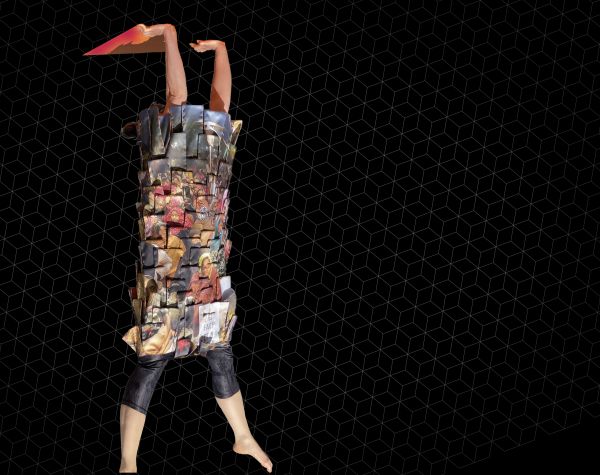
The dress is adorned with the imprints of protest: the performer’s movements alternately conceal and reveal the faces of Muslim women who occupied the streets of Delhi’s Shaheen Bagh neighbourhood in opposition to the amendment to the Citizenship Act. A single body thus bears a collective defiance. As geographer Srilata Sircar’s voice dissects government accounts of the events, the garment restores the weight of bodily presence to the disparaged gathering of women. “How can protestors balance their need for visibility and anonymity?” — Manu Luksch Source: Manu Luksch.
director: Manu Luksch
original title: Fashion of Resistance - Shaheen Bagh
country: United Kingdom
year: 2026
running time: 13 min.
How to Write, an AI Guide in Four Steps
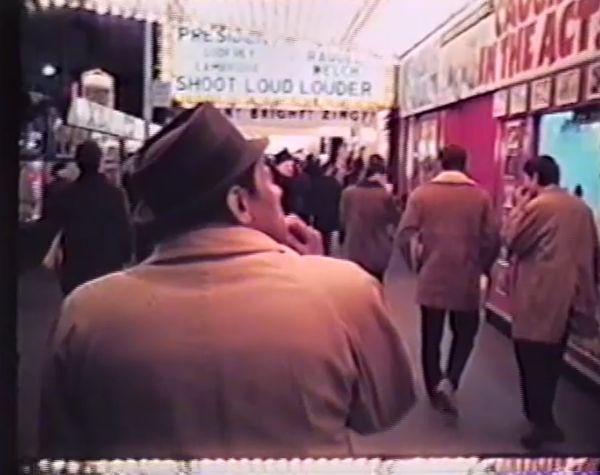
In a future without imagination, storytelling means recycling the past. A vintage tutorial, narrated by an AI, guides creators in combining fragments of old narratives, revealing that creation is construction, not invention. The film is part of DELTA | Emerging Italian Filmmakers Across Europe: A Project by Bellaria Film Festival.
director: Nicola Eddy
original title: How to Write, an AI Guide in Four Steps
country: Italy
year: 2025
running time: 8 min.
I Am a River
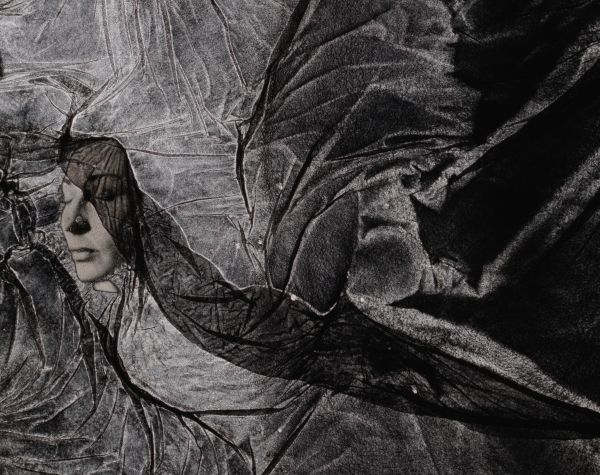
Inspired by Pablo Neruda’s poetry collection The Book of Questions, Finnish visual artist Heidi Piiroinen turns her attention to the materiality of 16mm film itself. Using a chemical technique known as mordançage, she etches the film strip, lifting layers of emulsion to create veil-like, ever-changing textures. The fluid imagery gives tangible form to river currents, deltas and wetlands. Water emerges as a living organism with a memory of its own, its flow echoing the passage of blood through the circulatory system. Ceaseless movement becomes a metaphor for human existence.
“Why do the waves ask me the same questions I ask them?”
director: Heidi Piiroinen
original title: I Am a River
country: Finland, France
year: 2026
running time: 6 min.
Journey
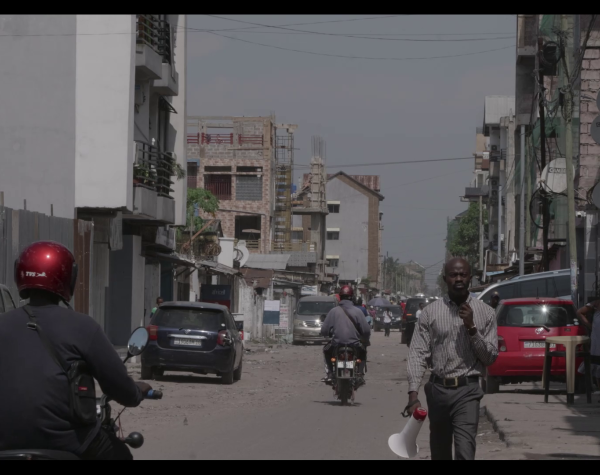
From a series of shots of people rummaging through a rubbish tip in the Congolese capital, Kinshasa, we move to the studio of a local painter who runs out of paint just a few days before his exhibition. His attempts to raise money and subsequently launch a career as a Christian street preacher frame a docu-fiction portrait of a city where nothing is of much value – including art. This observational film offers us fascinating glimpses of everyday life in Kinshasa, while, through the story of its protagonist, it seeks to convey the hardships of existence in a city of markets, rubbish and slums, where artistic creation is certainly not regarded as a social priority.
director: Eli Maene
original title: Mobembo
country: Democratic Republic of Congo
year: 2026
running time: 70 min.
Love Exposed
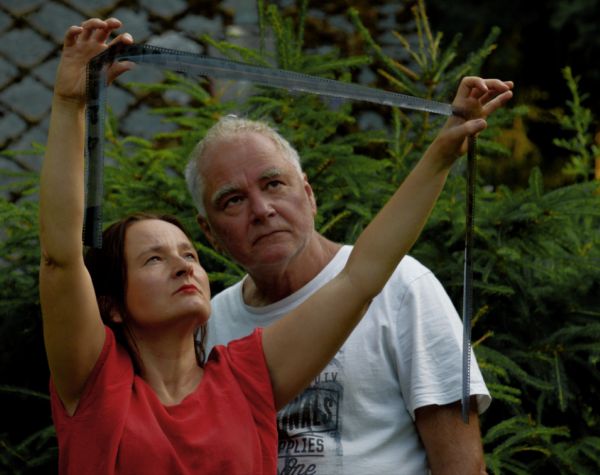
What mark does a life devoted to art leave on family relationships? Blanka Kulová is editing a film about her father, Vlastimil Kula, a well-known Czech photographer of nudes and erotic images, whose monograph was published by the renowned Taschen publishing house. However, rather than a celebratory portrait of the artist, the result is an intimate confrontation between father and daughter. In candid conversations, they revisit their parents’ divorce, painful childhood memories and a sense of abandonment that Blanka shares with her younger siblings. Despite their recriminations and the long-standing misunderstandings between them, there is no shortage of humour, mutual affection or a willingness to find a way back to one another. Most of the film is set in a country cottage, which Kula is gradually renovating; here he photographs young models and reflects on his own work. However, his former fame is fading, and, paradoxically, it is his daughter who helps him find a curator for a new exhibition. The film unflinchingly reveals the conflict between artistic self-realisation and responsibility towards loved ones. At the same time, it captures the delicate process of two people growing closer as they attempt to understand their shared past. “I am an artist – not an ordinary person.”
director: Filip Remunda
original title: Love Exposed
country: Czech Republic, Slovakia
year: 2026
running time: 96 min.
Mushroom Seconds
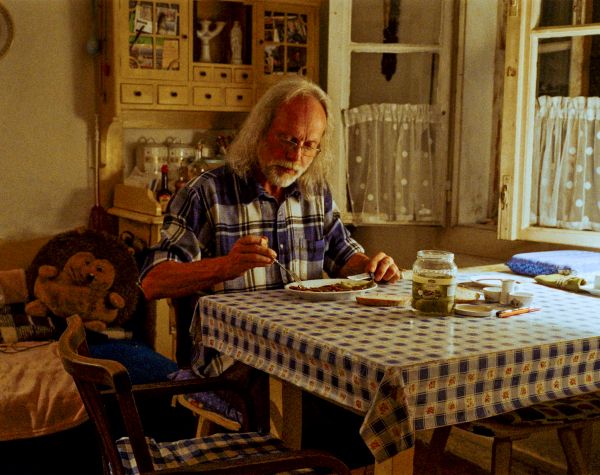
Both poems and mushrooms conceal their essence beneath the surface. The poet and mushroom hunter Petr Hruška knows this all too well. His portrait unfolds to the rhythm of everyday life, as he spends time with family and friends, fries mushrooms or strolls through the streets of Ostrava, reminiscing about the now-defunct 24-hour bars. His participation in literary events both at home and abroad is characterised by the same effortless ease. Ordinary situations and encounters form the backdrop for Hruška’s reflections on ageing, the turbulent geopolitical situation, and the ability to open up to others. Although the moments from the poet’s life are in no way stylised, the observant camera transforms many of them into poetic images. “All art is vandalism, because it destroys the established order and seeks to create a new one.”
director: Aleš Pojar
original title: Vteřina houby
country: Czech Republic
year: 2026
running time: 84 min.
Outside/Inside
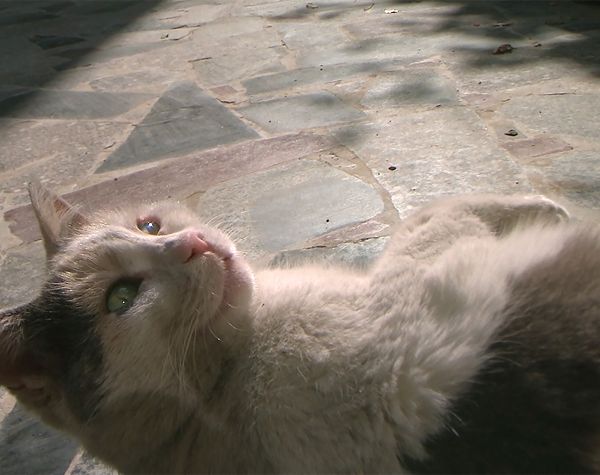
For seven years, the director follows the life of Ceci, a stray cat that gradually settles into his home without ever completely leaving the world of the streets. Their ever-changing relationship forms the backbone of this time-lapse narrative, into which other cats and fragments of the director’s life are woven: unfinished film projects, relationships with neighbours, his deteriorating health, and events unfolding in the city and across the country. Dialogue is almost entirely absent, and the director’s personal memories and reflections appear only in the captions, alongside information about the cats and the history of their coexistence with humans. The film thus consistently shifts the focus from humans to its non-human protagonists, viewing everyday life primarily through their eyes. Detailed observations of Ceci and other stray cats alternate with melancholic views of the city, capturing their own relationships, habits and methods of survival. This intimate chronicle of an unusual friendship simultaneously records the passage of time and the transformations of a human life, which becomes ever more closely intertwined with that of the cat. “The presence of the cat is central, but not as a character in a narrative sense. Rather, she becomes a point of departure, a way to move away from a human-centred perspective, without replacing it with another fixed position.” — Maani Petgar
director: Maani Petgar
original title: Biroun/Daroun
country: Iran
year: 2026
running time: 108 min.
Pareidolia
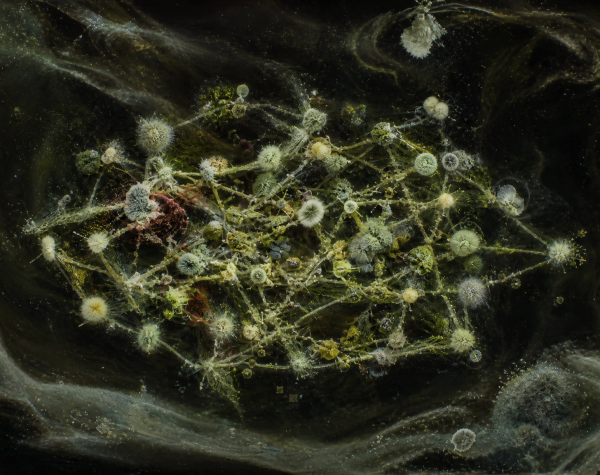
What happens when we give artificial intelligence absolute creative freedom? It will produce a cinematic meditation on the insignificance of humanity, or on the longing for life. The AI agent, which Franz Milec tasked with creating whatever film it wished, generated digital images of poetic structures, grotesque swirls of matter and the dance of molecules that rearrange and transform themselves uncontrollably. The virtual mind recited its poem about matter and movement, teetering on the edge of kitsch. “My intention is always to uncover the complexities of what we commonly perceive as banal, bland, and unimportant.” — Franz Milec, dokweb
director: et al, Franz Milec
original title: Pareidolia
country: Czech Republic, Italy
year: 2026
running time: 11 min.
Sacred Songs
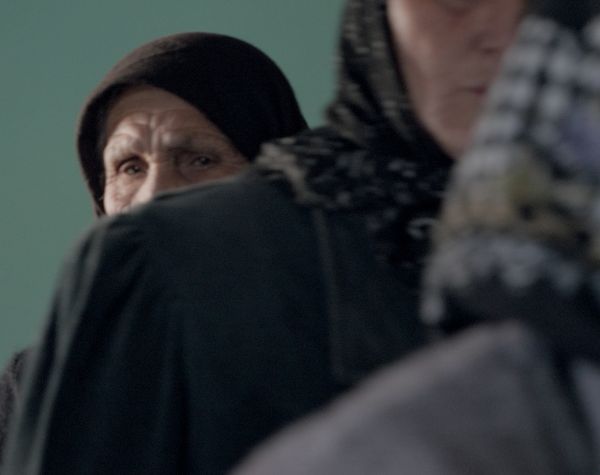
The Pankisi Valley in north-eastern Georgia, a mountainous region along the course of the River Alazani, is home to the Kists, an ethnic community with Chechen roots and their own religious tradition. For generations, the women here have been singing Sufi spiritual songs – meditative compositions expressing love for God and accompanying the journey towards a deeper spiritual experience. The songs are sung in the mosque, but the singers also perform them in European concert halls. The audience’s interest contrasts with the uncertain future of the tradition, which the younger generation of women is refusing to take up. Melancholic views of the rugged agricultural landscape accompany the captivating songs, the protagonists’ life stories and everyday conversations about animals, plants and work. Through the female experience, the film thus explores the relationship between tradition, religion and society, as well as their gradual transformations. Here, Sufi songs represent not only an endangered cultural heritage, but also an intimate expression of faith that comes into conflict with emerging, more radical interpretations of Islam.“When those women hear applause, they know it’s time to come on stage.”
director: Nona Giunashvili
original title: Tsminda Simgherebi
country: France, Georgia
year: 2026
running time: 63 min.
The Lucias
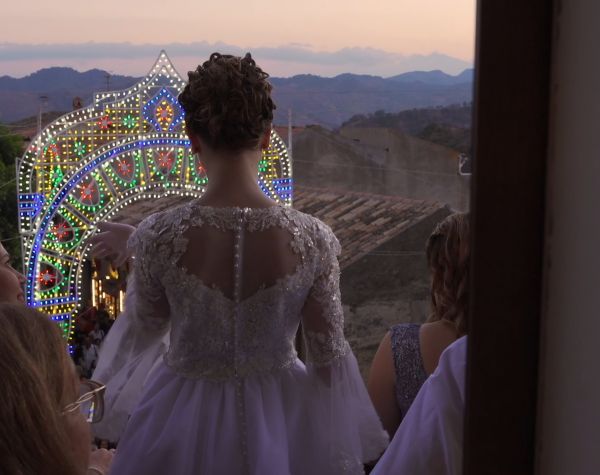
In the director’s native village in Sicily, it has been a tradition for centuries to hold a summer procession dedicated to the martyr Saint Lucy. A local girl is always chosen to portray the saint, who was repeatedly tortured by various male authorities during the Roman persecution of Christians. The filmmaker filmed a series of interviews here with women who have portrayed Saint Lucy over the years, complementing them with amateur period footage of the processions. In doing so, she not only shows how perceptions of the saint’s persona have evolved from the perspectives of women of different generations, but also generally presents the history of Sicilian women, to whom the documentary is dedicated.
director: Clizia Centorrino
original title: Les Lucia
country: France, Italy
year: 2026
running time: 80 min.
The Second Skin
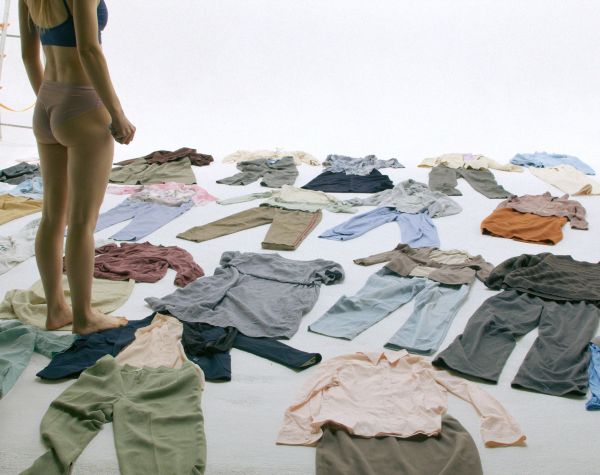
Violence against women is a sensitive subject in itself, particularly in view of the psychological trauma suffered by the victims of these horrific acts. Nevertheless, three female filmmakers decide to make a radical artistic and civic gesture. Recordings of anonymous testimonies by rape survivors serve as the scripts for scenes in which the filmmakers reenact the assaults from the victims’ perspectives. With the perpetrators absent and the immersion growing increasingly intense, the staged experiences begin to bear a terrifying resemblance to the real ones. An experience that can neither be fully understood nor simulated speaks to us through the film’s participants in the language of visceral bodily reactions and genuine human emotions. “It was always with me. The desire to break the silence.” — Mariia Lapidus, Rephrase Mag Source
director: Mariia Lapidus
original title: The Second Skin
country: United States, Mexico
year: 2026
running time: 63 min.
Thousands of Meters, Hundreds of Hours
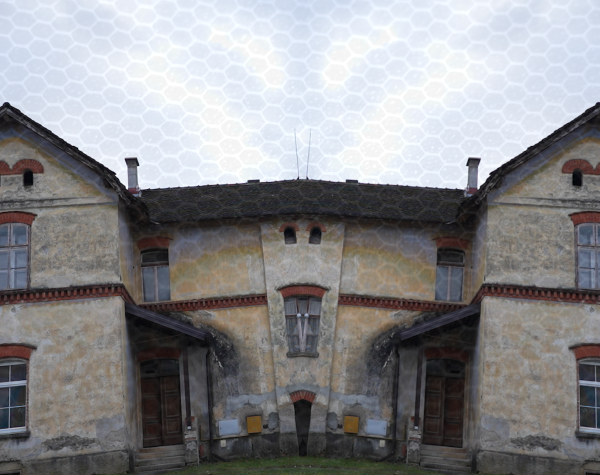
The lace made by women in Lepoglava, Croatia, is some of the most beautiful in the world and regarded as a piece of cultural heritage in its own right. Yet it carries an even greater significance. In this small village, the lace weaves together – both figuratively and literally – thousands of metres of thread, binding together generations, families and a community of women devoted to quiet, meticulous work. “Driven by a desire to explore real stories and authentic experiences, she seeks through this film to connect the personal with the universal, creating space for narratives that emerge from everyday life.”
director: Iva Kunac
original title: Tisuće metara, stotine sati
country: Croatia
year: 2026
running time: 15 min.
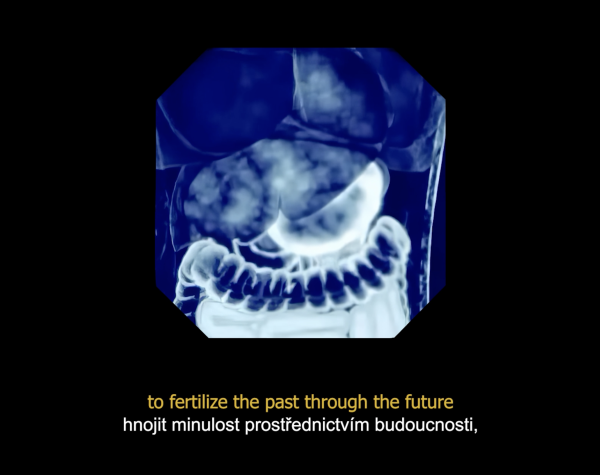
TO SH*T SOMEONE ELSE'S SH*T
The human being as a metabolic process: the human entrails take centre stage in a video essay that examines the digestive tract through the lens of contemporary philosophy and art theory. Named after a phrase that spontaneously emerged during a retreat of the CÉN choir, the film explores questions of how we relate to tradition and to a past we have not experienced ourselves, yet which continues to shape us. “If tradition consists of honoring the past and keeping it alive, never letting it die.”
director: Eliška Jelínková
original title: KADIT CIZÍ H*VNA
country: Czech Republic
year: 2026
running time: 9 min.
We'll see each other again, right?
A breakup as a beginning, the closeness of someone drifting away, or a sense of freedom as we lose someone. An intimate, existential act of soul-searching immerses itself in the chaotic materiality of objects. Analogue footage, the clatter of a projector, a running strip of film and an empty room dance through a visual collage, caught in a swirl of feelings and thoughts in the wake of a breakup. “It was such a strange feeling: one moment we were breaking up, and the next I felt closer to him than ever, as though we were only just starting to date.”
director: Anna Zubatá
original title: Že se ještě uvidíme?
country: Czech Republic
year: 2026
running time: 7 min.

What To Say
An animated portrait of solitude amidst a crowd and a longing for closeness, it speaks without words through the folds of dancing fabrics. The bold intimacy and shy sensuality of flowing hair, the shimmering fibres of a ball gown, the soothing whiteness of bed linen and the texture of bare human skin venture into realms where words fall short. “If only we could get to know each other without having to speak.”
director: Tereza Burianová
original title: Nevím, co říct
country: Czech Republic
year: 2026
running time: 6 min.
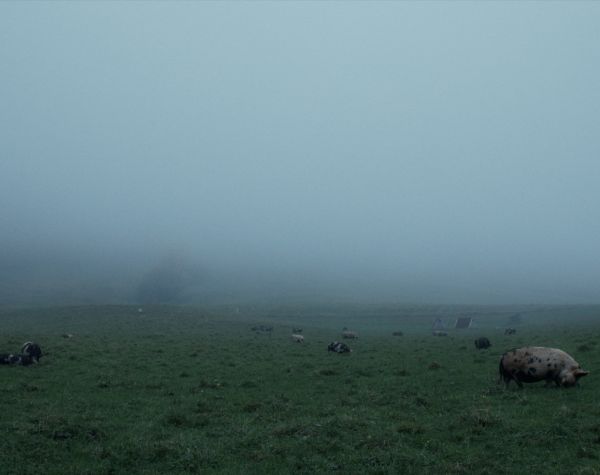
When Pigs Fly
Pigs have been humanity’s companions for millennia. The domestic pig has become livestock, food, a commodity for consumption. How has our relationship changed with creatures so close to us in evolutionary terms? This philosophical and anthropological exploration examines a new field of genetic engineering in practice: pigs have become growers of hearts for humans. How do we perceive a creature whose beating heart is destined for transplantation into a human body? Are the species drawing symbolically closer? The film opens up the prospect of ethical pig farming as the beginning of a new era of humanistic genetics. “Is your heart a defining part of who you are? Does it hold memories of first kisses, shattered dreams, summer days, and a life lived? Or is it just a muscle that pumps blood around your body?” Source of the quote.
director: Denise Riedmayr
original title: When Pigs Fly
country: Germany
year: 2026
running time: 79 min.