society
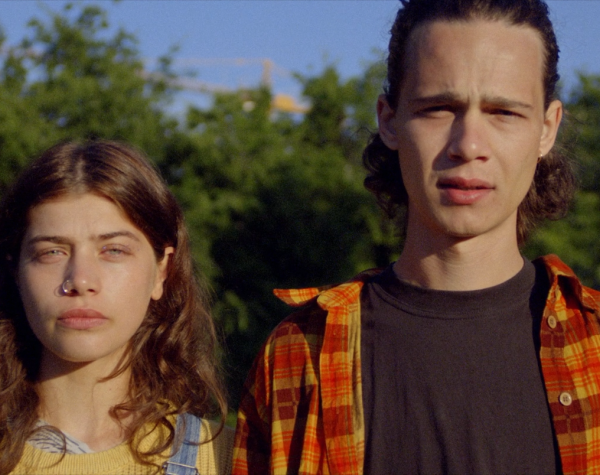
Books Are Our Weapons
This Hungarian staged documentary captures the day-to-day life of a community of young, progressive-minded intellectuals. We come to understand the values the group upholds and reflects upon together, but also a certain self-absorption and lack of empathy that emerge here despite their theoretical ideals. We are guided by the characters of Noémie and Petri, who, albeit fictional, have been brought to life through improvisation. The scenes of their gatherings are shot in long takes, in which the camera moves in circles around the characters, thereby emphasising their sense of community and egalitarianism.
director: Máté Konkol
original title: A könyv a mi fegyverünk
country: Hungary
year: 2026
running time: 73 min.
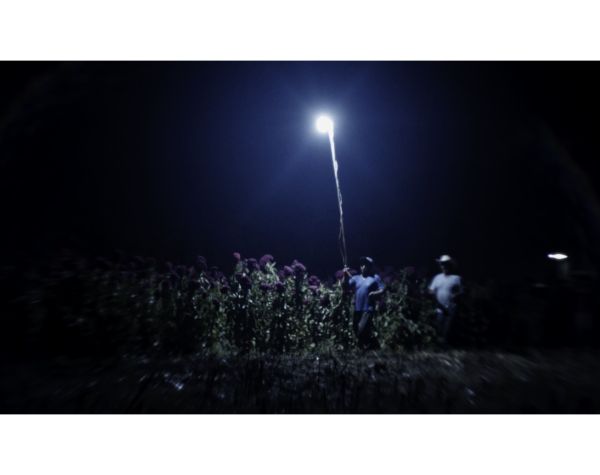
Dance of the Souls
Día de los Muertos is the focal point of this personal documentary, which takes us into a community in Mexico’s Oaxaca highlands. A voice-over, conceived as the voice of one of the souls returning among the living on the “Day of the Dead”, accompanies a series of scenes evoking the nocturnal atmosphere of one of Mexico’s most important celebrations. Remembrance of the dead, a whirl of macabre masks, night-time revelry, but also a sense of release from everyday life and renewed energy for the life ahead, all come together in a succession of observed scenes and purely atmospheric glimpses."Over time, I came to understand what the Muertada means for the communities of Ella Valley, as we believe that the souls of our loved ones return to dance with us.”
director: Ramón Llaven
original title: El baile de las ánimas
country: Mexico, Canada
year: 2026
running time: 73 min.
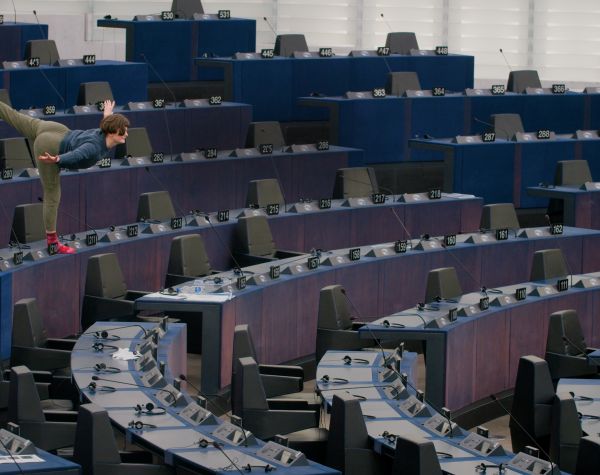
Dear People, Dear Citizens
For five years, Andrea Culková tracked a unique political experiment: around 800 Europeans of different generations – students, workers and senior citizens – selected at random were given the chance to decide on the future of the continent within the European Parliament. The confrontation between determined citizens and cautious political elites lays bare the mechanisms of a system that may itself be the cause of many of today’s crises. The author interweaves her analytical observations with performative rituals, black humour and broader reflections on whether we will be able to bring about the necessary changes before the state of democracy and the environment reaches the point of no return. “Let‘s make a Copernican shift from United Nations to united people.”
director: Andrea Culková
original title: Drazí spoluobčané
country: Czech Republic
year: 2026
running time: 118 min.
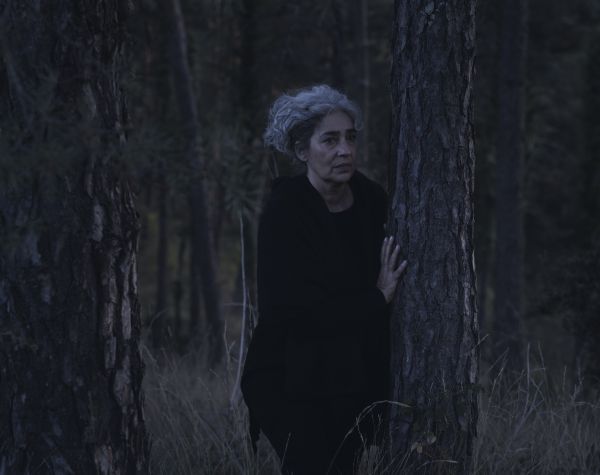
Gaulana
Light signifies knowledge and progress; darkness denotes ignorance and danger. But what if we were to turn this seemingly self-evident contrast on its head? Light and darkness in the film are not merely metaphorical principles, but direct physical phenomena whose relationship evolves alongside society. As capitalism advances, light pollution increases, the number of places from which one can observe the stars dwindles, and artificial light interferes with natural cycles – what will become of a landscape from which fireflies are gradually disappearing? Darkness, on the other hand, provides a refuge for those who need to hide. In this visually captivating, contemplative essay, the stories of prisoners who escaped from the Ezkaba fortress in 1938, Portuguese migrants from the mid-20th century, and people who cross the River Bidasoa today all come together. The film neither explains these individual layers nor weaves them into a linear narrative. Through images of the night-time landscape, songs, texts, memories and archive photographs, it creates a mosaic of a place where light signifies both progress and control, while darkness represents uncertainty and the possibility of disappearing safely. “Those flying free are only birds and banknotes.”
director: Pablo Casanueva
original title: Gaulana
country: Spain
year: 2026
running time: 61 min.
Glowing
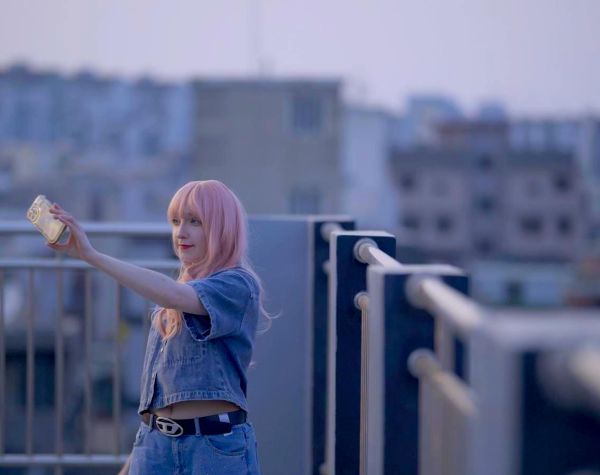
If only one could have the perfect relationship, thousands of likes on Instagram, a successful career and, ideally, fairer skin. Young men and women from different social backgrounds, living in Seoul, New Delhi and Nairobi, are united by the same goal: they all want to “shine”. Martin Páv’s visually dazzling documentary deconstructs the phenomenon of physical attractiveness as a norm of global capitalism. The film offers a glimpse into the private lives of people caught in the web of social expectations and the pressure to be perfect. Behind their obsession with their own appearance, however, lies a deeper identity crisis and a search for an answer to the question of whether there is still any room for us to be ourselves in today’s interconnected world.“When they make cosmetic commercials in Vietnam, they say: You can be as light-skinned as the Koreans.”
director: Martin Páv
original title: Zářit
country: Czech Republic
year: 2026
running time: 90 min.
I Dreamed of a Man Who Dreamed of Horses
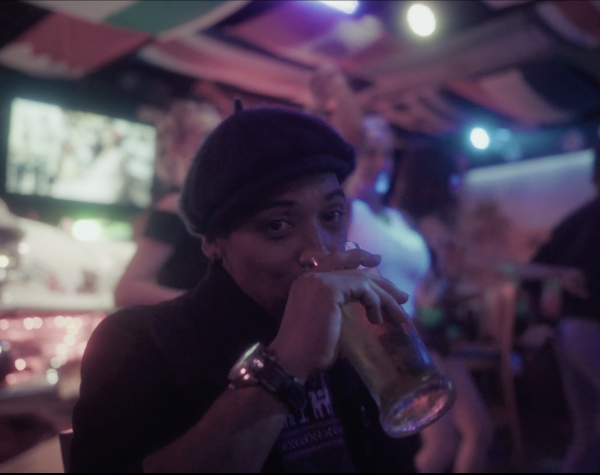
While trees have their place, people sometimes have yet to find theirs. In this sensitive portrait, director Lucie Zpěváková captures the search for a place in a world that has yet to decide whether it will accept you. Yimel, a Cuban living in the Czech Republic, has spent many months awaiting a decision on his asylum application. Meanwhile, he walks through snow-covered streets, a housing estate and a landscape traversed by a gas pipeline. Winter gives way to spring, but the sense of being in limbo persists. Attentive to small details and the atmosphere of places, the images record his attempts to connect with unfamiliar surroundings: stopping at a local pub, watching boys play football and finding moments of affinity in familiar rhythms.
director: Lucie Zpěváková
original title: Soñaba con un hombre que soñaba con caballos
country: Czech Republic
year: 2026
running time: 19 min.

I've Never Seen This Sink Before
We are like snails on the railway tracks, waiting for a train to run us over – but that doesn’t have to involve any existential drama. This languid, ambient, montage-driven illusion about fragments and the passage of time is tailored to the fragmented attention span of the contemporary viewer. Instead of narrative and context, it presents an associative stream of being in the here and now, in which a kitchen sink is just as important as a lunar eclipse. “What seems familiar to us may in fact be completely unknown, and what seems strange to us may, on the contrary, be something we know intimately.”
director: Andran Abramjan
original title: Ten dřez jsem ještě nikdy neviděl
country: Czech Republic
year: 2026
running time: 11 min.
Land of Fire
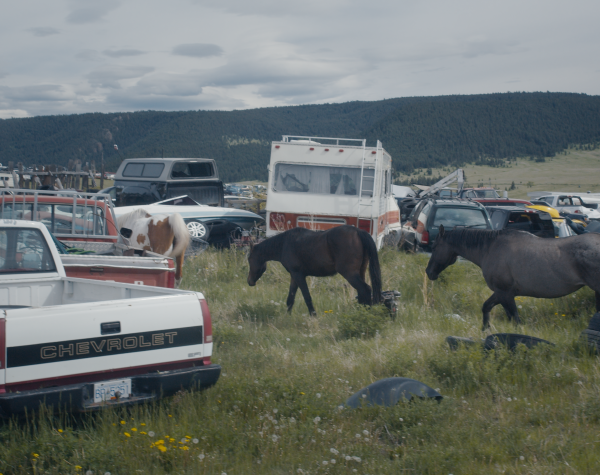
In British Columbia-one of the most sparsely populated regions of the Western world- wildfires have become an everyday part of life. Local communities are marked by substance abuse, violence, and traces of absence are everywhere: in the burned forests and along roadsides lined with posters of missing persons. Nikola Klinger has made a film about people facing complex challenges who nonetheless believe in a better future. By weaving together the interconnected lives of the locals, the film creates a layered portrait of the landscape and the people’s bond with the wilderness, its magic and its myths. Residents live in the shadow of unsolved deaths and the disappearances of young people, finding an escape from their troubles in community solidarity and modern-day rituals, such as the demolition derby at the local wreck yard. “There is something alive out there in the bush; you can feel it, but you can't see it.”
director: Nikola Klinger
original title: Land of Fire
country: Czech Republic, Germany
year: 2026
running time: 85 min.
Let's Pretend
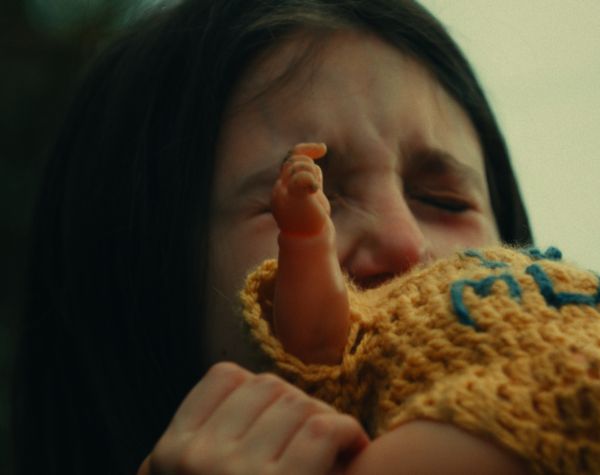
The grown-ups are not there. The children play, they act. The script they stage, by way of imitation, is the world that is raising them. It is a frightening, cruel world: it’s us. But they are only pretending. The film is part of DELTA | Emerging Italian Filmmakers Across Europe: A Project by Bellaria Film Festival.
director: Diego Fossati
original title: Per finta
country: Italy
year: 2025
running time: 17 min.
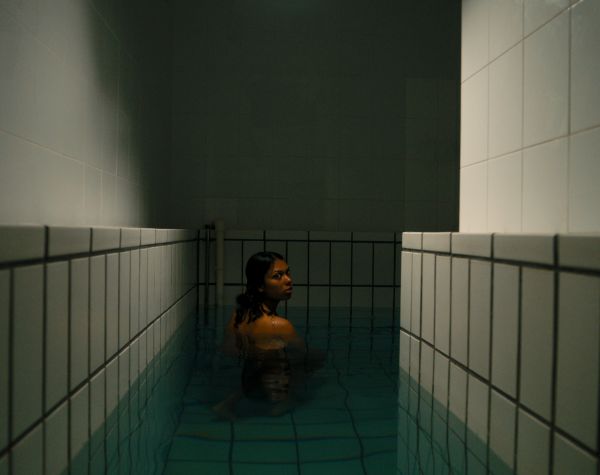
Naomi
Naomi is a 23-year-old Frenchwoman of Senegalese descent. Her parents converted to Islam, and she is now converting to Judaism. This combination of personal testimony and art installation places the young woman in positions from which she explores various aspects of her identity and seeks to understand the meaning of community and the essence of religious faith. “The resulting forms are not simply documentation, but the transposition, even the sublimation, of a shared experience.” — Le Fresnoy Studio national des arts contemporains Source: https://www.lefresnoy.net/en/ecole/etudiant/627/
director: Jérémie Danon
original title: Naomi
country: France
year: 2026
running time: 17 min.
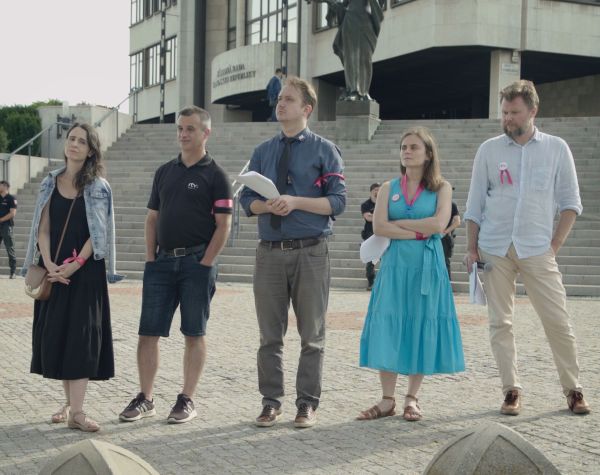
Retuning
Directly from within the newsrooms, director Sára Prokopová observes the attempt – one that begins absurdly but becomes increasingly tragic – to gain political control over Slovakia’s public service television and radio. While heated debates about a strike are taking place behind the scenes, the gradual curtailment of independent journalism and the silencing of opposition voices unfolds on screens. Cultural policy – and the institution itself – are beginning to be run by people lacking the necessary expertise; by those who seriously speculate as to whether the Earth is flat or not. The journalists’ initial enthusiasm is giving way to a sense of powerlessness and frustration at developments that bear a number of cautionary parallels with situations in other Central European countries. “I wanted to highlight the importance of the actions of the individuals who decided to stand up to the establishment, at the risk of either losing their jobs or having their work interfered with.” — Sára Prokopová, SME
director: Sára Prokopová
original title: Preladenie
country: Slovakia
year: 2026
running time: 60 min.
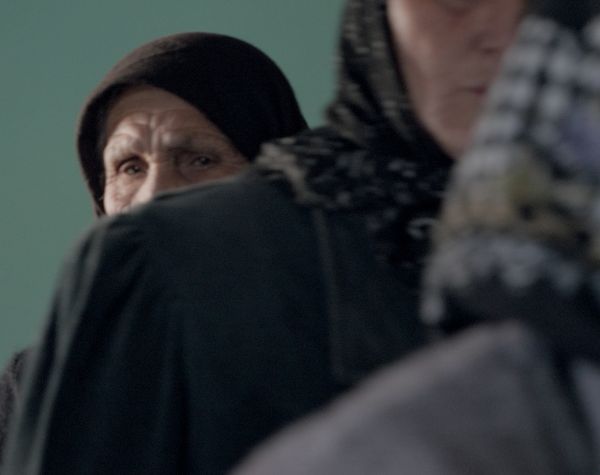
Sacred Songs
The Pankisi Valley in north-eastern Georgia, a mountainous region along the course of the River Alazani, is home to the Kists, an ethnic community with Chechen roots and their own religious tradition. For generations, the women here have been singing Sufi spiritual songs – meditative compositions expressing love for God and accompanying the journey towards a deeper spiritual experience. The songs are sung in the mosque, but the singers also perform them in European concert halls. The audience’s interest contrasts with the uncertain future of the tradition, which the younger generation of women is refusing to take up. Melancholic views of the rugged agricultural landscape accompany the captivating songs, the protagonists’ life stories and everyday conversations about animals, plants and work. Through the female experience, the film thus explores the relationship between tradition, religion and society, as well as their gradual transformations. Here, Sufi songs represent not only an endangered cultural heritage, but also an intimate expression of faith that comes into conflict with emerging, more radical interpretations of Islam.“When those women hear applause, they know it’s time to come on stage.”
director: Nona Giunashvili
original title: Tsminda Simgherebi
country: France, Georgia
year: 2026
running time: 63 min.
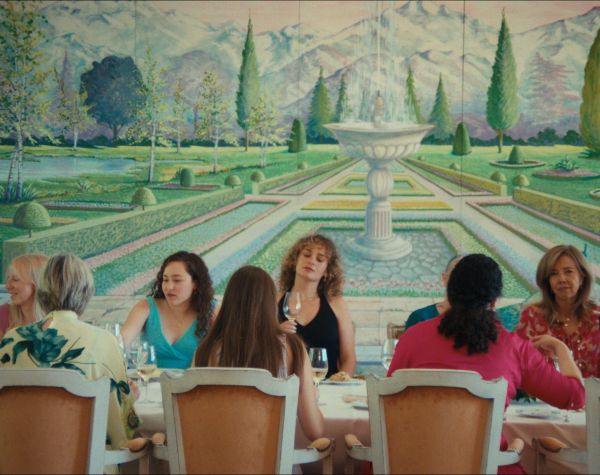
Small Talk
How does one behave properly in society, carry oneself with elegance and conduct a polite conversation? Charlie, a 35-year-old Frenchwoman, decides to change her career and sets off on a summer course at the last remaining school of etiquette. Surrounded by the Swiss countryside, she joins women from all corners of the world to learn the rules of dining, the art of hospitality and social etiquette. Through lessons and seemingly casual conversations, the students gradually grow closer, sharing their life stories and forming deep friendships. This sensitive and at times humorous film follows its likeable protagonist in an environment where an emphasis on elegance, discipline and good manners intertwines with conservative notions of the female role. Are the women here learning to conduct themselves confidently in society, or are they still expected, above all, to be perfect wives? With gentle irony, the film explores gender stereotypes and the tensions between tradition and modernity, asking what women’s emancipation actually means and to what extent women themselves can determine its form.“You feel free to do what you want because you’re successful.”
director: Mateo Ybarra
original title: Small Talk
country: Switzerland
year: 2026
running time: 95 min.
Some of You Fucked Eva
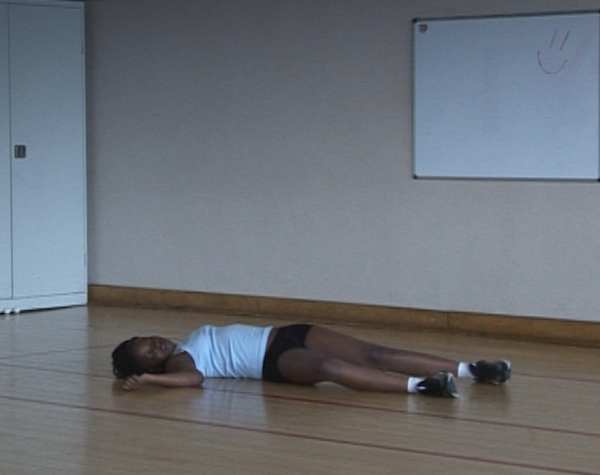
In 2002, a group of cheerleaders fainted en masse at a secondary school in North Carolina. However, this fifteen-minute film does not attempt to reconstruct the mysterious incident. Using found footage from the internet, it instead dissects the myths and rituals of American high schools. The whispers of adolescent voices, oppressive ambient sounds and deliberately distorted images of girls’ bodies in prescribed poses reveal layers of latent, gender-based violence. This Lynchian collage of fragments from collective memory frames the high school girls’ breakdown primarily as a form of physical resistance against the relentless demands and expectations of the system.“High schools remain the birthplace of a gendered, formatted, hierarchical world. (…) What I was interested in was how this soft power, these ordinary images deeply engraved in our collective imagination, were reinvested and distorted.” — Lilith Grasmug, from an interview for FID Marseille.
director: Lilith Grasmug
original title: Some of You Fucked Eva
country: France
year: 2025
running time: 15 min.
something like a foolish fire i guess
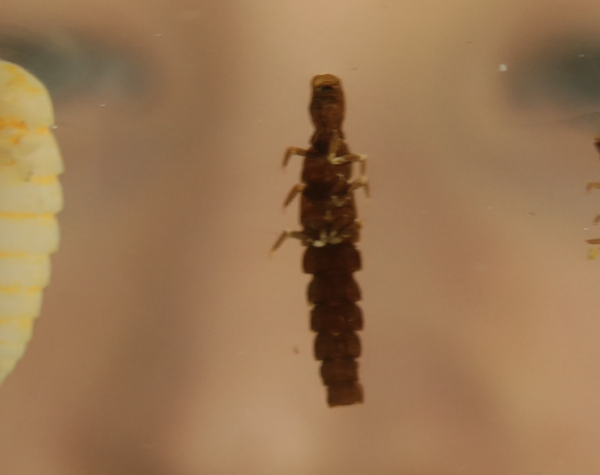
This hybrid experiment blending documentary and fiction begins as a survey about petty shoplifting. Yet what starts as a relatively sober analysis of the systemic redistribution of surplus goods soon mutates into a conspiratorial sci-fi narrative, in which paranoid young protagonists discover connections between cryptozoology, technofeudalism and cosmic entities. With its distinctive lo-fi aesthetic, the film places the logic of contemporary consumerism on a par with the irrational belief in extraterrestrials. But what if a return to myths and magical thinking is actually the most effective form of collective resistance to today’s global crises? “Why do we have to save the world?”
director: Denisa Langrová, Michael Jiřinec
original title: asi jako hloupý oheň no
country: Czech Republic
year: 2026
running time: 77 min.
The Chronicle of Salaš
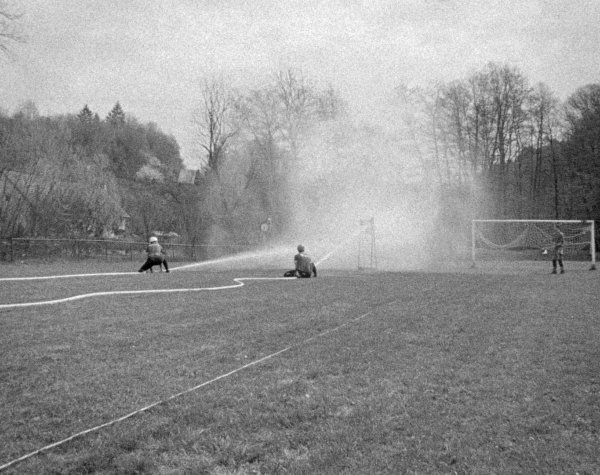
At a meeting of Salaš residents gathered around historical chronicles, the question arises of what is important to record from the present and preserve for future generations. Opinions differ, yet the chronicle inevitably creates only a single image and legacy of the village. The film thus follows not only the lives of individuals, but also the lives that emerge between them.
director: Šimon Gogola
original title: Kronika obce Salaš
country: Czech Republic
year: 2026
running time: 10 min.
The Leap
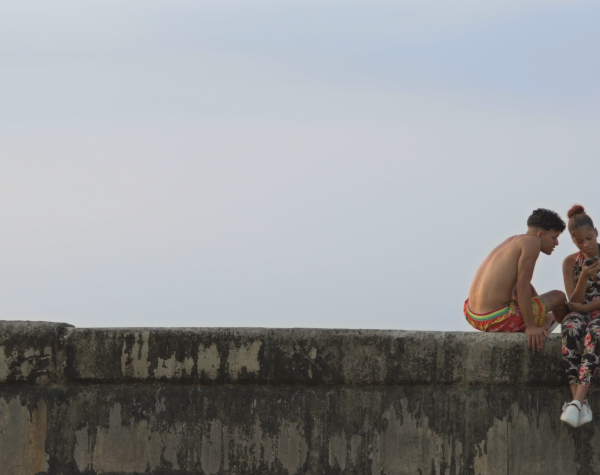
Josué is about to embark on a new chapter in his life. Together with his pregnant partner, he is preparing a room for their son and hanging photographs from the past on the walls – snippets of life from the family chronicle, to which they will soon add new chapters. Set against the backdrop of contemporary Cuba, a quiet social and relational drama centred on a young family on the threshold of an uncertain future unfolds in this delicate observation.“The Leap explores the fragility of memory and how we need it to navigate the uncertainties of the future.”
director: Pedro Junqueira
original title: El salto
country: Brazil, Cuba
year: 2026
running time: 15 min.
The Tingbjerg Experiment
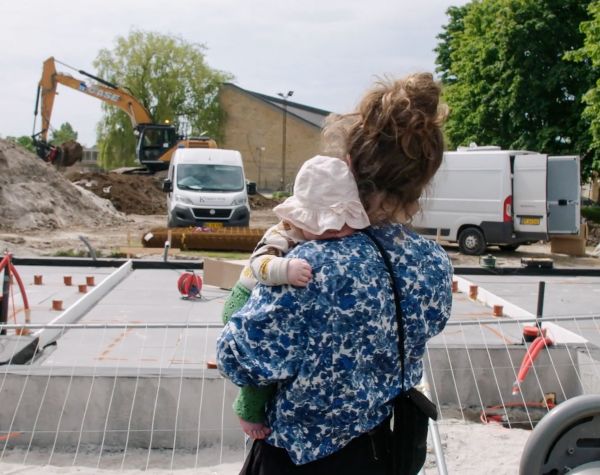
Copenhagen’s Tingbjerg neighbourhood began as an ambitious social experiment. Urban planner and visionary Steen Eiler Rasmussen sought to realise a dream of bringing different social groups together in a welcoming setting of small apartment blocks surrounded by greenery. By the end of the twentieth century, the experiment had turned into a nightmare marked by outbreaks of ethnic violence, police repression and political demagoguery. In 2018, Copenhagen’s mayor launched a new experiment: moving selected families into new flats within the public housing estate, with the option to buy them at a favourable price. Four years later, the initial idealism has faded, and the young families take stock of what participating in the experiment has given them – and what it has cost them. Can a ghetto of privilege within another ghetto resolve such entrenched problems? “When you ask me, if Tingbjerg turned out how I envisioned it, I am compelled to answer yes. By and large, it looks like my vision on the surface. – But is there something under the surface that didn’t turn out that way? – Yes, very much so. The residents aren’t thriving as I had imagined.” — Steen Eiler Rasmussen
director: Louise Detlefsen
original title: Tingbjerg-eksperimentet
country: Denmark
year: 2026
running time: 84 min.