science
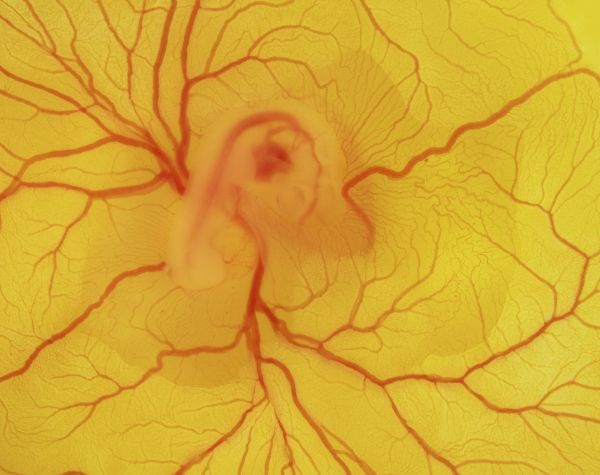
Becoming Bird
This time-lapse documentary condenses the entire 21-day development of a chicken – from fertilised egg to the hatching of the chick – into a nine-minute film. In microscopic detail and in full colour, we observe the early stages of life within the fragile shell, which so often cracks prematurely at the hands of humans seeking to satisfy their base appetites. “What is particularly interesting I think, is that the basics of embryonic development are the same for all animals, including us. I think the way we develop is a true miracle.” — Jan van IJken Source: Colossal
director: Jan van IJken
original title: Becoming Bird
country: Netherlands
year: 2026
running time: 9 min.
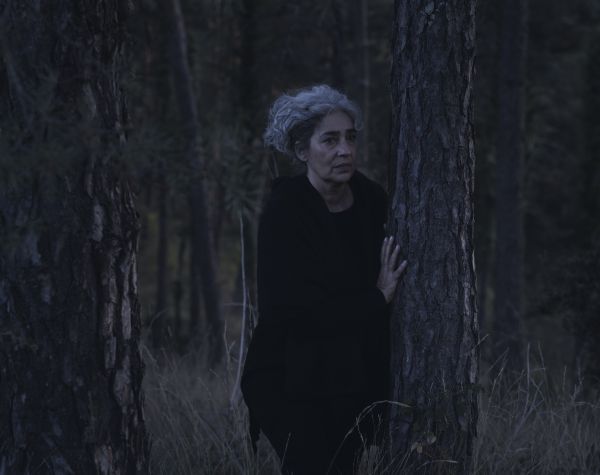
Gaulana
Light signifies knowledge and progress; darkness denotes ignorance and danger. But what if we were to turn this seemingly self-evident contrast on its head? Light and darkness in the film are not merely metaphorical principles, but direct physical phenomena whose relationship evolves alongside society. As capitalism advances, light pollution increases, the number of places from which one can observe the stars dwindles, and artificial light interferes with natural cycles – what will become of a landscape from which fireflies are gradually disappearing? Darkness, on the other hand, provides a refuge for those who need to hide. In this visually captivating, contemplative essay, the stories of prisoners who escaped from the Ezkaba fortress in 1938, Portuguese migrants from the mid-20th century, and people who cross the River Bidasoa today all come together. The film neither explains these individual layers nor weaves them into a linear narrative. Through images of the night-time landscape, songs, texts, memories and archive photographs, it creates a mosaic of a place where light signifies both progress and control, while darkness represents uncertainty and the possibility of disappearing safely. “Those flying free are only birds and banknotes.”
director: Pablo Casanueva
original title: Gaulana
country: Spain
year: 2026
running time: 61 min.
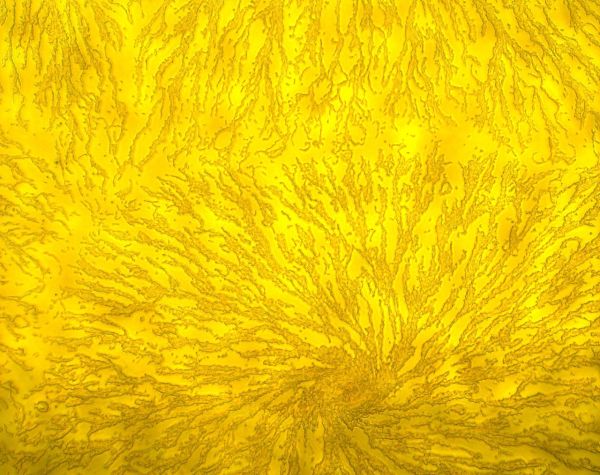
Grex
Thousands of single-celled slime moulds dance in a frenetic whirl to a track by Joshua Borin from the album by British pianist Hannah Watson Emmrich. Scientific microscope footage is transformed into an artistic artefact, drawing us into a musical-microbiological ecosystem of cells that come together to form a coordinated, slug-like structure known as a grex. “Science often generates hidden beauty long before we realise it may resonate far beyond the laboratory.” — Jitka Čejková
director: Hannah Watson Emmrich, Jitka Čejková
original title: Grex
country: Czech Republic, United Kingdom
year: 2026
running time: 4 min.
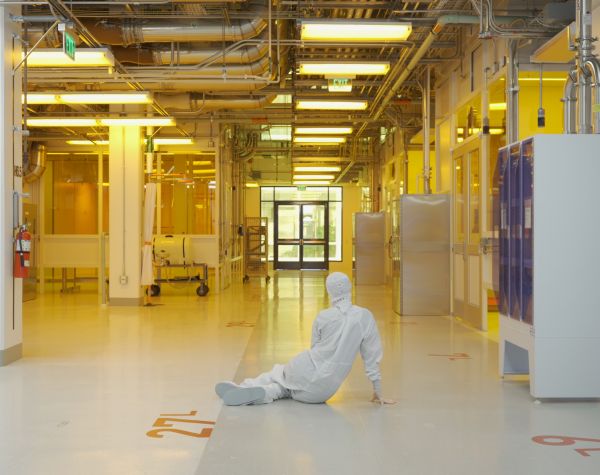
Infinite Replica
Binarity under the microscope: curiosity permeates a nanotechnology laboratory, yet a non-binary body is forbidden to pose nude. With the matter-of-fact tone of a scientific explanation, the essay moves from a drawing of the body exposed to the coldness of the laboratory to instructive visualisations, delving into particles of organic and synthetic matter. Through these shifts in representation, the body becomes both a mirror of technical processes and an object where the inquiring gaze encounters the rules governing visibility. “And in the end, whatever I want to express will not be easily contained within words.” — Kwan Q Li Source: Oui.Gallery.
director: Kwan Q Li
original title: Infinite Replica
country: United States, Hong Kong
year: 2026
running time: 18 min.
Look, the Sun Is Burning
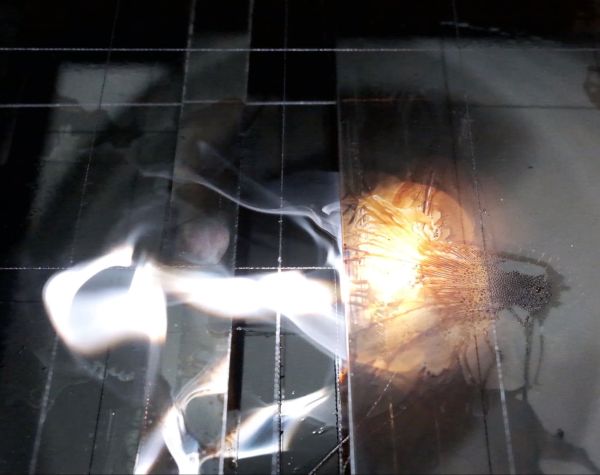
An illustration from the 1685 treatise Oculus Artificialis Teledioptricus recalls a time when vision was understood as an active ray emanating from the eye. Visual artist Gregor Eldarb takes up this idea in an analogue experiment. Using a magnifying glass, sunlight, a magnet and an oily liquid with magnetic properties, he creates crystalline structures and amorphous landscapes within the camera’s lens. Combined with a digital display and Stefan Nemeth’s minimalist score, this exploration of the human gaze becomes a compelling spectacle in which historical notions of vision clash against today’s fascination with glowing screens.
“Like membranes, similitudes flutter through the air, and wherever they are carried, they are evident in the canyons.” — Johann Zahn, The Long Distance Artificial Eye, or Telescope
director: Gregor Eldarb
original title: Look, the Sun Is Burning
country: Austria
year: 2025
running time: 6 min.
No Before or After: Notes on a Film
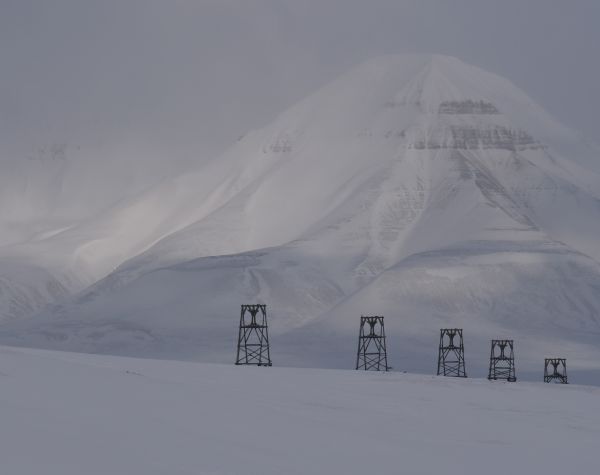
Deep in the Arctic permafrost lies humanity’s collective memory. A global memory bank is housed in an abandoned coal mine on Svalbard, three hundred metres below the surface. This intimate, hypnotic audiovisual essay reflects on humanity’s attempt to defy its own transience. Amid a monumental landscape of ice, chillingly desolate and melancholically endless, physical and digital records of human existence await discovery a thousand years from now. By then, we may no longer be here. The film forms part of a project that also includes a web app and presents the landscape as an archive or an intermedial map of texts, images, knowledge and ideas.“The Arctic contains archetypes that are a way of understanding the narrative of change on a planetary scale.”
director: Emily Richardson
original title: No Before or After: Notes on a Film
country: United Kingdom, Norway
year: 2026
running time: 18 min.
RERUM
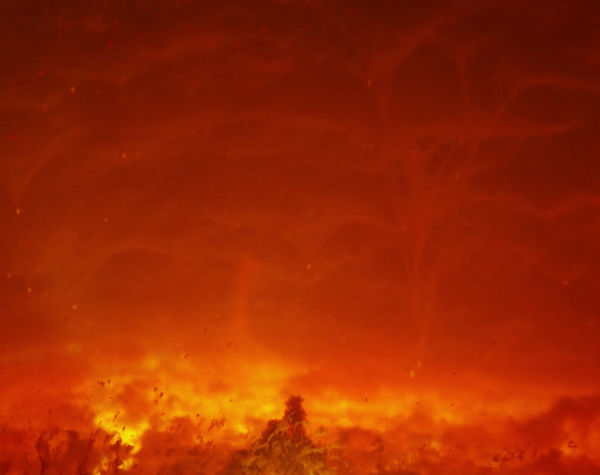
An experimental disaster thriller drawn from a family archive explores the coexistence of the microcosm and the macrocosm, of mundane human everyday life and the magmatic hell bubbling beneath the Earth’s surface. Every system will eventually collapse; it is a biological constant. We will know it when the cry of Beethoven’s symphony rings out. “An anthropocentric world, in which the only reminders of the underworld are cracks, is losing its relevance. This state of fragile equilibrium is inevitably heading towards ruin.”
director: Marek Koutesh
original title: RERUM
country: Czech Republic
year: 2026
running time: 8 min.
The Case Against Space
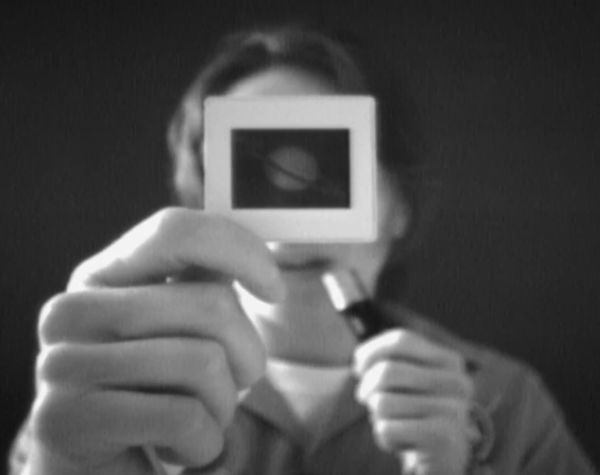
NASA’s first space station was called Skylab, and three crews took turns aboard it over a total of 24 weeks in 1973 and 1974. The final crew made history, among other things, as the first astronauts ever to go on strike. Given the sensitive nature of the source material, the film takes the form of a documentary reconstruction, with actors performing on makeshift sets and a narrative structured by staged recreations of communications between Skylab and mission control. This only heightens the oppressive atmosphere of a workplace where people in a demanding profession are deliberately pushed beyond their limits.“For me, living is not just surviving. Living is having a life.” — Graeme ArnfieldSource: Business Doc Europe
director: Graeme Arnfield
original title: The Case Against Space
country: United Kingdom, France
year: 2026
running time: 73 min.
The Forest Code
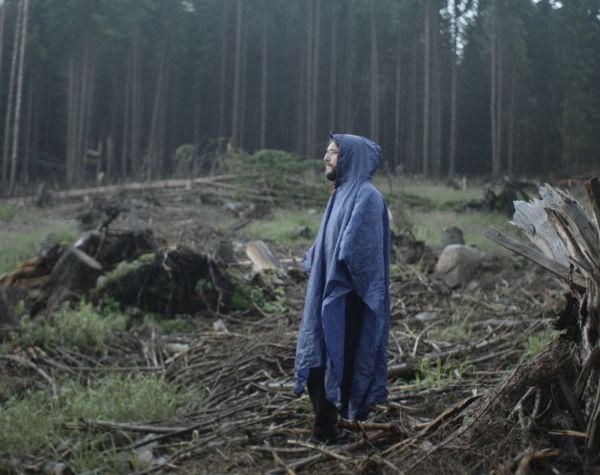
Forests and fungi communicate just as people do. In this reflective documentary built around unfolding situations, the slopes above Val di Fiemme in the Italian Dolomites become the epicentre of a visionary experiment mapping communication between trees and other forest beings. Organic signals from trees, shrubs, animals and fungi offer the ecologists, foresters and scientists working there an opportunity both to study the behaviour of biological ecosystems and to save a damaged forest. After several years of devastation caused by nature (Storm Vaia) and human activity (bark beetle infestations resulting from drought), the film’s participants propose a systemic solution: we can save the trees and their unique ecosystem by understanding their language.“Nine years a meadow, nine years a forest, then comes the promised time, when what once was shall be again.”
director: Alessandro Bernard, Paolo Ceretto
original title: Il codice del bosco
country: Italy
year: 2025
running time: 93 min.
When Pigs Fly
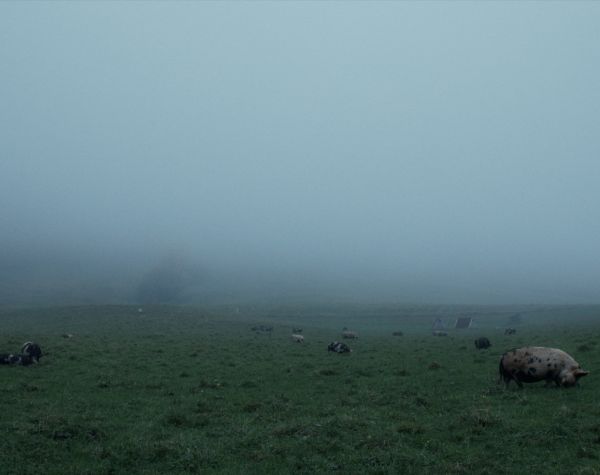
Pigs have been humanity’s companions for millennia. The domestic pig has become livestock, food, a commodity for consumption. How has our relationship changed with creatures so close to us in evolutionary terms? This philosophical and anthropological exploration examines a new field of genetic engineering in practice: pigs have become growers of hearts for humans. How do we perceive a creature whose beating heart is destined for transplantation into a human body? Are the species drawing symbolically closer? The film opens up the prospect of ethical pig farming as the beginning of a new era of humanistic genetics. “Is your heart a defining part of who you are? Does it hold memories of first kisses, shattered dreams, summer days, and a life lived? Or is it just a muscle that pumps blood around your body?” Source of the quote.
director: Denise Riedmayr
original title: When Pigs Fly
country: Germany
year: 2026
running time: 79 min.