politics
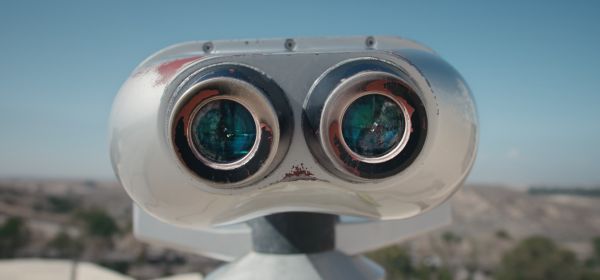
2:30 Minutes for 5 Shekels
director: Efim Graboy
original title: 2:30 Minutes for 5 Shekels
country: Serbia, Israel
year: 2026
running time: 25 min.
At the Sderot lookout, a coin-operated telescope that opens for five shekels for two and a half minutes allows the visitors to glimpse the ruins of Gaza.“Compassion, even when it feels almost impossible, may be the only place from which healing can begin.” This film was created independently through the voluntary collaboration of all creators. This is a fully independent film. No member of the creative or production team, and no member of the crew, received any payment for their work on the film.
Atlas of Disappearance
director: Manuel Correa
original title: Atlas de la Desaparición
country: Spain, Norway
year: 2026
running time: 84 min.
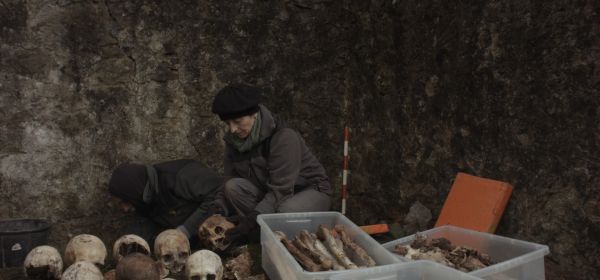
Over four decades, Franco’s regime in Spain left tens of thousands dead or disappeared. A sinister topography of terror lies in hundreds of mass graves, where the bodies of the disappeared ended up, stripped of their identities and individual fates. A colossal reminder of this troubled era is an ominous monument built from the remains of thousands of anonymous people, yet bearing only two names: Francisco Franco and José Antonio Primo de Rivera. Accompanied by archaeologists, the filmmakers visit the controversial Valley of the Fallen (Valle de los Caídos) memorial and use new forensic methods to try to recover at least a fraction of the stories and identities hidden in forests, fields and caves.“Enforced disappearance unfolds in three stages. First, the abduction. Then, the murder. But what truly defines the crime is the violence against evidence: all traces are erased, the bodies concealed, and witnesses silenced.”
Books Are Our Weapons
director: Máté Konkol
original title: A könyv a mi fegyverünk
country: Hungary
year: 2026
running time: 73 min.
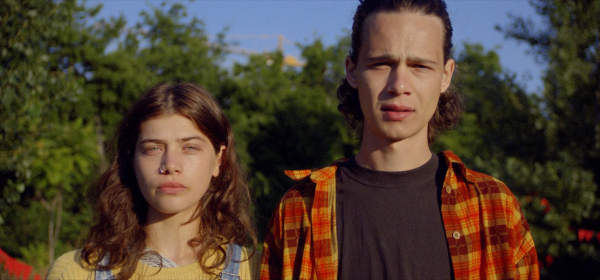
This Hungarian staged documentary captures the day-to-day life of a community of young, progressive-minded intellectuals. We come to understand the values the group upholds and reflects upon together, but also a certain self-absorption and lack of empathy that emerge here despite their theoretical ideals. We are guided by the characters of Noémie and Petri, who, albeit fictional, have been brought to life through improvisation. The scenes of their gatherings are shot in long takes, in which the camera moves in circles around the characters, thereby emphasising their sense of community and egalitarianism.
Dear People, Dear Citizens
director: Andrea Culková
original title: Drazí spoluobčané
country: Czech Republic
year: 2026
running time: 118 min.
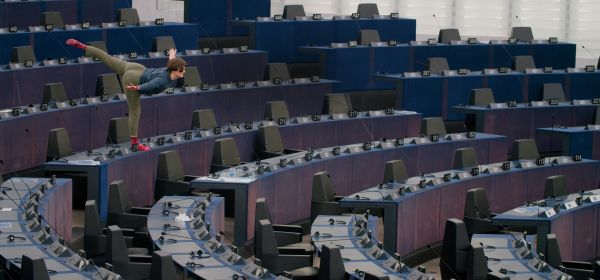
For five years, Andrea Culková tracked a unique political experiment: around 800 Europeans of different generations – students, workers and senior citizens – selected at random were given the chance to decide on the future of the continent within the European Parliament. The confrontation between determined citizens and cautious political elites lays bare the mechanisms of a system that may itself be the cause of many of today’s crises. The author interweaves her analytical observations with performative rituals, black humour and broader reflections on whether we will be able to bring about the necessary changes before the state of democracy and the environment reaches the point of no return. “Let‘s make a Copernican shift from United Nations to united people.”
I Dreamed of a Man Who Dreamed of Horses
director: Lucie Zpěváková
original title: Soñaba con un hombre que soñaba con caballos
country: Czech Republic
year: 2026
running time: 19 min.
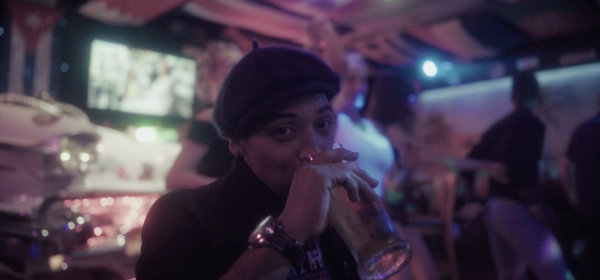
While trees have their place, people sometimes have yet to find theirs. In this sensitive portrait, director Lucie Zpěváková captures the search for a place in a world that has yet to decide whether it will accept you. Yimel, a Cuban living in the Czech Republic, has spent many months awaiting a decision on his asylum application. Meanwhile, he walks through snow-covered streets, a housing estate and a landscape traversed by a gas pipeline. Winter gives way to spring, but the sense of being in limbo persists. Attentive to small details and the atmosphere of places, the images record his attempts to connect with unfamiliar surroundings: stopping at a local pub, watching boys play football and finding moments of affinity in familiar rhythms.
Language in Exile
director: Graeme Thomson, Silvia Maglioni
original title: Language in Exile
country: Italy
year: 2026
running time: 23 min.
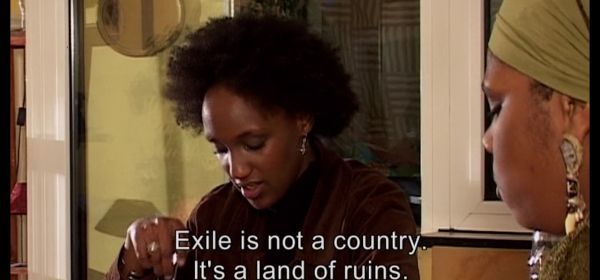
In a world full of borders, the film presents art as a realm in which movement from place to place is almost unbelievably easy. This experimental found-footage documentary brings together excerpts from films of various origins, all of which explore the experience of exile. Characters of different genders, skin colours and cultural backgrounds take turns speaking, reflecting on feelings of uprootedness, the search for identity and their invisibility in the eyes of mainstream society. The universality of this existential condition is underscored by the fact that, although they speak different languages, they seem to share a single language of sorrow and hope.“Languages are living organisms, each of which carries within itself an entire universe.” — Lost for Words, a lecture-performance by Silvia Maglioni and Graeme Thomson
Source
Meeting Götz
director: Birgit Bergmann, Gregor Centner
original title: Meeting Götz
country: Austria
year: 2026
running time: 77 min.
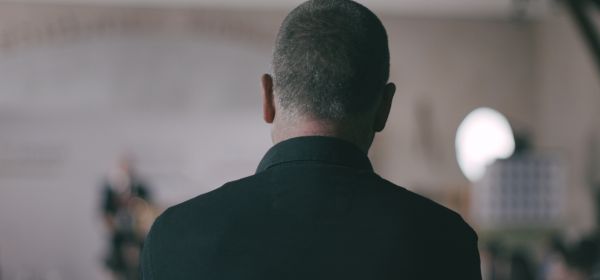
Götz Kubitschek is a German journalist, activist and representative of the far-right Neue Rechte movement. He is also a former schoolmate of director Gregor Centner, who describes himself as a liberal leftist. At the outset of this personal documentary, Centner contacted Kubitschek with a proposal to make a film about him. Over the next six years, they met to share memories of their childhood and school days, but above all to discuss Kubitschek’s ideological turn towards the extreme right. The resulting film draws its power from candid recordings of their conversations and the recordings the two men exchanged.“I don’t know if you are aware what it means to make a film about me. This means about us and about the movement I represent. Especially with public funding. Even talking to us, to me, is the crossing of a line.”
October Revolution Island
director: Zbyněk Baladrán
original title: October Revolution Island
country: Czech Republic, France
year: 2026
running time: 18 min.
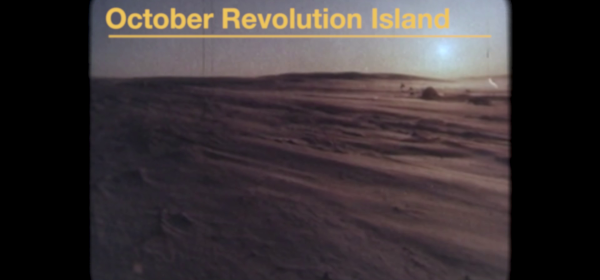
Sixty years after the Great October Socialist Revolution, a Soviet nuclear-powered icebreaker set sail for the Arctic Circle to mark this momentous historical occasion. Drawing on Galina Chubakova’s popular-science film To the Top of the Planet (1978), this work of docu-fiction engages in an imaginary dialogue with the creator of this new film, who is caught between the concepts of the past and the future. “Communism has always seemed terrifying, and it still does. Not only did it not end, it never truly existed. It was only a spectre.”
Porno para Ricardo
director: Hana Jakrlová
original title: Porno para Ricardo
country: Czech Republic
year: 2026
running time: 78 min.
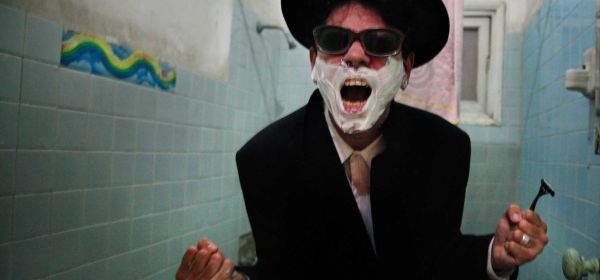
Gorki Águila is the frontman of the Cuban punk band Porno para Ricardo. Due to his opposition to the communist regime, he has faced censorship, harassment and imprisonment. But after a quarter of a century of defiance, fatigue is setting in. Hana Jakrlová’s documentary looks behind the mask of the unrepentant rebel. The film follows the musician during his forced exile in Mexico, as he sings anti-regime songs and reflects nostalgically on his homeland. His daily struggle to get by and his preparations for a concert in Prague are interspersed with archive footage of banned concerts. Despite his uprootedness and powerlessness, however, Gorki intends to continue his struggle until the dictatorship falls. “The band is called after our good friend Ricardo. He is an artist and he loves porn.”
Retuning
director: Sára Prokopová
original title: Preladenie
country: Slovakia
year: 2026
running time: 60 min.
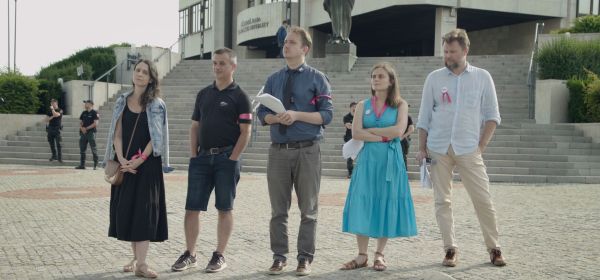
Directly from within the newsrooms, director Sára Prokopová observes the attempt – one that begins absurdly but becomes increasingly tragic – to gain political control over Slovakia’s public service television and radio. While heated debates about a strike are taking place behind the scenes, the gradual curtailment of independent journalism and the silencing of opposition voices unfolds on screens. Cultural policy – and the institution itself – are beginning to be run by people lacking the necessary expertise; by those who seriously speculate as to whether the Earth is flat or not. The journalists’ initial enthusiasm is giving way to a sense of powerlessness and frustration at developments that bear a number of cautionary parallels with situations in other Central European countries. “I wanted to highlight the importance of the actions of the individuals who decided to stand up to the establishment, at the risk of either losing their jobs or having their work interfered with.” — Sára Prokopová, SME
Robota Sweden
director: Kristoffer Kronander, Patrik Öberg
original title: Robota Sweden
country: Sweden
year: 2026
running time: 15 min.
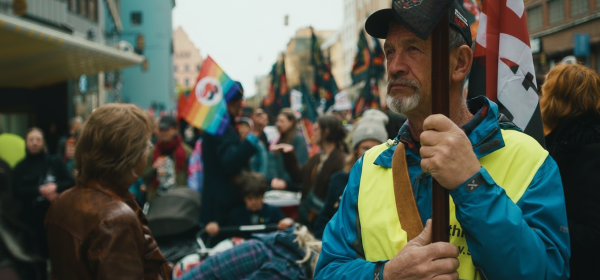
Serhiy, an elderly Ukrainian man, has not been paid by his employer. He has no contract. And, unlike the local people, he appears to have no one to stand up for him. This documentary-style film follows a group of foreigners seeking nothing more than fair treatment in a country that has long prided itself on being a democratic and open society.“The point was to shed light on the parallel reality that has emerged in Sweden — one of unpaid wages, exploitation and fraudulent companies.” — Arberaten
Third Land
director: Farzad Khoshdast
original title: Třetí země
country: Czech Republic
year: 2026
running time: 90 min.
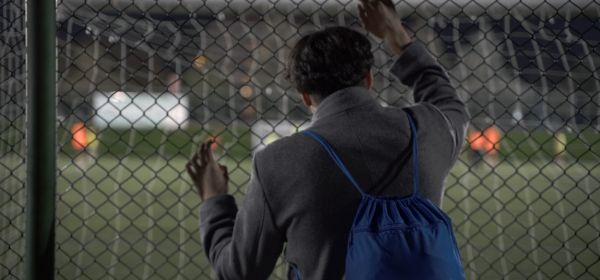
A family of three from Iran has now spent thirteen years in exile in Turkey. Kian, Hamid and Hananeh left their homeland to escape the Iranian Revolutionary Guards. However, the promised asylum in the US remains a distant prospect, and even their last glimmer of hope is fading in the wake of the US elections. Director Farzad Khoshdast’s melancholic observational documentary captures their daily routine – from cleaning and working in a factory to visiting nightclubs and watching news reports of unrest in their homeland. The film thus offers an intimate insight into the lives of people trapped in a peculiar limbo, far enough from the state’s reach to be safe, yet too close to overcome their homesickness and build a new life. “You’re right. We can’t go to the USA or anywhere else. What’s your plan?”