war
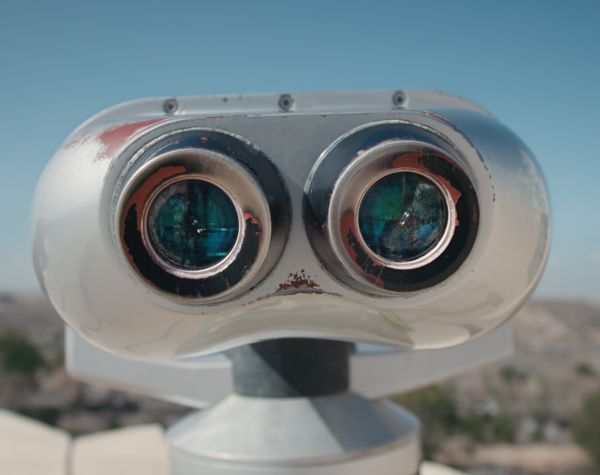
2:30 Minutes for 5 Shekels
At the Sderot lookout, a coin-operated telescope that opens for five shekels for two and a half minutes allows the visitors to glimpse the ruins of Gaza.“Compassion, even when it feels almost impossible, may be the only place from which healing can begin.” This film was created independently through the voluntary collaboration of all creators. This is a fully independent film. No member of the creative or production team, and no member of the crew, received any payment for their work on the film.
director: Efim Graboy
original title: 2:30 Minutes for 5 Shekels
country: Serbia, Israel
year: 2026
running time: 25 min.
Baltic UXO
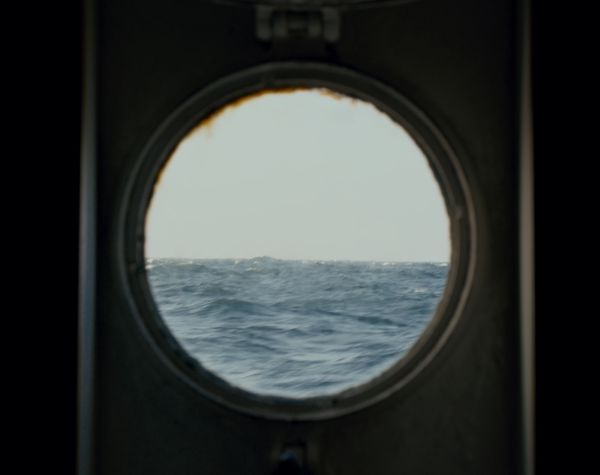
After the Second World War, approximately 1.6 million tonnes of unexploded military ordnance were dumped into the Baltic and North Seas. Decades later, this wartime legacy has become part of the marine ecosystem and poses a threat to fish, the coastal economy and new construction projects. The film follows scientists, fishermen and coastal residents who face the consequences of this issue on a daily basis and are trying to find a solution to a problem whose true extent remains hidden beneath the surface. It gradually shifts its focus from tiny organisms to vast stretches of affected sea and the human activities that are inextricably linked to them. Nonetheless, it does not make a strident ecological appeal using catastrophic imagery, but rather through slow, meditative observations of the landscape both above and below the surface. The sea becomes a silent witness to human actions and a space into which history has physically inscribed itself. The film thus serves as a reminder that the consequences of wartime decisions do not end with war, but can transform nature and the lives of the people who inhabit it for generations to come.“You are swimming in unfamiliar waters or maybe just a dark pond, and you have this uncomfortable feeling as if someone is about to grab your leg.” — Agnė Dovydaitytė, Alexander BelinskiSource: EAVE.
director: Agnė Dovydaitytė, Alexander Belinski
original title: Baltic UXO
country: Lithuania, Germany, Latvia
year: 2026
running time: 76 min.
Donbas within Reach
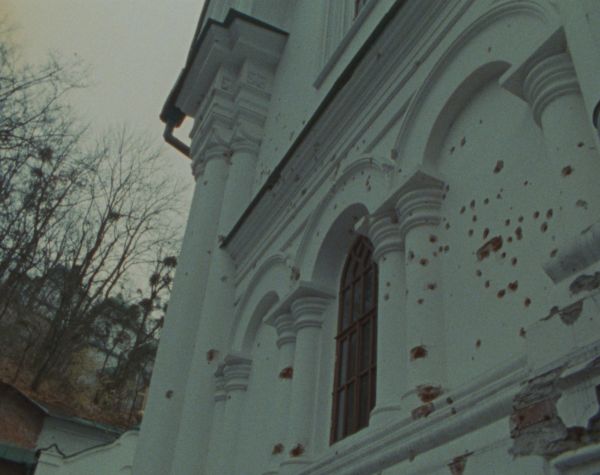
“Things keep exploding here,” residents of Lyman, a Ukrainian town roughly ten kilometres from the front line, confide to the camera. Dariia Kovalchuk travelled there from Prague with a friend. She remembers Donbas as a place where she spent carefree holidays and fell asleep beneath the stars. Now, however, she finds empty streets and houses scarred by Russian shelling. Her personal travel diary captures her sifting through memories and fleeting encounters with people and cats. Returning to a childhood landscape transformed beyond recognition by war becomes a search for what endures of a former home, and what can be preserved, at least in cinematic images. “When you hear the word Donbas today, the first things that come to mind are ruined towns and houses. But I remember it as the place where I spent my happy, carefree childhood.”
director: Dariia Kovalchuk
original title: Donbas na dosah
country: Czech Republic, Ukraine
year: 2026
running time: 21 min.

Going Home
Palestinian director Kamal Aljafari returns to his parents’ home after a three-year absence and watches news reports on television from the heavily-shelled Gaza. He transforms news footage of destroyed houses, burnt-out cars and people searching for drinking water into a home video stripped of its original informative nature. He zooms in on gestures, faces and details in the background, and edits the sound so that not all Palestinian voices reach us. The constant emphasis on the mediated nature of one of the greatest humanitarian crises of recent decades highlights the fact that extensive media coverage of violence cannot prevent it from continuing.“The picture says what the story cannot.”
director: Kamal Aljafari
original title: Going Home
country: Germany, Palestine, France
year: 2026
running time: 21 min.
Hands, trees, heads, scars
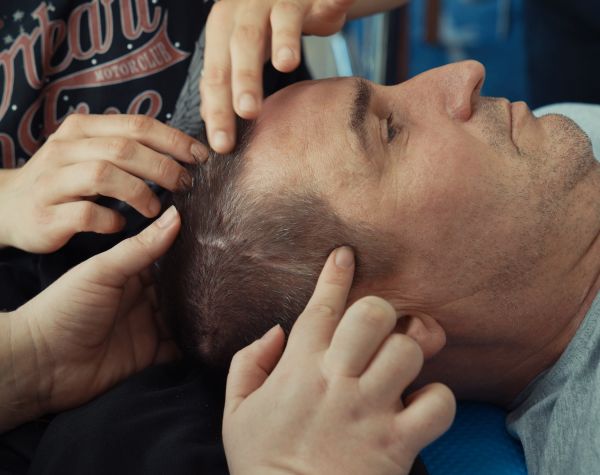
More than 100,000 Ukrainians have already lost a limb as a result of the unjust war unleashed by Russia. Their scarred bodies are tended to by nurses behind the front lines. This is a film about touch – comforting and essential – that seeks to rekindle life from the flesh of the body where the soul is suffering.“This only happens with time — in their case, two and a half years of production — but above all with the trust, the bond and the respect that forms with the people, the stories and the realities you set out to tell.” — Giacomo Locci, FerraraToday.
director: Alberto Gottardo, Francesca Sironi
original title: Hands, trees, heads, scars
country: Italy
year: 2026
running time: 14 min.
I See No Death
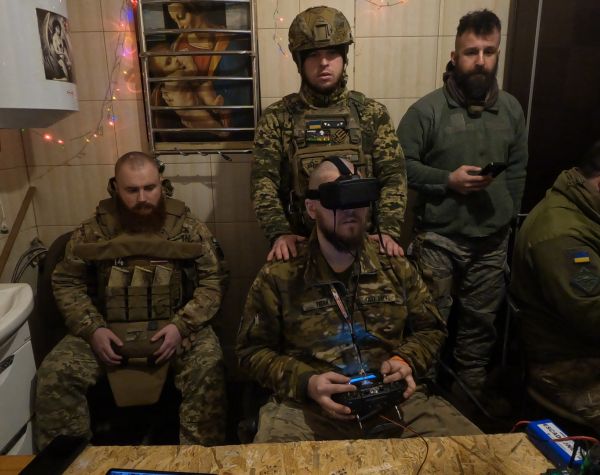
How is war changing as technology advances and part of the fighting is shifting to the screens of drone operators? The film follows a newly formed Ukrainian unmanned systems unit from its first deployment in the Donetsk region and on to operations on Russian territory. The daily lives of these modern-day warriors unfold in cold cellars and trenches, where destruction becomes a technical task and death is reduced to a few pixels on a monitor. They hardly ever see blood, yet the human casualties remain just as real. Their shifts are filled with computer games, black humour or looking after animals, yet the calm can be shattered at any moment by explosions and artillery fire. The film alternates between intimate portraits of individual men and observational depictions of their daily lives, combining the dynamics of a war film with an aesthetic reminiscent of a video game. Through a variety of cinematic techniques, it thus offers a comprehensive view of the technological transformation of modern warfare, in which physical distance from the enemy paradoxically coincides with the immediacy of the moment when, just before an attack, a man on screen looks directly into the lens of a drone.“I saw blood, torn bodies, death – with my own eyes. But the war has changed. It has become more modern, more distant, something new.”
director: Yevhen Titarenko
original title: Я не бачу смерті
country: Ukraine, Latvia
year: 2026
running time: 76 min.
Mohabat
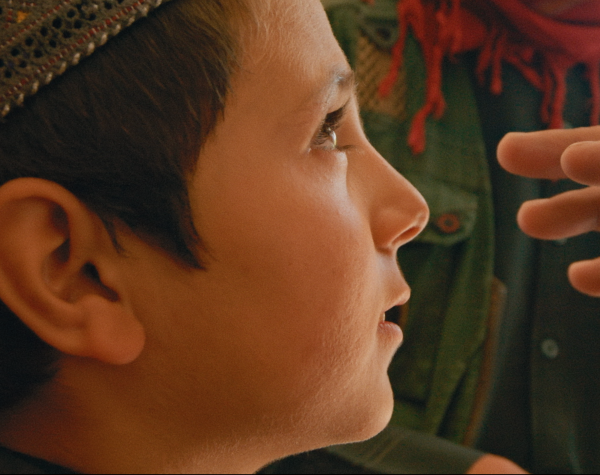
Following his father’s death in a drone strike, twelve-year-old Mohabat is left without parental care, along with his two older brothers. His father is regarded by those around him as a martyr, and their deep faith in God and adherence to the Qur’an help the boys to accept this painful loss as part of God’s will. Mohabat is taken to a city orphanage, where it becomes clear that his experience is not unique – many of the children there have lost their parents and other loved ones as a result of the war. Nevertheless, friendships form among the boys and, together, they create at least a temporary sense of security. Following a mental breakdown, Mohabat returns to his native mountain village, where he attends school, helps with the harvest and visits his brother Aja. When his older brother and closest protector, Mawladdin, leaves for Europe via Iran, the increasingly lonely Mohabat must gradually learn to rely on himself. His gentle voiceover accompanies a sensitive portrait of premature adulthood, in which personal suffering intertwines with the wider social consequences of a long-standing conflict. Meanwhile, the sweeping images of the monumental Afghan mountains and colourful urban landscapes create a striking contrast to the ever-present traces of war.“I want to go to Heaven. Because Heaven must be a nice place.”
director: James Longley
original title: Mohabat
country: United States, Afghanistan
year: 2026
running time: 89 min.
The Divided City of Mitrovica
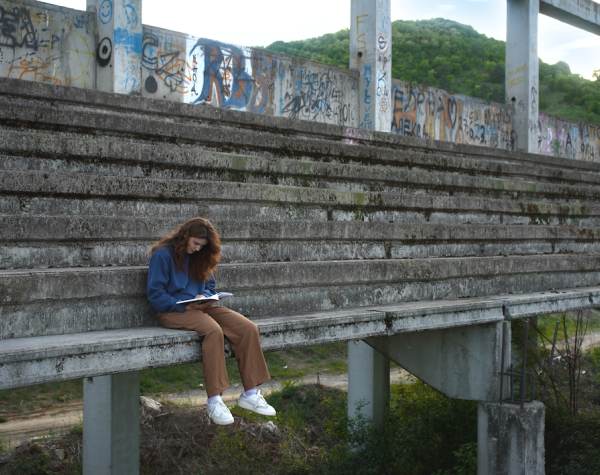
Twenty-five years have passed since the war in Kosovo, yet Mitrovica’s Albanian majority and Serbian minority still do not speak to one another. The ruins of houses left unrepaired since the war, decadent poems about dying mothers and isolated young figures rooted in a landscape frozen by conflict speak of the past and of silence. Yet a blossoming cherry tree insistently grows through this hushed emptiness, its growth a subversive defiance of history’s course and human will, its scent intoxicating in the lyrical sunset. But history does not end in kitsch: the image breaks apart into a jumble of pixels until it loses all meaning. The void will only be filled by the future, which brings new meanings.“The main obstacle while filming was the lack of trust between the communities, which he [Marko Grba Singh] eventually used to his advantage because, he explained, ‘the film is about the lack of communication’.”— Xhorxhina Bami, Balkan Insight
director: Marko Grba Singh
original title: Podeljeni grad Kosovska Mitrovica/Qyteti i Ndarë i Mitrovicës
country: Serbia, Kosovo
year: 2025
running time: 17 min.
Upon the return
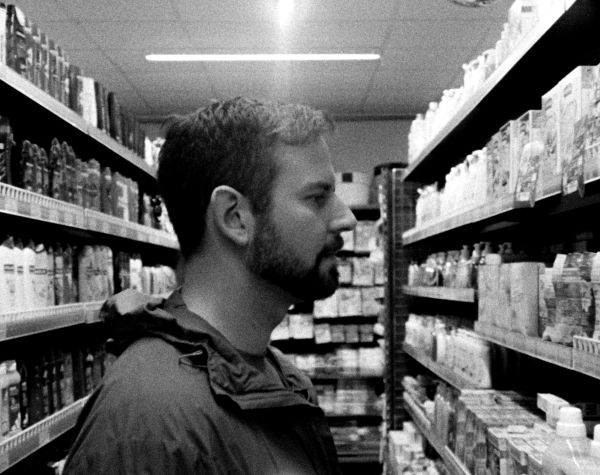
This personal documentary report explores the gulf between the front line and the tranquillity of home through the story of a Czech medic. In Ukraine, he experienced an intense sense of purpose. After returning home, he sinks into a profound emptiness, unable to find any meaning in everyday life.
director: Anna Zubatá
original title: Po návratu
country: Czech Republic
year: 2026
running time: 8 min.
Voices from Neptune
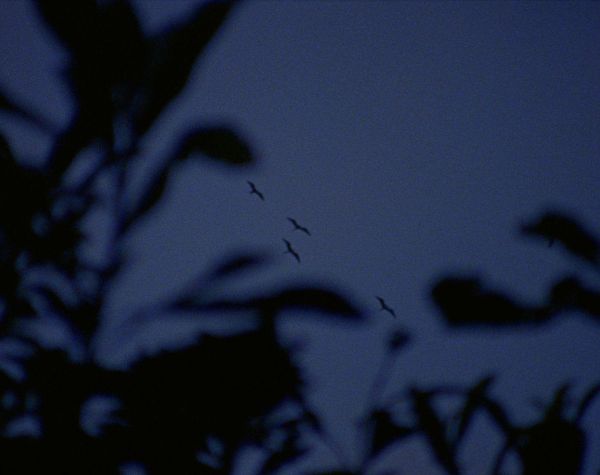
This experimental documentary conveys the traumatic experience of “enforced disappearances” in war-torn Colombia. We hear testimonies from the mothers of some of the dozens of missing young men. Their voices are accompanied by images of the empty places where the missing were last seen, alongside footage of fire and other elemental forces, abstract sequences of coloured blotches, or simply a black screen. Together, these elements create a devastating impression of absence, of inhospitable, abandoned spaces haunted by spectral memories of people whose fate remains a painful mystery. “Well, let me tell you something. God is the only one who can change this. How many times have they signed peace treaties? And yet, the massacres continue.”
director: Leinad Pájaro De la Hoz
original title: Voces de Neptuno
country: Colombia, Germany
year: 2026
running time: 86 min.
Wild Asparagus
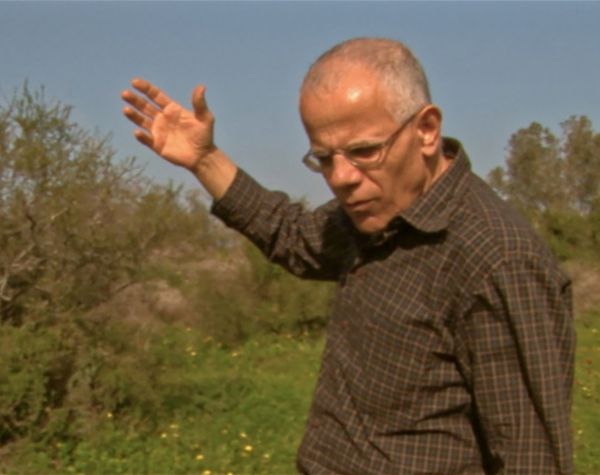
It is painful enough simply to have to leave one’s place of origin, as was the case of Ali Al Azhari in 1948 during the displacement of Palestinian villages following the establishment of the State of Israel. It can be even more harrowing when there is nowhere to return to, as settlement in question no longer exists. In this exploratory documentary, Ali, accompanied by the director and the cameraman, sets out after decades on a journey back to the site of the former village of Saffuriya, where, although no people live there any longer, life otherwise thrives in abundance. Ali can name the biological species of every plant, every tree and every bush. He touches them all and tastes them. They are his old acquaintances. “If some people see themselves as a fly on the wall, I see myself as a fly in the soup!” — Avi MograbiSource: Cineaste
director: Avi Mograbi
original title: Halayon
country: Portugal, France
year: 2026
running time: 24 min.