Ji.hlava Online
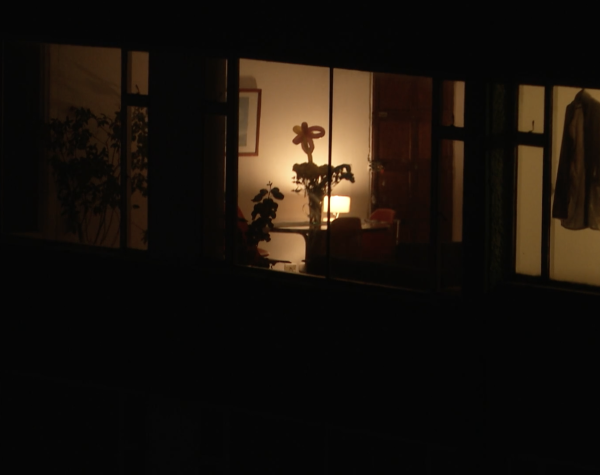
19th Floor
For three years, the director has been capturing the ever-changing face of Bogotá from the windows of her 19th-floor flat. The time-lapse footage alternates between day and night, depicting everything from minor street scenes to major events – fireworks, a fire, demonstrations and riots. Their political context is occasionally complemented by the sound of television news reports. Gradually, however, the filmmaker’s private life also becomes interwoven with her observations of the city: we hear conversations with her partner and read their messages to one another, ranging from everyday questions about what’s for dinner to tense moments in their relationship. Following the death of her life and film partner, the footage – originally a record of everyday life – takes on new meaning. While the image remains turned outwards, towards the city beyond the windows, the sound opens up the intimate space of a family whose members we never see directly. The bird’s-eye view maintains a distance from the events taking place far below the windows; at the same time, however, personal experience permeates the captured images. From fragments of the city, sounds, news reports and private conversations emerges a cinematic reflection on memory, mourning and the significance that ordinary moments acquire the instant they become memories.“It is a first-person account of a family looking outward while the story unfolding within gradually pulls them apart.” — Patricia Ayala RuizSource of the quote: Interview with the director. ALZATE VARGAS, César. Entrevista a Patricia Ayala Ruiz: Un diálogo que no termina. Canaguaro: Revista de cine colombiano.
director: Patricia Ayala Ruiz
original title: Piso 19
country: Colombia
year: 2026
running time: 71 min.
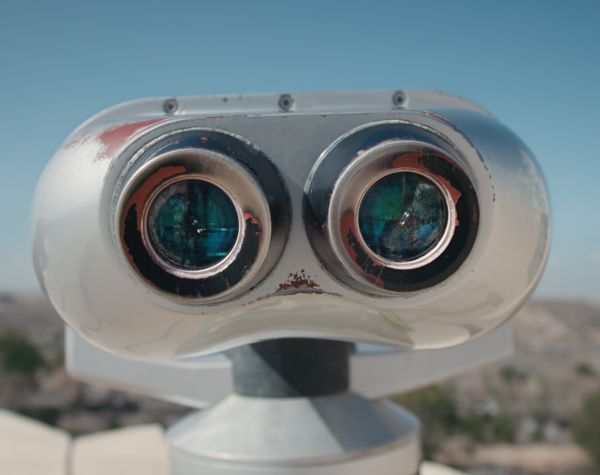
2:30 Minutes for 5 Shekels
At the Sderot lookout, a coin-operated telescope that opens for five shekels for two and a half minutes allows the visitors to glimpse the ruins of Gaza.“Compassion, even when it feels almost impossible, may be the only place from which healing can begin.” This film was created independently through the voluntary collaboration of all creators. This is a fully independent film. No member of the creative or production team, and no member of the crew, received any payment for their work on the film.
director: Efim Graboy
original title: 2:30 Minutes for 5 Shekels
country: Serbia, Israel
year: 2026
running time: 25 min.
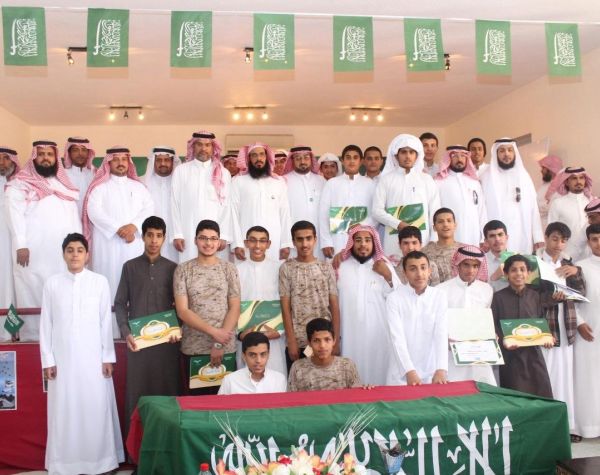
A Friend, No Longer Here.
Ahmed moved back to Egypt from Saudi Arabia in 2017. That was the last time he saw his classmate and best friend. This evocative account of loss uses videos and an inner monologue to look back in time and, through six symbolic gifts, explores why some friendships fall apart and where the line between care and dependence lies.“I don't claim to have told the complete truth… but I hope that everything I’ve said here is true.”
director: Ahmed Elshabrawy
original title: صديق لم يعد هنا
country: Egypt
year: 2026
running time: 12 min.
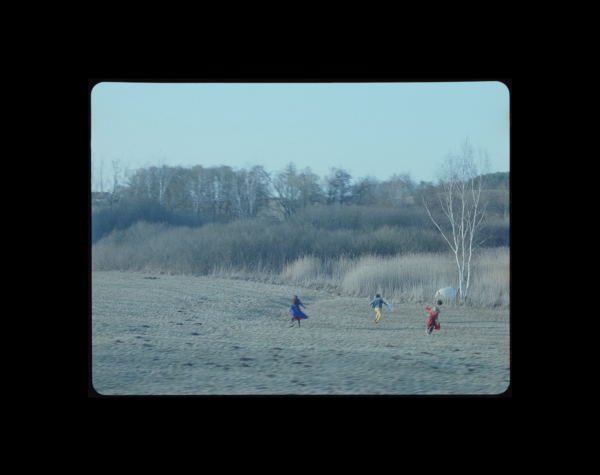
A Way Away
This lyrical introspective work, which straddles the line between fiction and documentary, tells the story of a train travelling through time and across the landscape, from the present to the past, from the reality of a hospital ward to a merciful timelessness bathed in the raw colours of autumn. It is also the story of a woman who, in a silence underscored by a sense of impending tragedy, is fleeing somewhere from something, inwards and outwards, back and forth. “Although my films deal with serious subjects, I also want them to have light.” — Ema Hůlková, mujRozhlas
director: Ema Hůlková
original title: Vlak do oblak
country: Czech Republic
year: 2026
running time: 8 min.
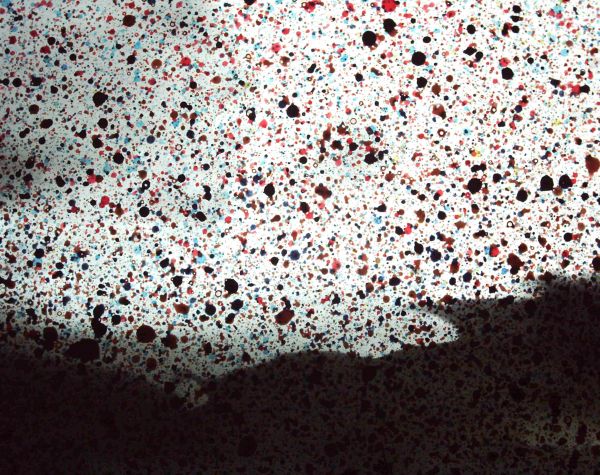
Ad Infinitum
Vegetation and minerals send the gaze branching into structures where the forest meets its digital and cinematic reflections. A plunge into detail explores both nature and the possibilities of its representation: each closer view opens up another space. An ardent declaration of love for matter that transcends its depictions and returns knowledge to wonder. “‘If something interesting is happening, I possibly decide to shoot in the opposite direction’ [say Seppo Renvall], and often he finds something more subtle, more telling than the spectacle ahead. His sympathy goes to the little things in life, or maybe I should say: empathy.” — Klaus W. Eisenlohr Source: Directors Lounge: Seppo Renvall — Times, Songs and Material.
director: Seppo Renvall
original title: Ad Infinitum
country: Finland
year: 2026
running time: 11 min.
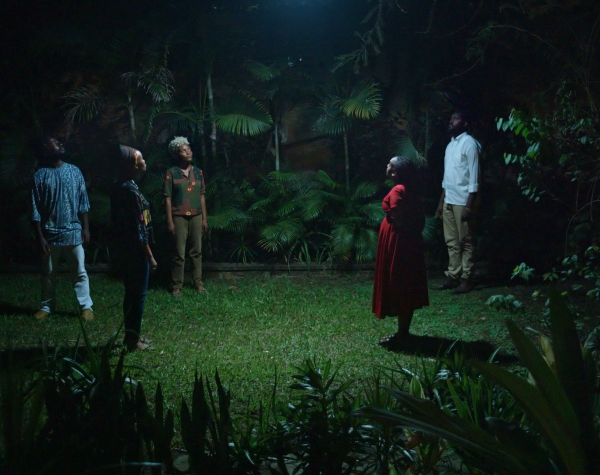
After the Rehearsal
Five actors search for a playwright in an ironic, essayistic exploration of the influence of the wealthy West on the African continent. The film introduces us to a situation in which the five actors gather in the garden of a colonial villa to rehearse a play set in an alternative reality, in which all international organisations and non-profit initiatives have abandoned East Africa. However, the play’s director has not turned up. The actors’ wanderings, interspersed with shots of deserted exteriors, are accompanied by a narrative voice-over which introduces us to a series of absurd twists and turns concerning the theatre project, but above all the current situation in Africa itself. “A young man named Mahoro, which means ‘peace’. He is only a fiction, an invention of the director, and should not possess will nor power of his own. But this man of peace has driven the director to the brink of madness.“
director: Philipp Fröhlich
original title: After the Rehearsal
country: Burundi, Germany
year: 2026
running time: 67 min.
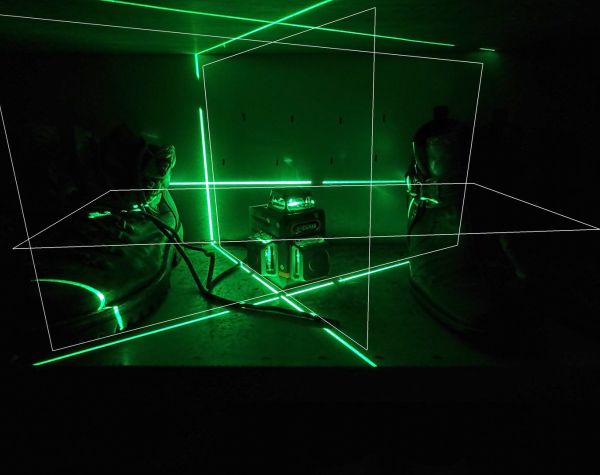
Albert Wondered What Light Is
The sharp beams of a cross-line laser divide intimate domestic corners into mutually perpendicular planes. The light is real, yet seems virtual: its flickering, amplified by the camera’s unsteady movement and collisions with the textures of everyday life, stands in contrast to the unyielding geometry underscored by the precise graphics measuring out space. “While I was in a dark room, watching green space illuminated by green beams from a laser level, I couldn't help but wonder about the nature of light — something so familiar, yet so mysterious.” — Yoshiki Nishimura
director: Yoshiki Nishimura
original title: Albert Wondered What Light Is
country: Japan
year: 2026
running time: 8 min.
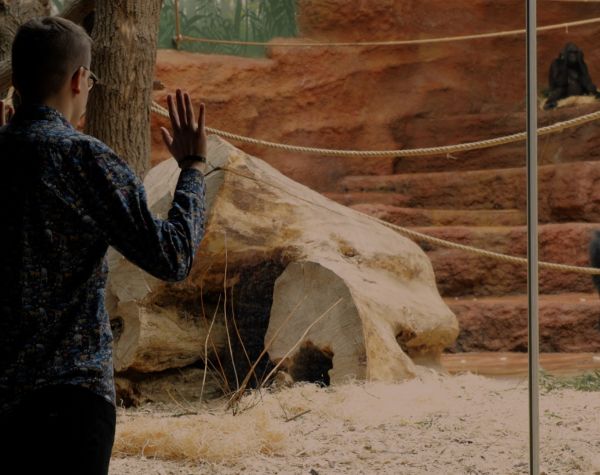
Amma, Do Giraffes Cry?
Indian director Kartikeya Saxena walks through Prague Zoo with his camera, sharing his impressions over the phone with his mother – a zoologist. The transcontinental conversation touches on the human tendency to project one’s own feelings and memories onto animals. However, the son’s poetic enchantment and his conviction that he has seen tears in the eyes of a baby giraffe clash with his mother’s scientific rationalism. This perceptive interspecies essay transforms the pavilions housing hippos, anacondas and gorillas into a theatrical stage upon which a quiet drama unfolds about overcoming barriers – between son and mother, and between the human and more-than-human.“Giraffes don't have tear ducts. I don't know what you saw.”
director: Kartikeya Saxena
original title: Amma, pláčou žirafy?
country: Czech Republic
year: 2026
running time: 26 min.
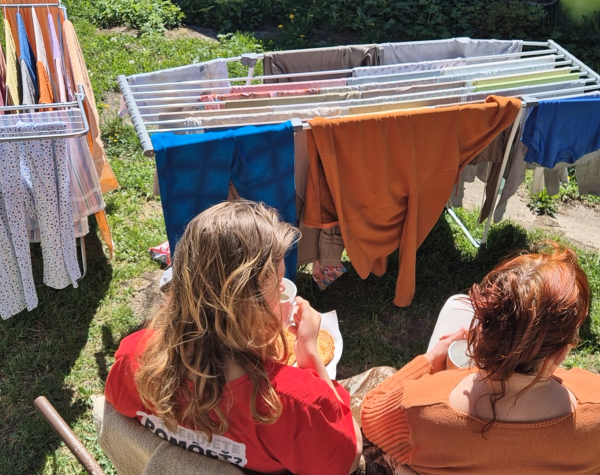
And We'll Be Home Here Again
The filmmaker returns to a place that was once her home and is set to become her home again. In the process, she clears away the remnants of her childhood while she and her mother try to reclaim the house as their own.
director: Ester Halagová
original title: A budeme tu zase doma
country: Czech Republic, Slovakia
year: 2026
running time: 8 min.
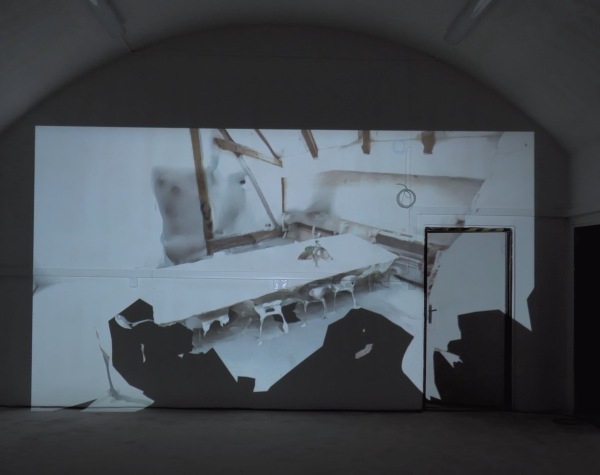
APARTMENT NUMBER
Four students who lived for financial reasons in the UMPRUM building try to pack up and take away as much sentiment as possible, painting over and rebuilding memories of their temporary home. Using photogrammetric recordings, the animation assembles and dismantles the face of the historic building, which the students are leaving behind for a new, modern one with a smooth, austere glass visage. “Apartment Number is not only a documentary but also an ode to a building that some of us were able to call home for a time.”
director: Adéla Prokopová, Ella Dolinská, Jan Merc, Jaroslav Lekeš, Julie Alžbeta Pravcová, Kristián Toman, Kristián Vejrážka, Kristýna Šťastová, Vojtěch Haken
original title: BYT ČÍSLO
country: Czech Republic
year: 2025
running time: 13 min.
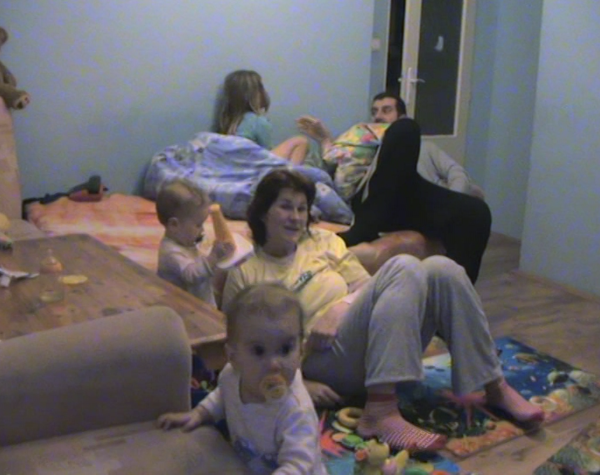
Aquarium
The living room as a stage, the family as a world enclosed behind glass. Maja Penčič assembles her father’s home videos into a portrait of childhood unfolding in the rhythm of holidays, games, meals and television broadcasts. Long, static shots bring out everyday details and the significance of moments spent waiting. Toddlers demand their father’s attention, a child reaches for the camera, presents lie ready beneath the Christmas tree. A voice from the television intrudes on these familiar scenes, reporting on weapons and politics. The family archive becomes a vehicle for reflection on the limits of a private world that the camera both preserves and exposes to the gaze of others. “Daddy, daddy, daddy.”
director: Davor Penčič, Maja Penčič
original title: Akvárium
country: Czech Republic
year: 2026
running time: 29 min.
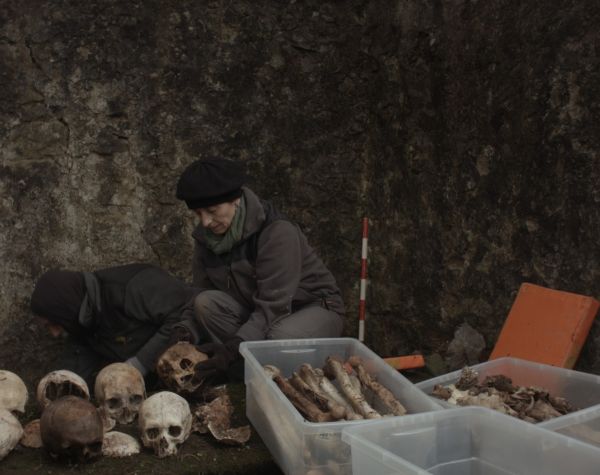
Atlas of Disappearance
Over four decades, Franco’s regime in Spain left tens of thousands dead or disappeared. A sinister topography of terror lies in hundreds of mass graves, where the bodies of the disappeared ended up, stripped of their identities and individual fates. A colossal reminder of this troubled era is an ominous monument built from the remains of thousands of anonymous people, yet bearing only two names: Francisco Franco and José Antonio Primo de Rivera. Accompanied by archaeologists, the filmmakers visit the controversial Valley of the Fallen (Valle de los Caídos) memorial and use new forensic methods to try to recover at least a fraction of the stories and identities hidden in forests, fields and caves.“Enforced disappearance unfolds in three stages. First, the abduction. Then, the murder. But what truly defines the crime is the violence against evidence: all traces are erased, the bodies concealed, and witnesses silenced.”
director: Manuel Correa
original title: Atlas de la Desaparición
country: Spain, Norway
year: 2026
running time: 84 min.
Baltic UXO
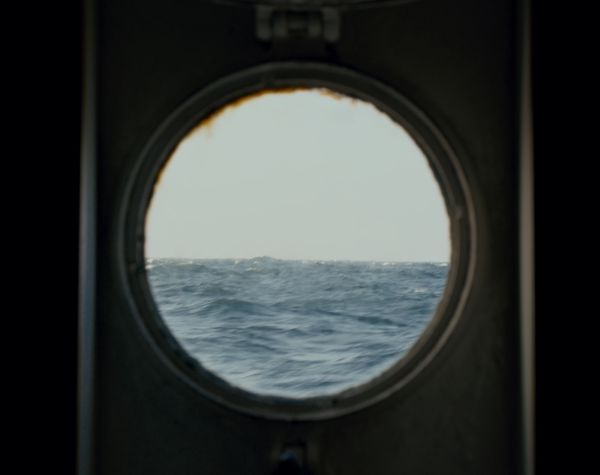
After the Second World War, approximately 1.6 million tonnes of unexploded military ordnance were dumped into the Baltic and North Seas. Decades later, this wartime legacy has become part of the marine ecosystem and poses a threat to fish, the coastal economy and new construction projects. The film follows scientists, fishermen and coastal residents who face the consequences of this issue on a daily basis and are trying to find a solution to a problem whose true extent remains hidden beneath the surface. It gradually shifts its focus from tiny organisms to vast stretches of affected sea and the human activities that are inextricably linked to them. Nonetheless, it does not make a strident ecological appeal using catastrophic imagery, but rather through slow, meditative observations of the landscape both above and below the surface. The sea becomes a silent witness to human actions and a space into which history has physically inscribed itself. The film thus serves as a reminder that the consequences of wartime decisions do not end with war, but can transform nature and the lives of the people who inhabit it for generations to come.“You are swimming in unfamiliar waters or maybe just a dark pond, and you have this uncomfortable feeling as if someone is about to grab your leg.” — Agnė Dovydaitytė, Alexander BelinskiSource: EAVE.
director: Agnė Dovydaitytė, Alexander Belinski
original title: Baltic UXO
country: Lithuania, Germany, Latvia
year: 2026
running time: 76 min.
Becoming Bird
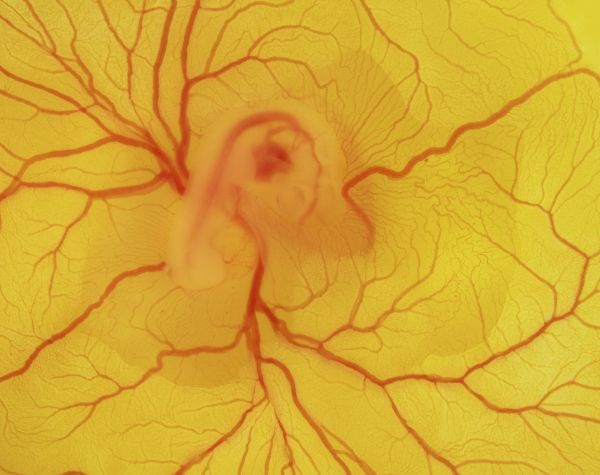
This time-lapse documentary condenses the entire 21-day development of a chicken – from fertilised egg to the hatching of the chick – into a nine-minute film. In microscopic detail and in full colour, we observe the early stages of life within the fragile shell, which so often cracks prematurely at the hands of humans seeking to satisfy their base appetites. “What is particularly interesting I think, is that the basics of embryonic development are the same for all animals, including us. I think the way we develop is a true miracle.” — Jan van IJken Source: Colossal
director: Jan van IJken
original title: Becoming Bird
country: Netherlands
year: 2026
running time: 9 min.
BFFS, grown up
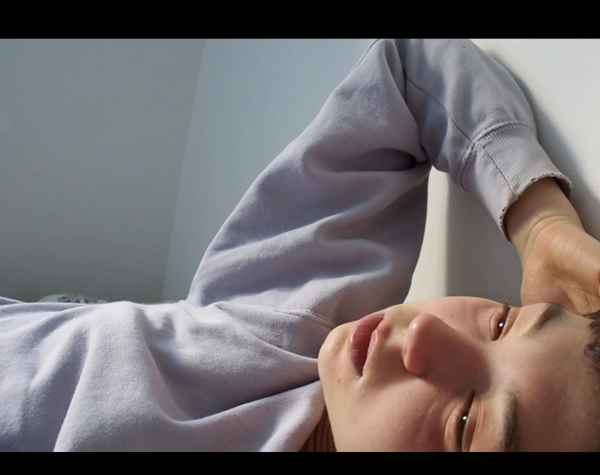
An epistolary movie about friendship.
director: Izabela Mahon, Julie Satranská
original title: DOSPĚLÝ HOLKY
country: Czech Republic
year: 2026
running time: 10 min.
Birdie
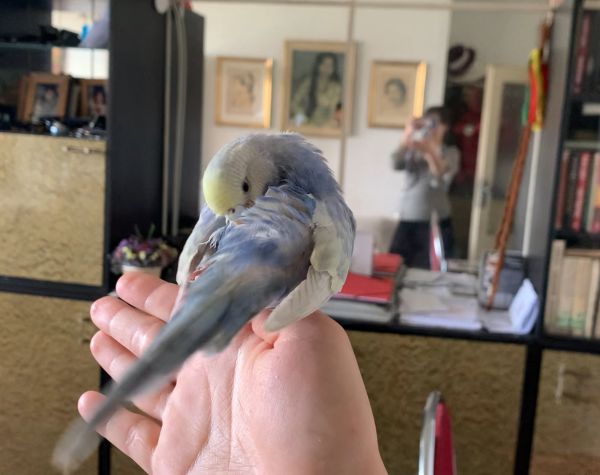
Through an intimate, unfiltered video diary, Mariana Macháňová captures her family’s grief as her mother approaches death. For the filmmaker, the camera becomes both a therapeutic tool and a means of creating distance. She records meanderings down sterile hospital corridors, taking what is likely their last selfie together in her mother’s hospital bed, and the scattering of her ashes. Coming to terms with loss also prompts reflections on the ethics of this kind of filming. The filmmaker asks whether it is acceptable to bring a camera into moments of extreme vulnerability, when the act of filming helps one turn fleeting fragments into something lasting and thus process grief. “So I thought I’d heal myself by making a film.”
director: Mariana Macháňová
original title: Andulka
country: Czech Republic
year: 2026
running time: 20 min.
Books Are Our Weapons
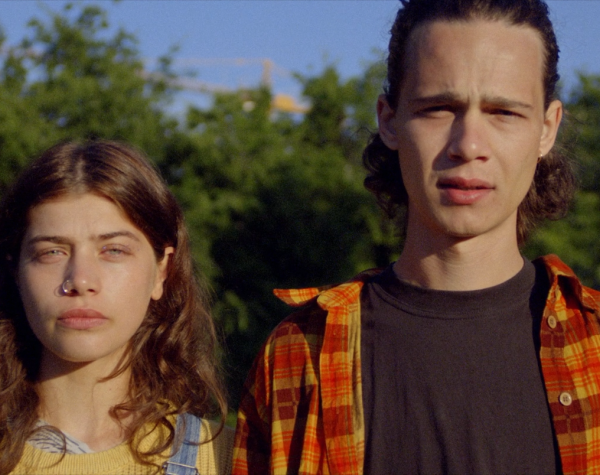
This Hungarian staged documentary captures the day-to-day life of a community of young, progressive-minded intellectuals. We come to understand the values the group upholds and reflects upon together, but also a certain self-absorption and lack of empathy that emerge here despite their theoretical ideals. We are guided by the characters of Noémie and Petri, who, albeit fictional, have been brought to life through improvisation. The scenes of their gatherings are shot in long takes, in which the camera moves in circles around the characters, thereby emphasising their sense of community and egalitarianism.
director: Máté Konkol
original title: A könyv a mi fegyverünk
country: Hungary
year: 2026
running time: 73 min.
Calandra
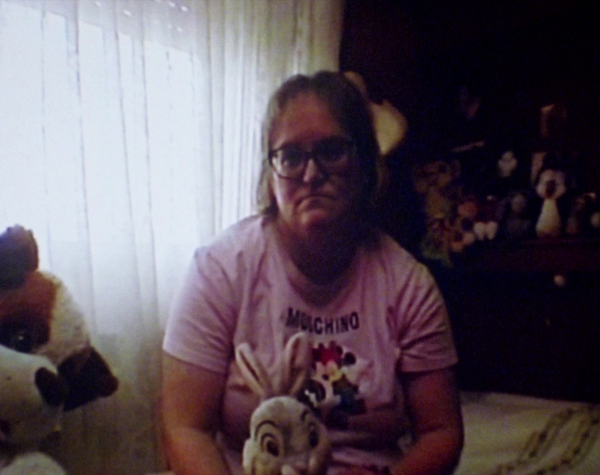
Nieves wants nothing more than to have a rabbit. But it wasn’t always like that. After having her fallopian tubes tied, she woke up longing for a long-eared friend. Nieves is, in fact, mentally disabled. Since her mother’s death, she has been living with her sister in a workers’ cottage on the outskirts of Madrid, working at a laundry mangle (calandra), where rabbits scamper past her windows. calandra (Spanish) – an industrial ironing machine used in professional laundries (hotels, hospitals, laundry facilities) for ironing and drying flat linen. Source of the quote.
director: Chloe Cazorla, Jaime Aurata, Laura Raniela, Lucas Lagrange
original title: Calandra
country: Spain
year: 2026
running time: 23 min.
Cold Call
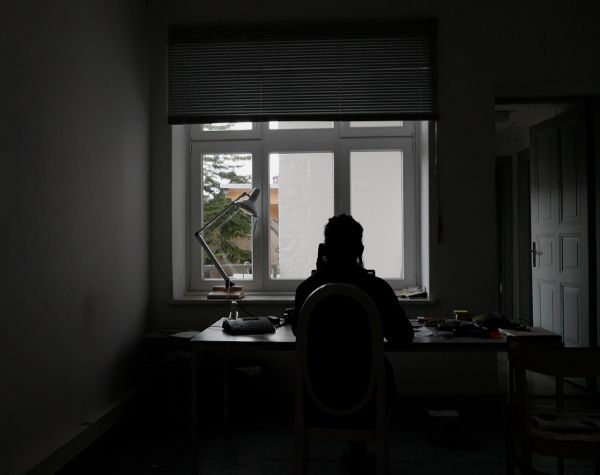
A standard telephone scam turns into a therapy session the moment the artist, suffering from writer’s block, refuses to play the role of a passive victim. Instead of hanging up or mocking him, she offers the fake IT technician a glimpse into her own emotional emptiness and sense of burnout. Deliberate manipulation on both ends of the line gradually escalates into an intimate confession between two lonely strangers who are both victims of the same exploitative system. This short film essay on global inequality and the dark side of online vigilantism skilfully balances absurdity, sarcasm and tragedy.“Today, it is known that many so-called scam call centers are not just questionable workplaces. They are part of larger structures involving exploitation, forced labor, and human trafficking.”
director: Stefanie Schroeder
original title: Cold Call
country: Germany
year: 2025
running time: 16 min.
Dance of the Souls
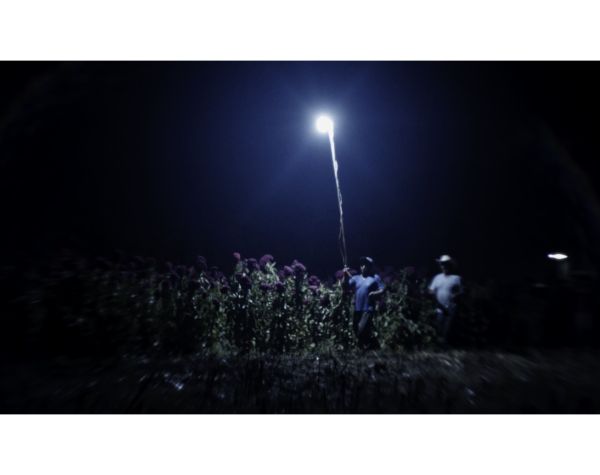
Día de los Muertos is the focal point of this personal documentary, which takes us into a community in Mexico’s Oaxaca highlands. A voice-over, conceived as the voice of one of the souls returning among the living on the “Day of the Dead”, accompanies a series of scenes evoking the nocturnal atmosphere of one of Mexico’s most important celebrations. Remembrance of the dead, a whirl of macabre masks, night-time revelry, but also a sense of release from everyday life and renewed energy for the life ahead, all come together in a succession of observed scenes and purely atmospheric glimpses."Over time, I came to understand what the Muertada means for the communities of Ella Valley, as we believe that the souls of our loved ones return to dance with us.”
director: Ramón Llaven
original title: El baile de las ánimas
country: Mexico, Canada
year: 2026
running time: 73 min.
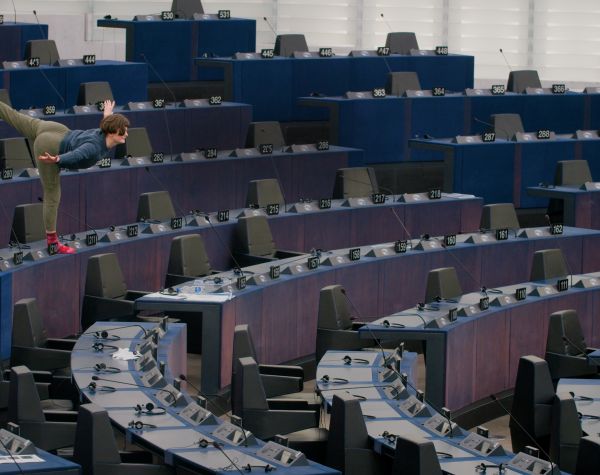
Dear People, Dear Citizens
For five years, Andrea Culková tracked a unique political experiment: around 800 Europeans of different generations – students, workers and senior citizens – selected at random were given the chance to decide on the future of the continent within the European Parliament. The confrontation between determined citizens and cautious political elites lays bare the mechanisms of a system that may itself be the cause of many of today’s crises. The author interweaves her analytical observations with performative rituals, black humour and broader reflections on whether we will be able to bring about the necessary changes before the state of democracy and the environment reaches the point of no return. “Let‘s make a Copernican shift from United Nations to united people.”
director: Andrea Culková
original title: Drazí spoluobčané
country: Czech Republic
year: 2026
running time: 118 min.
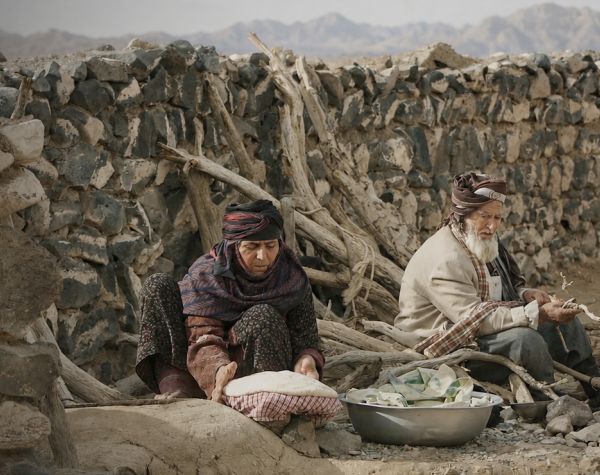
Dotuk
This apocalyptic cinéma vérité depicts the socio-economic situation in a remote Iranian village, which is lashed by violent sandstorms for 120 days a year. This is not a scene from the apocalypse, but the harsh reality for the inhabitants of Taj Mir in South Khorasan Province. Their sole source of income is hand-sewn “dotuk” dolls, a traditional ritual object that has become a commodity. “Villagers revive ancestral dolls as a means of survival, confronting the fragile line between cultural heritage and harsh contemporary realities.”
director: Hadi Sabet
original title: Dotuk
country: Iran
year: 2026
running time: 28 min.
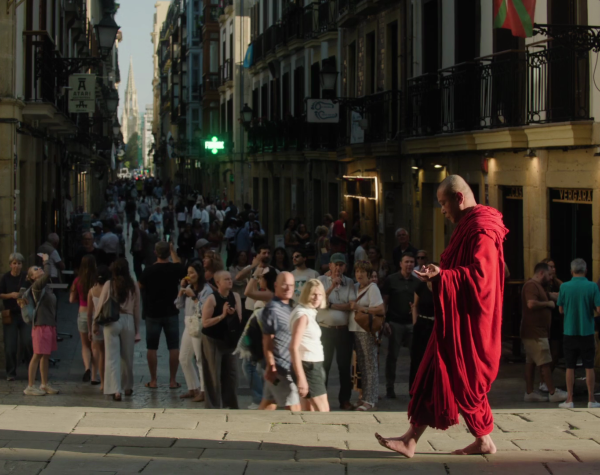
Dust
A Buddhist monk as an art installation or a walking sculpture. In the twelfth instalment of the walking films that he has been making since 2011, the Taiwanese director places his lifelong muse Lee Kang-sheng in San Sebastián, Spain, contrary to his eleventh film, which was shot in Jihlava. Step by step, movement by movement, inhalation after exhalation, the barefoot man with a shaven head and red robe cuts slowly through the tumult of a punk concert crowd or passes sgraffito façades. A mystical presence in the urban landscape, he connects the old and the new, the calm and the chaotic, the banal and the inward. Slowness is more than meditation: it is an act of rebellion, the art of coming to a halt in today’s world.“I had grown tired of making narrative films, and Lee’s slow walk gave me the idea of making something non-narrative, a form of pure visual expression. The way he walks is extraordinarily beautiful, and the idea of ‘slowness’ itself has great power.” — Tsai Ming- liang, Variety
director: Tsai Ming-liang
original title: Weichen
country: Spain, Taiwan
year: 2026
running time: 80 min.
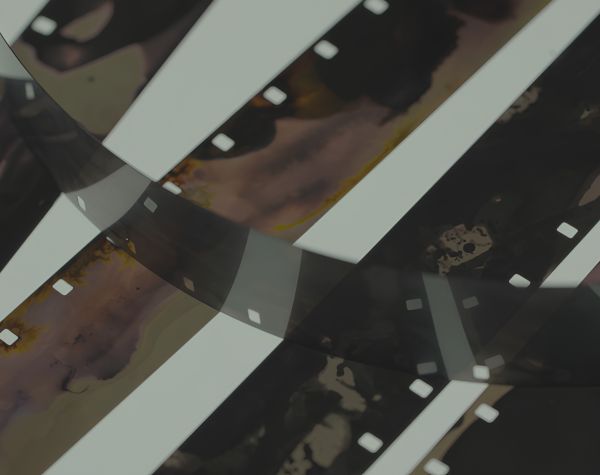
Erotic Blossoms in a Dream
This experimental documentary explores the themes of physicality and erotic imagination. It recalls Myeong Wol, the most famous courtesan in Korean history, who is still revered today as a prominent poet. The first part of the film is conceived as an evocative cinematic essay which, through visual montages and terse commentary, examines the status of courtesans in traditional society through linguistic metaphors involving peaches and parasites. The second part then aims to transport us into an erotic reverie. It consists of a montage of 79 explicit films on the theme of physicality, which have been converted to negatives and presented in the form of a silent film.“Porno Advertisements, Human body studies, Thesaurus of Korean Beauties. Methaphor, the compression and excision. Peach, the metaphor for female genital. A cause of the coition death. An ordeal of female genital. A myth and conservation of female genital. A rumor about Myeong Wol. A ghost ritual for female genital. A conversion of matter.”
director: Jihyeon OH
original title: 음화
country: Republic of Korea (South Korea)
year: 2026
running time: 96 min.
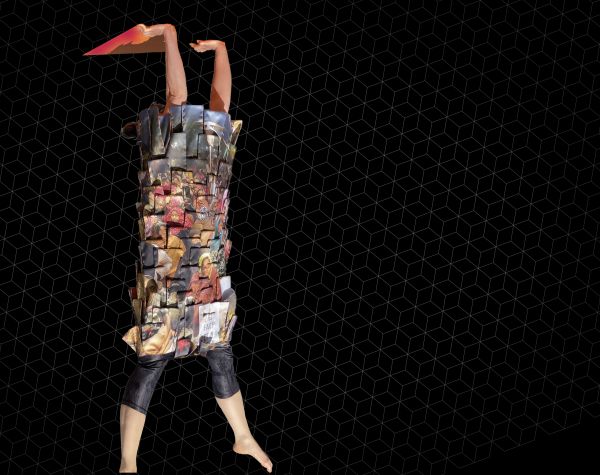
Fashion of Resistance - Shaheen Bagh
The dress is adorned with the imprints of protest: the performer’s movements alternately conceal and reveal the faces of Muslim women who occupied the streets of Delhi’s Shaheen Bagh neighbourhood in opposition to the amendment to the Citizenship Act. A single body thus bears a collective defiance. As geographer Srilata Sircar’s voice dissects government accounts of the events, the garment restores the weight of bodily presence to the disparaged gathering of women. “How can protestors balance their need for visibility and anonymity?” — Manu Luksch Source: Manu Luksch.
director: Manu Luksch
original title: Fashion of Resistance - Shaheen Bagh
country: United Kingdom
year: 2026
running time: 13 min.
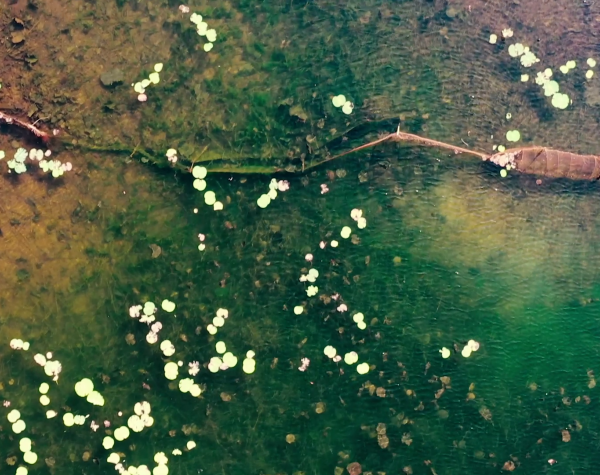
Frost Free Multi-Airflow BioFresh Twin Cooling
A critical environmental essay and a spellbinding meditation on the landscape uncovers the secrets behind the recycling of toxic electronic waste in the European Union. The non-profit organisation Arnika has found that “responsible” Europe has solved the problem by shifting it to developing countries. The consequences of European policy are piling up on the shores of Thailand. Waste, the disposal of which poses a health risk, ends up there. “If I were only making art, I’d be terribly ashamed, because it simply isn’t enough.” — Vladimír Turner, Artzóna
director: Vladimír Turner
original title: Frost Free Multi-Airflow BioFresh Twin Cooling
country: Czech Republic
year: 2026
running time: 3 min.
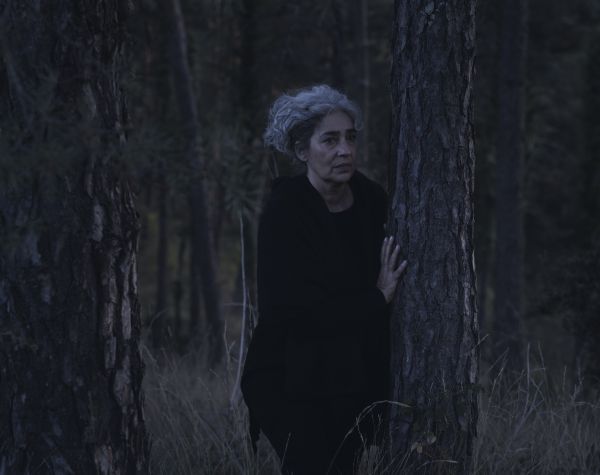
Gaulana
Light signifies knowledge and progress; darkness denotes ignorance and danger. But what if we were to turn this seemingly self-evident contrast on its head? Light and darkness in the film are not merely metaphorical principles, but direct physical phenomena whose relationship evolves alongside society. As capitalism advances, light pollution increases, the number of places from which one can observe the stars dwindles, and artificial light interferes with natural cycles – what will become of a landscape from which fireflies are gradually disappearing? Darkness, on the other hand, provides a refuge for those who need to hide. In this visually captivating, contemplative essay, the stories of prisoners who escaped from the Ezkaba fortress in 1938, Portuguese migrants from the mid-20th century, and people who cross the River Bidasoa today all come together. The film neither explains these individual layers nor weaves them into a linear narrative. Through images of the night-time landscape, songs, texts, memories and archive photographs, it creates a mosaic of a place where light signifies both progress and control, while darkness represents uncertainty and the possibility of disappearing safely. “Those flying free are only birds and banknotes.”
director: Pablo Casanueva
original title: Gaulana
country: Spain
year: 2026
running time: 61 min.
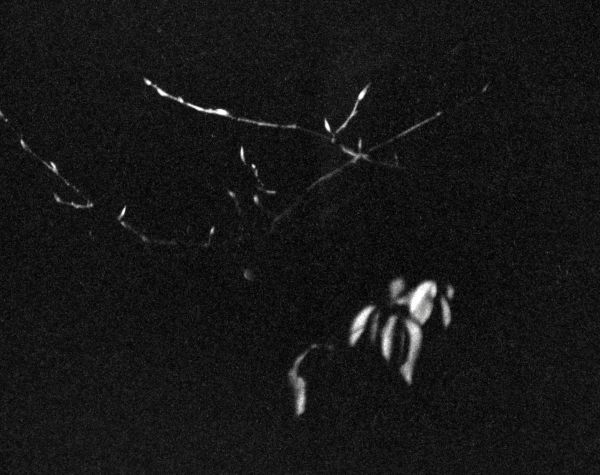
Girl, Show Your Pale Face
This delicately shimmering nocturnal impression treads the line between the abstract and the concrete. Through light and shadow, it explores new facets of branches, trunks and elusive folk traditions. Female choral singing from the past meets the technologies of the modern world and transforms into an ambient soundscape.
director: Kristína Zubáková
original title: Ukáž ďiovča svoju bľadú tvár
country: Czech Republic
year: 2026
running time: 5 min.
Glowing
If only one could have the perfect relationship, thousands of likes on Instagram, a successful career and, ideally, fairer skin. Young men and women from different social backgrounds, living in Seoul, New Delhi and Nairobi, are united by the same goal: they all want to “shine”. Martin Páv’s visually dazzling documentary deconstructs the phenomenon of physical attractiveness as a norm of global capitalism. The film offers a glimpse into the private lives of people caught in the web of social expectations and the pressure to be perfect. Behind their obsession with their own appearance, however, lies a deeper identity crisis and a search for an answer to the question of whether there is still any room for us to be ourselves in today’s interconnected world.“When they make cosmetic commercials in Vietnam, they say: You can be as light-skinned as the Koreans.”
director: Martin Páv
original title: Zářit
country: Czech Republic
year: 2026
running time: 90 min.
Going Home
Palestinian director Kamal Aljafari returns to his parents’ home after a three-year absence and watches news reports on television from the heavily-shelled Gaza. He transforms news footage of destroyed houses, burnt-out cars and people searching for drinking water into a home video stripped of its original informative nature. He zooms in on gestures, faces and details in the background, and edits the sound so that not all Palestinian voices reach us. The constant emphasis on the mediated nature of one of the greatest humanitarian crises of recent decades highlights the fact that extensive media coverage of violence cannot prevent it from continuing.“The picture says what the story cannot.”
director: Kamal Aljafari
original title: Going Home
country: Germany, Palestine, France
year: 2026
running time: 21 min.
Good Girls
At a Catholic reformatory for teenage girls in Łódź, daily life is governed by discipline, supervision and enforced obedience. A discreet camera observes the relationships between the girls and their interactions with adult staff. In intimate conversations, they recount events from their past: drug abuse, domestic violence and criminal activity. Their diverse life stories are linked by an awareness of how difficult it is to escape the influence of one’s family and the environment in which one grows up. Moreover, their attempts to break free from their own pasts take place in an environment permeated by fear and mistrust, where the girls inform on one another. Nevertheless, friendships and moments of mutual closeness develop between them, and humour occasionally shines through the oppressive daily routine. The film applies the familiar tropes of prison films to female protagonists and highlights the specific nature of their experience within a correctional facility. Their loneliness and powerlessness in the face of the institution reveal the broader logic of a system that attempts to rectify the consequences of social inequalities without addressing their root causes. “Heartbreak still hurts, but less than before.”
director: Ania Winiarska
original title: Good Girls
country: Sweden, Finland
year: 2026
running time: 75 min.
graze, burn, restore
The landscape is diverse, omnipresent, deserted. A documentary report on nature conservationists returning to pastoralism. In the film, I followed their practices for nurturing biodiversity, as well as the reciprocal relationship between people and the landscape they inhabit.
director: Aneta Skalická
original title: spást, spálit, obnovit
country: Czech Republic
year: 2026
running time: 6 min.

Grex
Thousands of single-celled slime moulds dance in a frenetic whirl to a track by Joshua Borin from the album by British pianist Hannah Watson Emmrich. Scientific microscope footage is transformed into an artistic artefact, drawing us into a musical-microbiological ecosystem of cells that come together to form a coordinated, slug-like structure known as a grex. “Science often generates hidden beauty long before we realise it may resonate far beyond the laboratory.” — Jitka Čejková
director: Hannah Watson Emmrich, Jitka Čejková
original title: Grex
country: Czech Republic, United Kingdom
year: 2026
running time: 4 min.
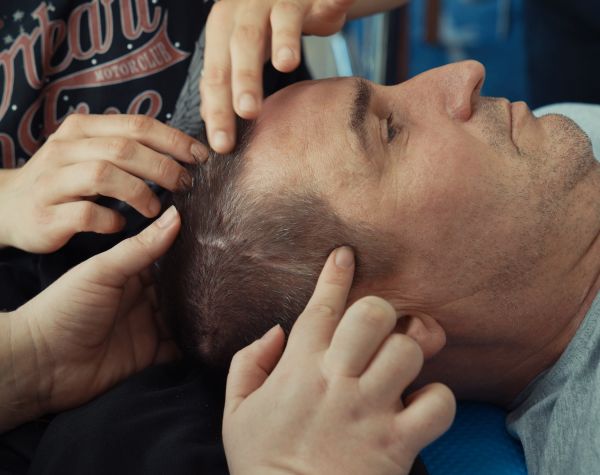
Hands, trees, heads, scars
More than 100,000 Ukrainians have already lost a limb as a result of the unjust war unleashed by Russia. Their scarred bodies are tended to by nurses behind the front lines. This is a film about touch – comforting and essential – that seeks to rekindle life from the flesh of the body where the soul is suffering.“This only happens with time — in their case, two and a half years of production — but above all with the trust, the bond and the respect that forms with the people, the stories and the realities you set out to tell.” — Giacomo Locci, FerraraToday.
director: Alberto Gottardo, Francesca Sironi
original title: Hands, trees, heads, scars
country: Italy
year: 2026
running time: 14 min.

Heirs to the Intangible Cultural Heritage
Easter is the most important celebration in the Christian calendar. In Lendak, a village at the foot of the Tatra Mountains, faith and community life are closely intertwined. The younger generation reflects on how to keep these traditions alive in their own way.
director: Ester Halagová
original title: Nehmotní kultúrni dediči
country: Czech Republic, Slovakia
year: 2026
running time: 10 min.
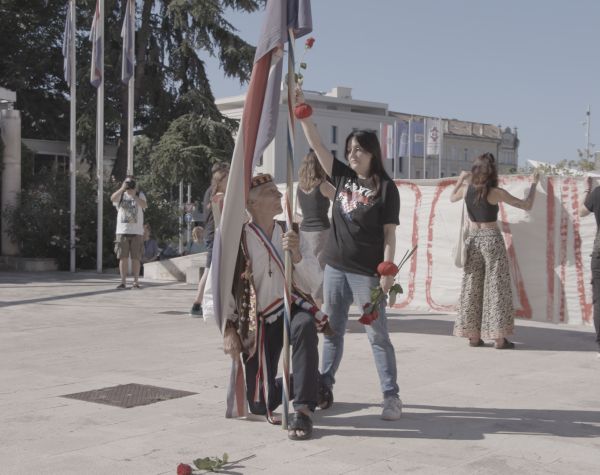
Holy Defiance
Every first Saturday of the month, members of the ultra-conservative religious movement, the Knights of the Immaculate Heart of the Virgin Mary, gather in Croatian town squares. The artist and activist Arijana Lekić-Fridrih is always there, too, until the police remove her, as women are barred from entering. This fascinating observation captures the clash of opposing forces in public space, as well as the coexistence of two female archetypes – the holy mother, who smiles quietly from a sacred image, and a goddess in a red dress, who uses her performance to fight against patriarchal violence against women. “All art is a political statement.” — Arijana Lekić-Fridrih Source
director: Karla Jelić
original title: Tiha misa
country: Croatia
year: 2026
running time: 15 min.
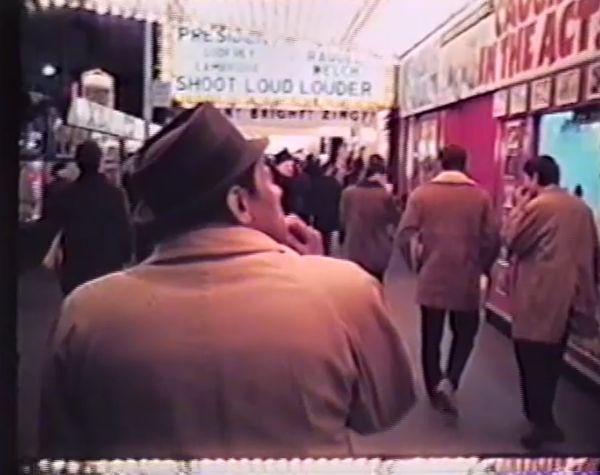
How to Write, an AI Guide in Four Steps
In a future without imagination, storytelling means recycling the past. A vintage tutorial, narrated by an AI, guides creators in combining fragments of old narratives, revealing that creation is construction, not invention. The film is part of DELTA | Emerging Italian Filmmakers Across Europe: A Project by Bellaria Film Festival.
director: Nicola Eddy
original title: How to Write, an AI Guide in Four Steps
country: Italy
year: 2025
running time: 8 min.
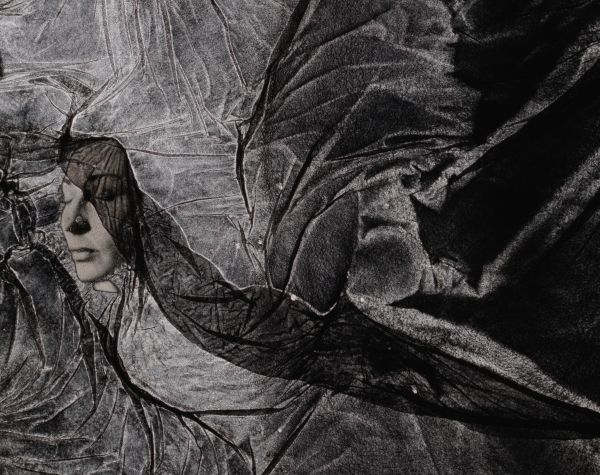
I Am a River
Inspired by Pablo Neruda’s poetry collection The Book of Questions, Finnish visual artist Heidi Piiroinen turns her attention to the materiality of 16mm film itself. Using a chemical technique known as mordançage, she etches the film strip, lifting layers of emulsion to create veil-like, ever-changing textures. The fluid imagery gives tangible form to river currents, deltas and wetlands. Water emerges as a living organism with a memory of its own, its flow echoing the passage of blood through the circulatory system. Ceaseless movement becomes a metaphor for human existence.
“Why do the waves ask me the same questions I ask them?”
director: Heidi Piiroinen
original title: I Am a River
country: Finland, France
year: 2026
running time: 6 min.
I Dreamed of a Man Who Dreamed of Horses
While trees have their place, people sometimes have yet to find theirs. In this sensitive portrait, director Lucie Zpěváková captures the search for a place in a world that has yet to decide whether it will accept you. Yimel, a Cuban living in the Czech Republic, has spent many months awaiting a decision on his asylum application. Meanwhile, he walks through snow-covered streets, a housing estate and a landscape traversed by a gas pipeline. Winter gives way to spring, but the sense of being in limbo persists. Attentive to small details and the atmosphere of places, the images record his attempts to connect with unfamiliar surroundings: stopping at a local pub, watching boys play football and finding moments of affinity in familiar rhythms.
director: Lucie Zpěváková
original title: Soñaba con un hombre que soñaba con caballos
country: Czech Republic
year: 2026
running time: 19 min.
I Hope You Fall in Love
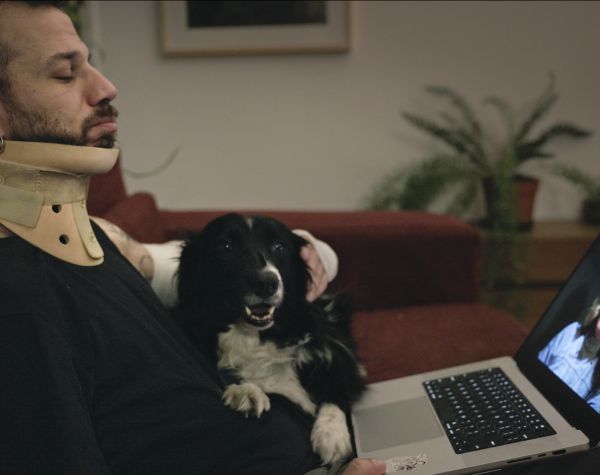
Director Ariel Feldman made his feature-length debut with his arm in a plaster cast and a broken heart. This chronicle of his own love life consists of interviews with former partners, as well as his parents and close friends. Taking stock leads him to reflect on the nature of romantic love in the current era of freer, yet also more volatile, relationships. Archive footage from romantic holidays alternates with shots of his current solitary wanderings around his flat, walking the dog, and even editing the film itself. This intimate, introspective film is built around spontaneously shot footage, utilising grainy film stock and a handheld digital camera.
director: Ariel Feldman
original title: Espero te enamores
country: Argentina
year: 2026
running time: 83 min.
I See No Death
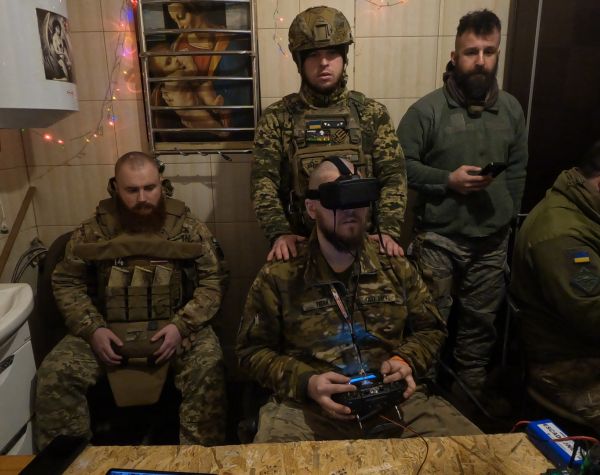
How is war changing as technology advances and part of the fighting is shifting to the screens of drone operators? The film follows a newly formed Ukrainian unmanned systems unit from its first deployment in the Donetsk region and on to operations on Russian territory. The daily lives of these modern-day warriors unfold in cold cellars and trenches, where destruction becomes a technical task and death is reduced to a few pixels on a monitor. They hardly ever see blood, yet the human casualties remain just as real. Their shifts are filled with computer games, black humour or looking after animals, yet the calm can be shattered at any moment by explosions and artillery fire. The film alternates between intimate portraits of individual men and observational depictions of their daily lives, combining the dynamics of a war film with an aesthetic reminiscent of a video game. Through a variety of cinematic techniques, it thus offers a comprehensive view of the technological transformation of modern warfare, in which physical distance from the enemy paradoxically coincides with the immediacy of the moment when, just before an attack, a man on screen looks directly into the lens of a drone.“I saw blood, torn bodies, death – with my own eyes. But the war has changed. It has become more modern, more distant, something new.”
director: Yevhen Titarenko
original title: Я не бачу смерті
country: Ukraine, Latvia
year: 2026
running time: 76 min.

I've Never Seen This Sink Before
We are like snails on the railway tracks, waiting for a train to run us over – but that doesn’t have to involve any existential drama. This languid, ambient, montage-driven illusion about fragments and the passage of time is tailored to the fragmented attention span of the contemporary viewer. Instead of narrative and context, it presents an associative stream of being in the here and now, in which a kitchen sink is just as important as a lunar eclipse. “What seems familiar to us may in fact be completely unknown, and what seems strange to us may, on the contrary, be something we know intimately.”
director: Andran Abramjan
original title: Ten dřez jsem ještě nikdy neviděl
country: Czech Republic
year: 2026
running time: 11 min.
Infinite Replica
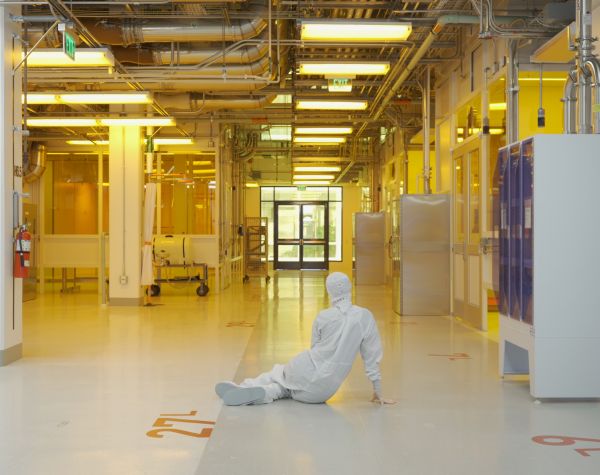
Binarity under the microscope: curiosity permeates a nanotechnology laboratory, yet a non-binary body is forbidden to pose nude. With the matter-of-fact tone of a scientific explanation, the essay moves from a drawing of the body exposed to the coldness of the laboratory to instructive visualisations, delving into particles of organic and synthetic matter. Through these shifts in representation, the body becomes both a mirror of technical processes and an object where the inquiring gaze encounters the rules governing visibility. “And in the end, whatever I want to express will not be easily contained within words.” — Kwan Q Li Source: Oui.Gallery.
director: Kwan Q Li
original title: Infinite Replica
country: United States, Hong Kong
year: 2026
running time: 18 min.
Journey
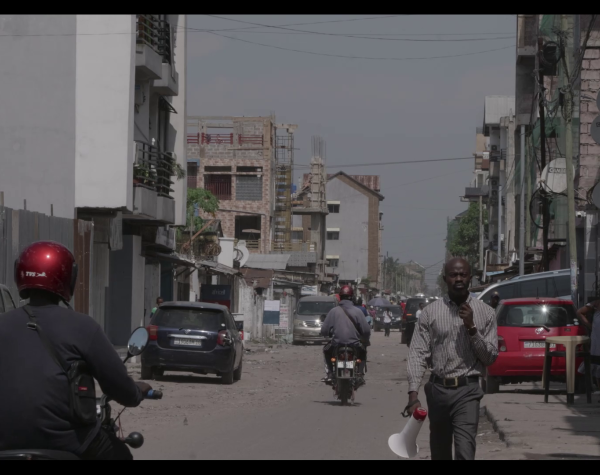
From a series of shots of people rummaging through a rubbish tip in the Congolese capital, Kinshasa, we move to the studio of a local painter who runs out of paint just a few days before his exhibition. His attempts to raise money and subsequently launch a career as a Christian street preacher frame a docu-fiction portrait of a city where nothing is of much value – including art. This observational film offers us fascinating glimpses of everyday life in Kinshasa, while, through the story of its protagonist, it seeks to convey the hardships of existence in a city of markets, rubbish and slums, where artistic creation is certainly not regarded as a social priority.
director: Eli Maene
original title: Mobembo
country: Democratic Republic of Congo
year: 2026
running time: 70 min.
Land of Fire
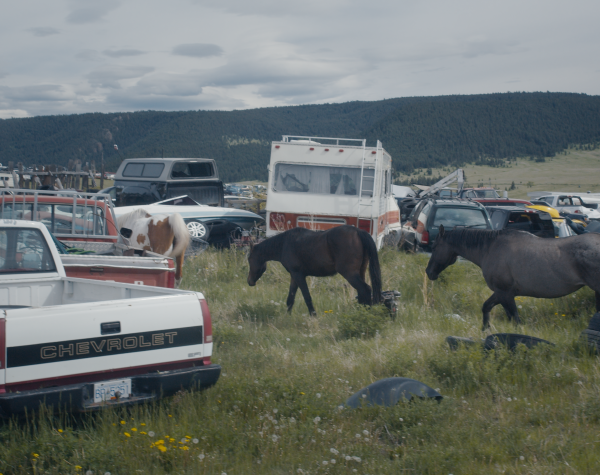
In British Columbia-one of the most sparsely populated regions of the Western world- wildfires have become an everyday part of life. Local communities are marked by substance abuse, violence, and traces of absence are everywhere: in the burned forests and along roadsides lined with posters of missing persons. Nikola Klinger has made a film about people facing complex challenges who nonetheless believe in a better future. By weaving together the interconnected lives of the locals, the film creates a layered portrait of the landscape and the people’s bond with the wilderness, its magic and its myths. Residents live in the shadow of unsolved deaths and the disappearances of young people, finding an escape from their troubles in community solidarity and modern-day rituals, such as the demolition derby at the local wreck yard. “There is something alive out there in the bush; you can feel it, but you can't see it.”
director: Nikola Klinger
original title: Land of Fire
country: Czech Republic, Germany
year: 2026
running time: 85 min.
Landmarks
The brothers Raul, Raimundo and Juldemar Batista de Souza recall human trafficking, violence and killings reminiscent of slavery in the American South. However, their employer was the German car manufacturer Volkswagen, which bought part of the rainforests in Brazil and, between 1973 and 1987, hired labourers for logging and cattle farming. “My films blur the boundaries of non-fiction and explore bodies, landscapes and orality as archives where past and present fold into each other.” — Benjamin Hindrichs Source: Benjamin Hindrichs's website.
director: Benjamin Hindrichs
original title: Landmarks
country: Germany, Spain
year: 2026
running time: 13 min.
Language in Exile
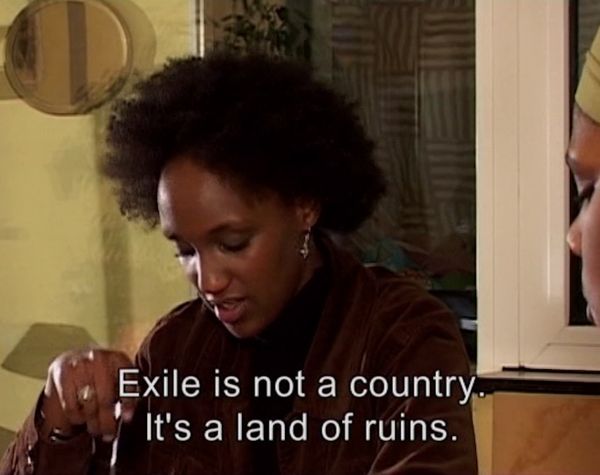
In a world full of borders, the film presents art as a realm in which movement from place to place is almost unbelievably easy. This experimental found-footage documentary brings together excerpts from films of various origins, all of which explore the experience of exile. Characters of different genders, skin colours and cultural backgrounds take turns speaking, reflecting on feelings of uprootedness, the search for identity and their invisibility in the eyes of mainstream society. The universality of this existential condition is underscored by the fact that, although they speak different languages, they seem to share a single language of sorrow and hope.“Languages are living organisms, each of which carries within itself an entire universe.” — Lost for Words, a lecture-performance by Silvia Maglioni and Graeme Thomson
Source
director: Graeme Thomson, Silvia Maglioni
original title: Language in Exile
country: Italy
year: 2026
running time: 23 min.
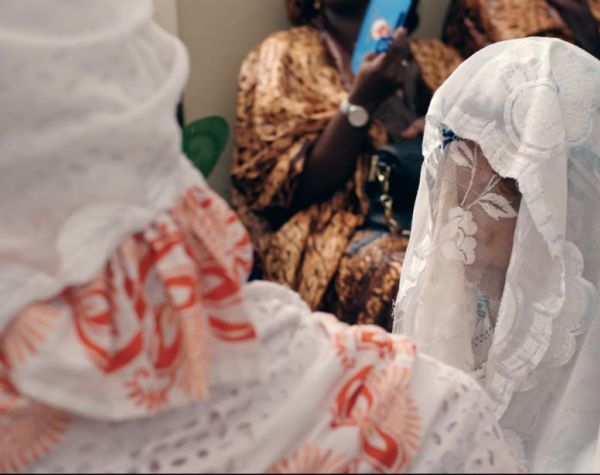
Lassiguili
This intimate documentary follows a bride-to-be who, according to Manding tradition, must spend the three days before her wedding in seclusion. Silence gives rise to questions: Was her mother afraid too? How can she be gentle, strong and true to herself? Between rituals and prayers, she enters a state of deep introspection and senses there is very much she has not been told.
“It is a very special cinematic genre, because these are unique and unforgettable moments that we live through.” — Zeinab Soumahoro, Abidjan.netSource
director: Zeinab Soumahoro
original title: Lassiguili
country: Côte d’Ivoire
year: 2025
running time: 27 min.
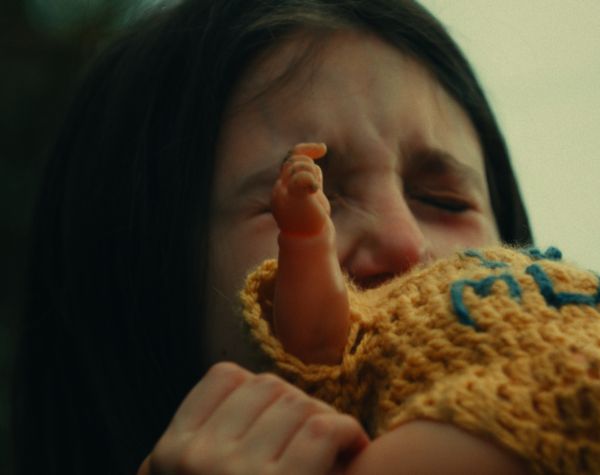
Let's Pretend
The grown-ups are not there. The children play, they act. The script they stage, by way of imitation, is the world that is raising them. It is a frightening, cruel world: it’s us. But they are only pretending. The film is part of DELTA | Emerging Italian Filmmakers Across Europe: A Project by Bellaria Film Festival.
director: Diego Fossati
original title: Per finta
country: Italy
year: 2025
running time: 17 min.
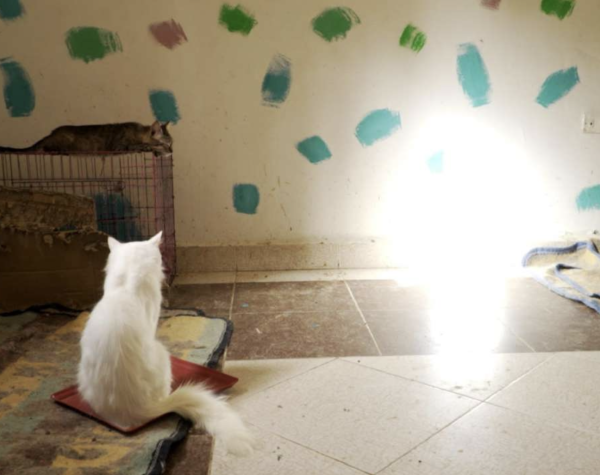
Life Is There
In this film, Cairo becomes a space where personal memories intersect with historical memory, and history is etched directly into the city’s very fabric. The director wanders through its streets and, through free association, links Egypt’s past with her own life story – marked by relocations resulting from political events – as well as fleeting memories of previous visits to the country. On her journey, she encounters the city’s inhabitants: a man who feeds stray dogs, or a woman who runs a shelter for over a hundred cats. Animals are prominent figures in the film and an integral part of Cairo – its everyday life, history and religion. Lyrical scenes intermingle with unvarnished street footage and archive material, while a poetic voice-over is interwoven with testimonies from locals. The result is an associative mosaic in which the boundary between personal experience and history is constantly blurred. The final visit to a nursery for orphaned children from Gaza brings the film urgently back to the present day and links the current political situation with historical events, the traces of which the director seeks out during her journey.“I find my home in the heart of Cairo. Here I lose myself, and as I walk aimlessly, I feel free.”
director: Ishtar Yasin Gutiérrez
original title: Alhaia hunak
country: Egypt, Chile, Costa Rica, Mexico, United Kingdom
year: 2026
running time: 71 min.
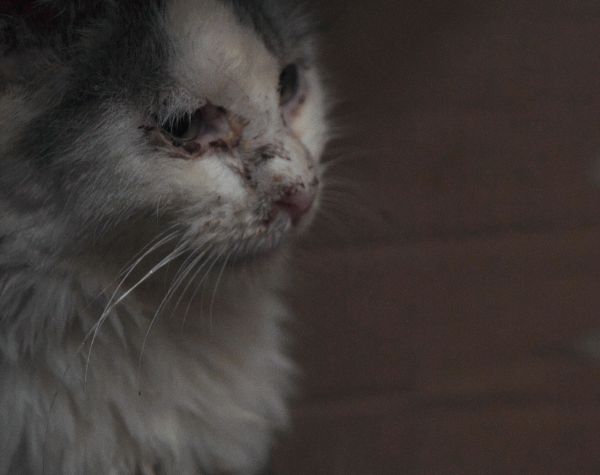
living
A short documentary set in a chicken slaughterhouse, where, amidst the filth, stench, decaying remains of animal carcasses and swarms of insects, a cat and her kittens manage to survive. In a place so deeply marked by human indifference to the death of other creatures, they paradoxically provide at least a hint of the unyielding desire to play, explore, or simply to live. “I strive for a naturalistic style in which viewers become immediate, situational observers.” — Eric M. WeglehnerSource: The Gap
director: Eric M. Weglehner
original title: vivre
country: Austria, Germany, Morocco
year: 2026
running time: 13 min.
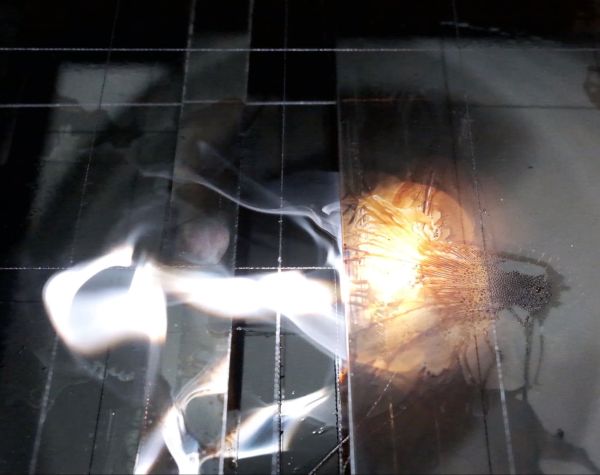
Look, the Sun Is Burning
An illustration from the 1685 treatise Oculus Artificialis Teledioptricus recalls a time when vision was understood as an active ray emanating from the eye. Visual artist Gregor Eldarb takes up this idea in an analogue experiment. Using a magnifying glass, sunlight, a magnet and an oily liquid with magnetic properties, he creates crystalline structures and amorphous landscapes within the camera’s lens. Combined with a digital display and Stefan Nemeth’s minimalist score, this exploration of the human gaze becomes a compelling spectacle in which historical notions of vision clash against today’s fascination with glowing screens.
“Like membranes, similitudes flutter through the air, and wherever they are carried, they are evident in the canyons.” — Johann Zahn, The Long Distance Artificial Eye, or Telescope
director: Gregor Eldarb
original title: Look, the Sun Is Burning
country: Austria
year: 2025
running time: 6 min.
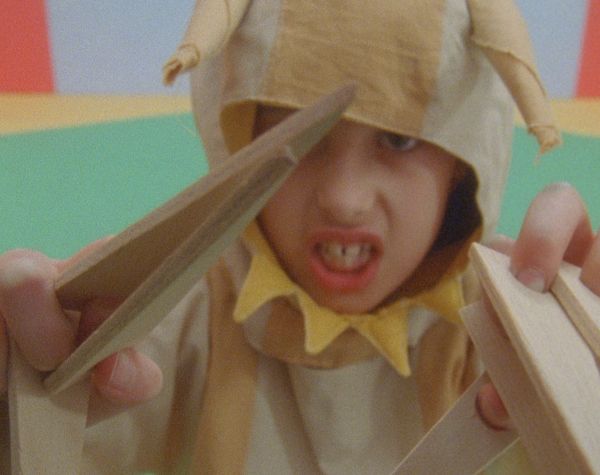
Lose Voice Toolkit
In an undefinable place and time we see a group of children who don’t use words anymore. They might have lost them due to powerful voice-stealing magnets, or dissolved by lose-voice candies. The words seem to be lost, forgotten somewhere. So, they start to transform and develop a new system of communicating made of aerial forms, sharp gazes or shared thoughts. Looking at them, one would think that they would speak with their noses, their elbows, their pupils. The film is part of DELTA | Emerging Italian Filmmakers Across Europe: A Project by Bellaria Film Festival.
director: Adele Dipasquale
original title: Lose Voice Toolkit
country: Italy, Netherlands
year: 2024
running time: 18 min.
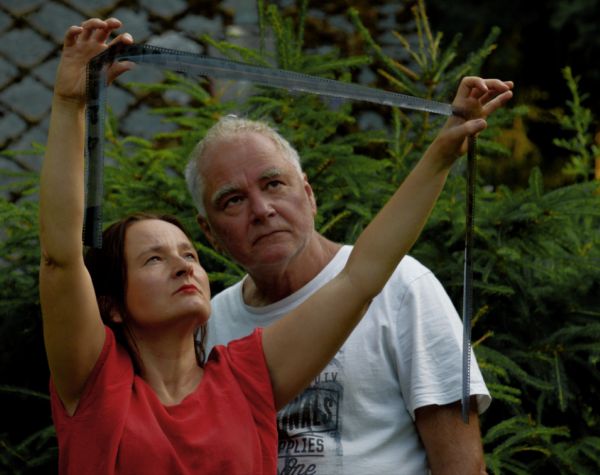
Love Exposed
What mark does a life devoted to art leave on family relationships? Blanka Kulová is editing a film about her father, Vlastimil Kula, a well-known Czech photographer of nudes and erotic images, whose monograph was published by the renowned Taschen publishing house. However, rather than a celebratory portrait of the artist, the result is an intimate confrontation between father and daughter. In candid conversations, they revisit their parents’ divorce, painful childhood memories and a sense of abandonment that Blanka shares with her younger siblings. Despite their recriminations and the long-standing misunderstandings between them, there is no shortage of humour, mutual affection or a willingness to find a way back to one another. Most of the film is set in a country cottage, which Kula is gradually renovating; here he photographs young models and reflects on his own work. However, his former fame is fading, and, paradoxically, it is his daughter who helps him find a curator for a new exhibition. The film unflinchingly reveals the conflict between artistic self-realisation and responsibility towards loved ones. At the same time, it captures the delicate process of two people growing closer as they attempt to understand their shared past. “I am an artist – not an ordinary person.”
director: Filip Remunda
original title: Love Exposed
country: Czech Republic, Slovakia
year: 2026
running time: 96 min.
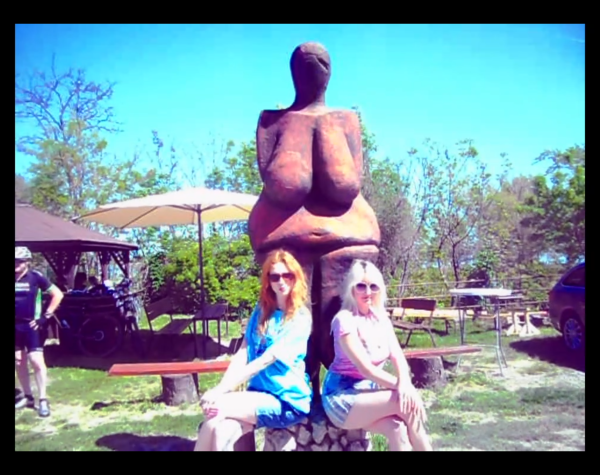
Love video letter
Although a romantic pop hit is blaring in the car, these two female friends are in no mood for romance. Armed with wigs and ketchup, they set out to take revenge on a boy who hurt one of them. Karolína Hovězáková’s unruly road movie channels female rage into relentless bitching, petty acts of disorder and conspiratorial laughter. Their quest for payback also becomes a declaration of friendship, through which wounded love ceases to be the centre of their world. A shaky digital camera and deliberately clumsy cross-fades give this chaotic campaign a punk-video look that refuses to bow to either aesthetic or social conventions. “They say it’s bad to smoke while you eat, ‘cause you can get bigger cancer that way.”
director: Karolína Hovězáková
original title: Love video letter
country: Czech Republic
year: 2026
running time: 26 min.
Meeting Götz
Götz Kubitschek is a German journalist, activist and representative of the far-right Neue Rechte movement. He is also a former schoolmate of director Gregor Centner, who describes himself as a liberal leftist. At the outset of this personal documentary, Centner contacted Kubitschek with a proposal to make a film about him. Over the next six years, they met to share memories of their childhood and school days, but above all to discuss Kubitschek’s ideological turn towards the extreme right. The resulting film draws its power from candid recordings of their conversations and the recordings the two men exchanged.“I don’t know if you are aware what it means to make a film about me. This means about us and about the movement I represent. Especially with public funding. Even talking to us, to me, is the crossing of a line.”
director: Birgit Bergmann, Gregor Centner
original title: Meeting Götz
country: Austria
year: 2026
running time: 77 min.
Mohabat
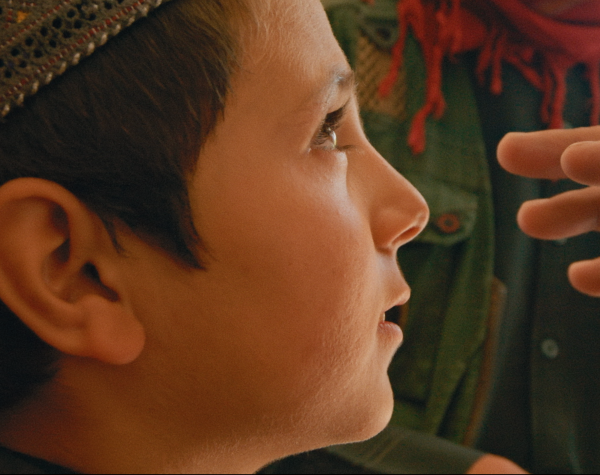
Following his father’s death in a drone strike, twelve-year-old Mohabat is left without parental care, along with his two older brothers. His father is regarded by those around him as a martyr, and their deep faith in God and adherence to the Qur’an help the boys to accept this painful loss as part of God’s will. Mohabat is taken to a city orphanage, where it becomes clear that his experience is not unique – many of the children there have lost their parents and other loved ones as a result of the war. Nevertheless, friendships form among the boys and, together, they create at least a temporary sense of security. Following a mental breakdown, Mohabat returns to his native mountain village, where he attends school, helps with the harvest and visits his brother Aja. When his older brother and closest protector, Mawladdin, leaves for Europe via Iran, the increasingly lonely Mohabat must gradually learn to rely on himself. His gentle voiceover accompanies a sensitive portrait of premature adulthood, in which personal suffering intertwines with the wider social consequences of a long-standing conflict. Meanwhile, the sweeping images of the monumental Afghan mountains and colourful urban landscapes create a striking contrast to the ever-present traces of war.“I want to go to Heaven. Because Heaven must be a nice place.”
director: James Longley
original title: Mohabat
country: United States, Afghanistan
year: 2026
running time: 89 min.
Murmurs in the Distance
Murmurs in the Distance begins with an encounter with a gap: the absence of a substantial historical and visual record of the women’s protests of March 8, 1979 in Iran. Through photographs, recordings, testimonies, and archival fragments, three artists from another generation, living in different countries, search for what has been preserved, what has disappeared, and find their own reflections along the journey. The archive becomes both a source and a place for questioning. The short documentary Iranian Women’s Liberation Movement: Year Zero (1979) offers one of the few surviving visual traces of the protests, while testimonies bring other forms of memory into the present. Rather than reconstructing a complete history, the film stays with these fragments and silences, asking how an archive shapes what can be remembered, seen, and understood as history.
“Murmurs in the Distance is not only an act of preservation but also an invitation to reimagine futures shaped by collective courage.”Source
director: Behshad Tajammol, Katayoon Barzegar, Pegah Pasalar
original title: Murmurs in the Distance
country: Germany, France, United States, Netherlands, Iran
year: 2026
running time: 24 min.
Mushroom Seconds
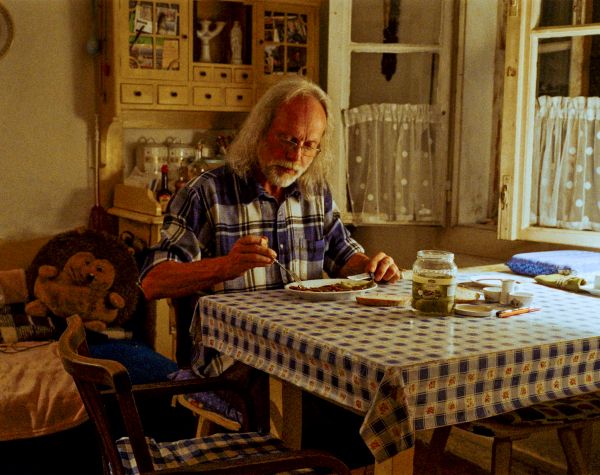
Both poems and mushrooms conceal their essence beneath the surface. The poet and mushroom hunter Petr Hruška knows this all too well. His portrait unfolds to the rhythm of everyday life, as he spends time with family and friends, fries mushrooms or strolls through the streets of Ostrava, reminiscing about the now-defunct 24-hour bars. His participation in literary events both at home and abroad is characterised by the same effortless ease. Ordinary situations and encounters form the backdrop for Hruška’s reflections on ageing, the turbulent geopolitical situation, and the ability to open up to others. Although the moments from the poet’s life are in no way stylised, the observant camera transforms many of them into poetic images. “All art is vandalism, because it destroys the established order and seeks to create a new one.”
director: Aleš Pojar
original title: Vteřina houby
country: Czech Republic
year: 2026
running time: 84 min.
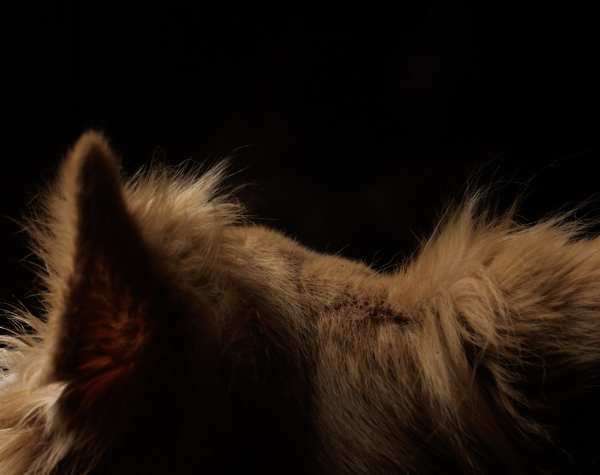
Mutar
An old dog and a person relive their bond, shaped by time, between imagined memories of a mountain childhood and the present in a small apartment. In a silent dialogue without voice, human and animal memories intertwine. The film is part of DELTA | Emerging Italian Filmmakers Across Europe: A Project by Bellaria Film Festival.
director: Maria Elena Franceschini
original title: Mutar
country: Italy
year: 2025
running time: 10 min.
My Father from the Island Russia
When a young Russian director fills in an application for permanent residence in the Czech Republic, he prefers to list his father’s occupation simply as “teacher”. In reality, his father is an influential Russian political scientist who endorsed the annexation of Crimea and continues to defend Putin’s regime to this day. In this personal documentary, composed of archival home videos and remote video calls, Georgij Mežujev attempts to understand his father’s ideological stance. Why did he help legitimise a system under which his son now faces imprisonment for collaborating with opposition media? This intimate film reflects on the ongoing armed conflict by examining the gulf between a son’s love and moral responsibility.“My protest against the regime was a protest against my father.”
director: Georgij Mežujev
original title: Můj táta z ostrova Rusko
country: Czech Republic
year: 2026
running time: 28 min.
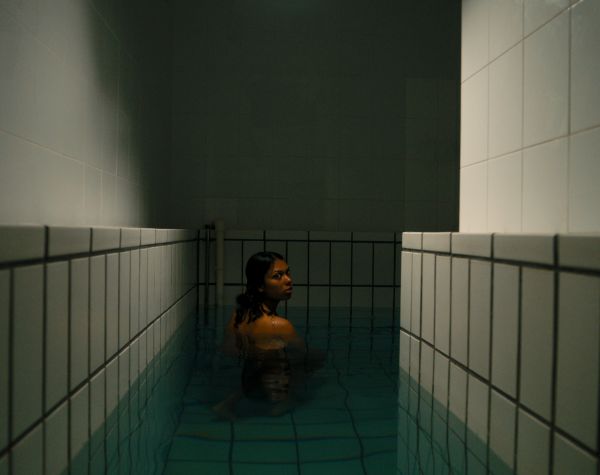
Naomi
Naomi is a 23-year-old Frenchwoman of Senegalese descent. Her parents converted to Islam, and she is now converting to Judaism. This combination of personal testimony and art installation places the young woman in positions from which she explores various aspects of her identity and seeks to understand the meaning of community and the essence of religious faith. “The resulting forms are not simply documentation, but the transposition, even the sublimation, of a shared experience.” — Le Fresnoy Studio national des arts contemporains Source: https://www.lefresnoy.net/en/ecole/etudiant/627/
director: Jérémie Danon
original title: Naomi
country: France
year: 2026
running time: 17 min.
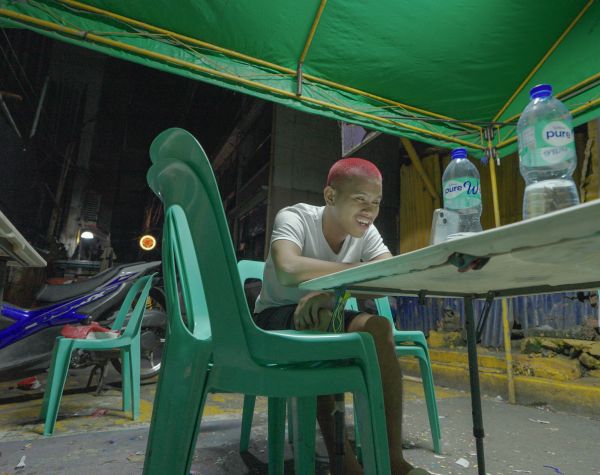
never been there, never.
Edison is a sorbet-selling street vendor who has to sell out his entire stock in order to celebrate Christmas – an occasion the whole of Manila lives for – otherwise he won’t get time off. But customers aren’t exactly queuing up. This observational portrait offers an intimate glimpse into the reality faced not only by Filipino workers in retail and the service sector, but also raises the issue of working conditions and the right to rest. “Vitali uses cinema as a space for reflection and confrontation, bridging personal experiences with the broader systemic realities of Filipino society.”
director: Joseph Vitali
original title: kung paano kakalas.
country: Philippines
year: 2026
running time: 19 min.
No Before or After: Notes on a Film
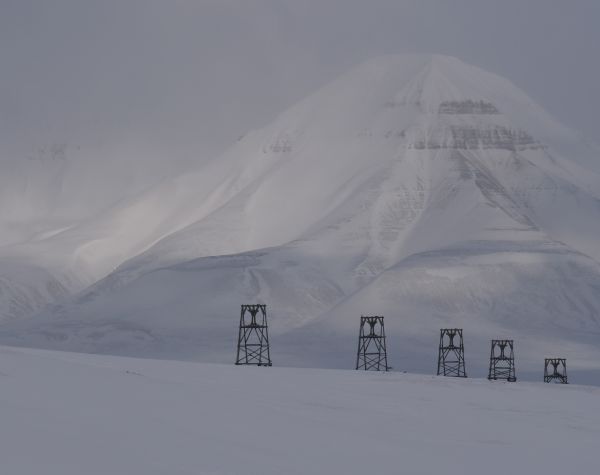
Deep in the Arctic permafrost lies humanity’s collective memory. A global memory bank is housed in an abandoned coal mine on Svalbard, three hundred metres below the surface. This intimate, hypnotic audiovisual essay reflects on humanity’s attempt to defy its own transience. Amid a monumental landscape of ice, chillingly desolate and melancholically endless, physical and digital records of human existence await discovery a thousand years from now. By then, we may no longer be here. The film forms part of a project that also includes a web app and presents the landscape as an archive or an intermedial map of texts, images, knowledge and ideas.“The Arctic contains archetypes that are a way of understanding the narrative of change on a planetary scale.”
director: Emily Richardson
original title: No Before or After: Notes on a Film
country: United Kingdom, Norway
year: 2026
running time: 18 min.
October Revolution Island
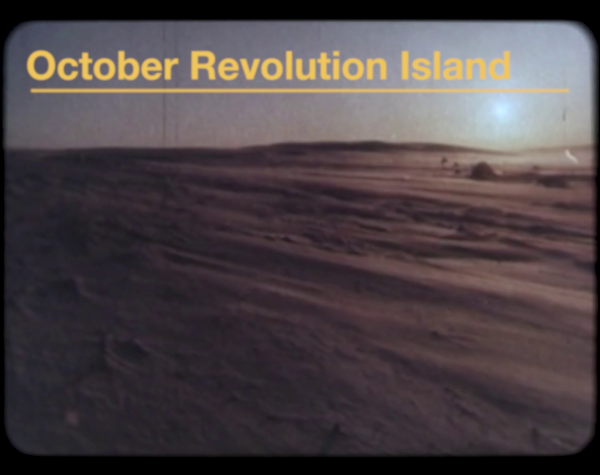
Sixty years after the Great October Socialist Revolution, a Soviet nuclear-powered icebreaker set sail for the Arctic Circle to mark this momentous historical occasion. Drawing on Galina Chubakova’s popular-science film To the Top of the Planet (1978), this work of docu-fiction engages in an imaginary dialogue with the creator of this new film, who is caught between the concepts of the past and the future. “Communism has always seemed terrifying, and it still does. Not only did it not end, it never truly existed. It was only a spectre.”
director: Zbyněk Baladrán
original title: October Revolution Island
country: Czech Republic, France
year: 2026
running time: 18 min.
On the Peaks of All the Beech Mountains
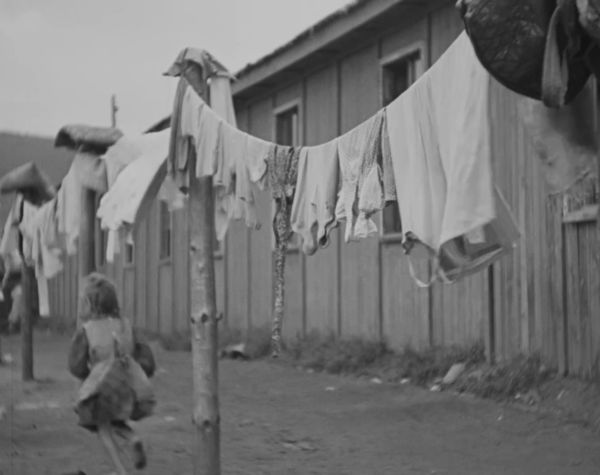
A poetic experimental film about memory, violence and the heavy legacy of post-war ethnic cleansing in Czechoslovakia returns to the area surrounding Buková Mountain in the Broumov region, where women, children and the elderly were murdered or beaten to death in 1945. Through animation, archive footage and observational shots, it explores how the trauma of ethnic violence persists both in people and in the landscape. “There are places where mistakes were made. The war ended, and the tables were turned. Those who had been at the bottom quickly gained the upper hand; pleas for mercy went unheeded; retribution took precedence over everything else.” Source: etc. galerie
director: Anežka Horová, Klára Trsková
original title: Na vrcholcích všech bukových hor
country: Czech Republic
year: 2026
running time: 9 min.
Outside/Inside
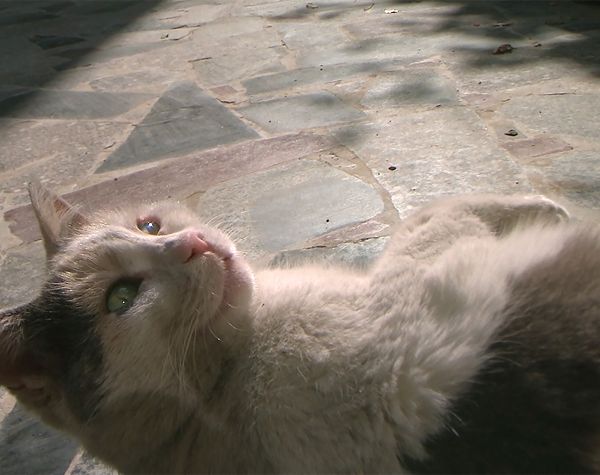
For seven years, the director follows the life of Ceci, a stray cat that gradually settles into his home without ever completely leaving the world of the streets. Their ever-changing relationship forms the backbone of this time-lapse narrative, into which other cats and fragments of the director’s life are woven: unfinished film projects, relationships with neighbours, his deteriorating health, and events unfolding in the city and across the country. Dialogue is almost entirely absent, and the director’s personal memories and reflections appear only in the captions, alongside information about the cats and the history of their coexistence with humans. The film thus consistently shifts the focus from humans to its non-human protagonists, viewing everyday life primarily through their eyes. Detailed observations of Ceci and other stray cats alternate with melancholic views of the city, capturing their own relationships, habits and methods of survival. This intimate chronicle of an unusual friendship simultaneously records the passage of time and the transformations of a human life, which becomes ever more closely intertwined with that of the cat. “The presence of the cat is central, but not as a character in a narrative sense. Rather, she becomes a point of departure, a way to move away from a human-centred perspective, without replacing it with another fixed position.” — Maani Petgar
director: Maani Petgar
original title: Biroun/Daroun
country: Iran
year: 2026
running time: 108 min.
Pareidolia
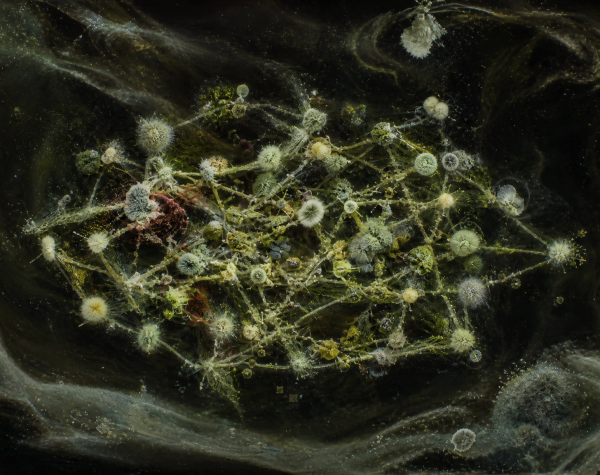
What happens when we give artificial intelligence absolute creative freedom? It will produce a cinematic meditation on the insignificance of humanity, or on the longing for life. The AI agent, which Franz Milec tasked with creating whatever film it wished, generated digital images of poetic structures, grotesque swirls of matter and the dance of molecules that rearrange and transform themselves uncontrollably. The virtual mind recited its poem about matter and movement, teetering on the edge of kitsch. “My intention is always to uncover the complexities of what we commonly perceive as banal, bland, and unimportant.” — Franz Milec, dokweb
director: et al, Franz Milec
original title: Pareidolia
country: Czech Republic, Italy
year: 2026
running time: 11 min.
Parking Review
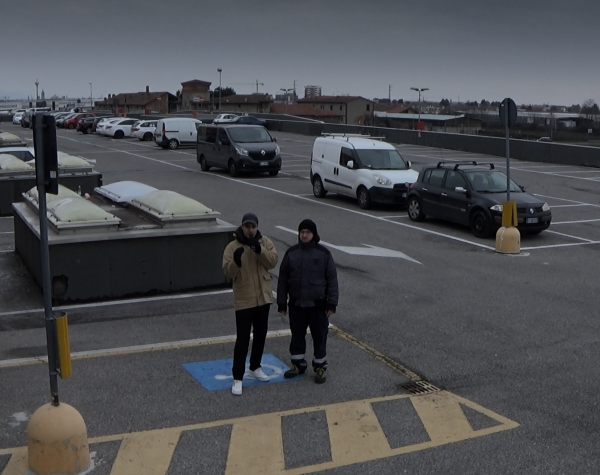
An ambitious videomaker is tasked with making a short social media video to promote the idea that city parking lots are eco-friendly. Assisting him are a cameraman and a clumsy engineer. The pervasiveness of the gray landscape and the absurdity of their task push the trio into a tragicomic spiral of parking lot reviews. The film is part of DELTA | Emerging Italian Filmmakers Across Europe: A Project by Bellaria Film Festival.
director: Davide Curto
original title: Parking Review
country: Italy
year: 2024
running time: 15 min.

Porno para Ricardo
Gorki Águila is the frontman of the Cuban punk band Porno para Ricardo. Due to his opposition to the communist regime, he has faced censorship, harassment and imprisonment. But after a quarter of a century of defiance, fatigue is setting in. Hana Jakrlová’s documentary looks behind the mask of the unrepentant rebel. The film follows the musician during his forced exile in Mexico, as he sings anti-regime songs and reflects nostalgically on his homeland. His daily struggle to get by and his preparations for a concert in Prague are interspersed with archive footage of banned concerts. Despite his uprootedness and powerlessness, however, Gorki intends to continue his struggle until the dictatorship falls. “The band is called after our good friend Ricardo. He is an artist and he loves porn.”
director: Hana Jakrlová
original title: Porno para Ricardo
country: Czech Republic
year: 2026
running time: 78 min.
Powder Maker 67
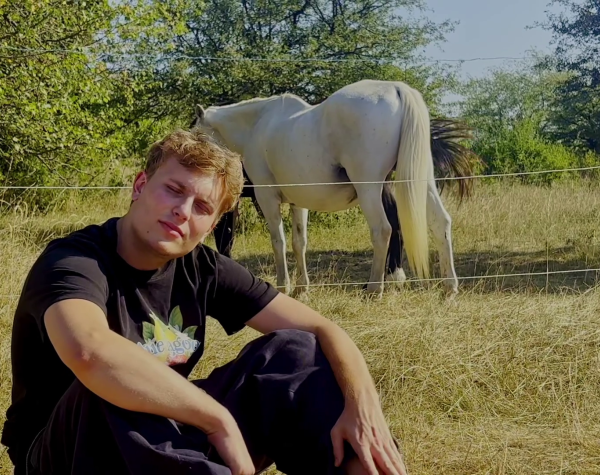
Where does provocation for its own sake end and the desire for reassurance that someone cares about us begin? Actor and musician František Prachař builds his image on irreverent humour and deliberately goading his audience. This short documentary portrait juxtaposes his assured public persona with his uncertainty when he has no one to perform for. Headlong editing, fragments of TikTok videos and abrupt shifts in pace bring the restlessness of Gen Z life into the film. The search for identity amid a stream of gestures, poses and personal confessions merges with an endless struggle for attention. “I don’t think I’m arrogant.”
director: Hugo Wiesner
original title: Pan Zábava
country: Czech Republic
year: 2026
running time: 14 min.
RERUM
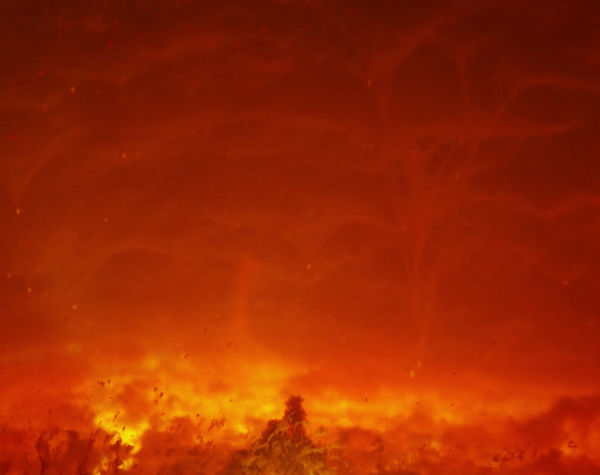
An experimental disaster thriller drawn from a family archive explores the coexistence of the microcosm and the macrocosm, of mundane human everyday life and the magmatic hell bubbling beneath the Earth’s surface. Every system will eventually collapse; it is a biological constant. We will know it when the cry of Beethoven’s symphony rings out. “An anthropocentric world, in which the only reminders of the underworld are cracks, is losing its relevance. This state of fragile equilibrium is inevitably heading towards ruin.”
director: Marek Koutesh
original title: RERUM
country: Czech Republic
year: 2026
running time: 8 min.
Retuning
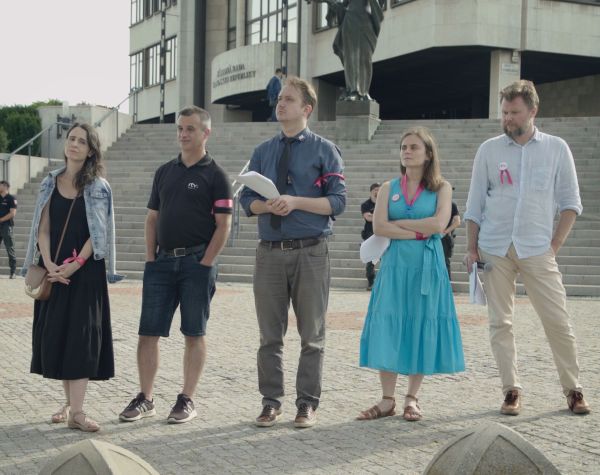
Directly from within the newsrooms, director Sára Prokopová observes the attempt – one that begins absurdly but becomes increasingly tragic – to gain political control over Slovakia’s public service television and radio. While heated debates about a strike are taking place behind the scenes, the gradual curtailment of independent journalism and the silencing of opposition voices unfolds on screens. Cultural policy – and the institution itself – are beginning to be run by people lacking the necessary expertise; by those who seriously speculate as to whether the Earth is flat or not. The journalists’ initial enthusiasm is giving way to a sense of powerlessness and frustration at developments that bear a number of cautionary parallels with situations in other Central European countries. “I wanted to highlight the importance of the actions of the individuals who decided to stand up to the establishment, at the risk of either losing their jobs or having their work interfered with.” — Sára Prokopová, SME
director: Sára Prokopová
original title: Preladenie
country: Slovakia
year: 2026
running time: 60 min.
River
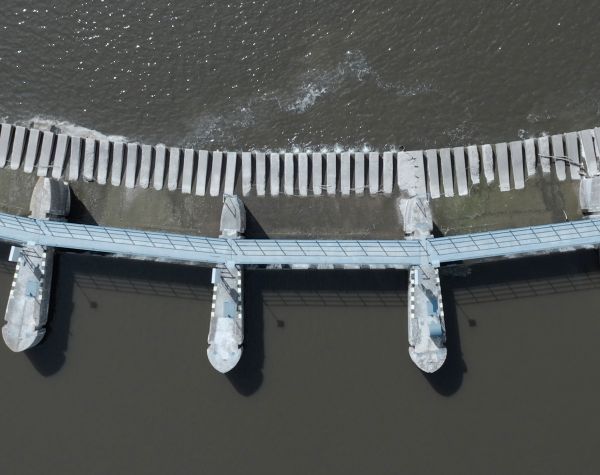
The Elbe. One of Europe’s greatest rivers, engineered and tamed by weirs, dams and embankments. A river serving as a source of water, a transport channel and a natural boundary between countries and regions. This hypnotic audiovisual essay immerses us in the history of river engineering and weir construction. Through wordless images, it presents an industrial symphony of hydraulic works and structures from the industrial age, alongside water as an untamed elemental force. The journey from the river’s source in the Krkonoše Mountains to its estuary on the North Sea traces a natural path through the water cycle while exploring the fascinating depths of human coexistence with a river that is absolutely crucial for life.“The River is a cinematic exploration that delves deep beneath the surface of visible reality and reveals traces of human activity. With The River, documentary filmmaker Timo Großpietsch brings his trilogy City, Landscape, River to a close.”Source of the quote.
director: Timo Grosspietsch
original title: Fluss
country: Germany
year: 2026
running time: 83 min.
Robota Sweden
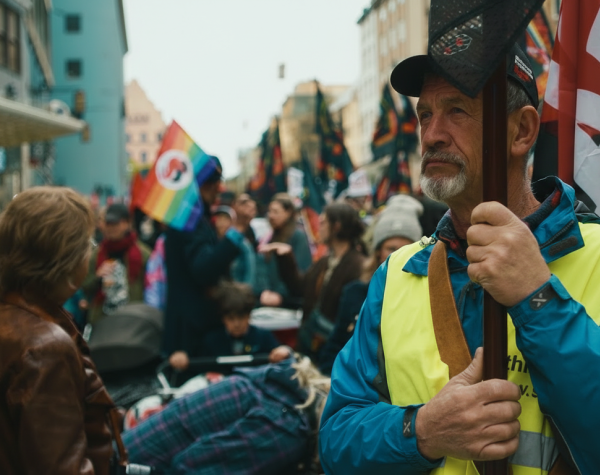
Serhiy, an elderly Ukrainian man, has not been paid by his employer. He has no contract. And, unlike the local people, he appears to have no one to stand up for him. This documentary-style film follows a group of foreigners seeking nothing more than fair treatment in a country that has long prided itself on being a democratic and open society.“The point was to shed light on the parallel reality that has emerged in Sweden — one of unpaid wages, exploitation and fraudulent companies.” — Arberaten
director: Kristoffer Kronander, Patrik Öberg
original title: Robota Sweden
country: Sweden
year: 2026
running time: 15 min.
Saudades Eternas
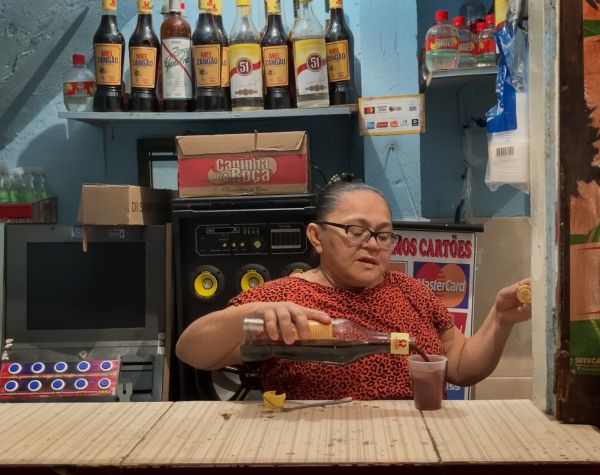
The lives of ordinary people in the Chapéu Mangueira neighbourhood of Rio are affected by the long-standing havoc raised by drug gangs. This observational documentary takes us into one of the local households struggling to survive in a neighbourhood where gunshots are a frequent occurrence and where the police, with their brutal tactics, only serve to escalate the situation. In the film, the title of which is a phrase of condolence in Portuguese meaning “He will remain in our hearts forever”, the director interacts directly with her subjects and films them with a handheld camera in everyday situations. In doing so, she highlights the extent to which the constant sense of threat has become an inescapable part of their existence. “It was in 2015, quite by chance, during my first trip to Brazil, that I discovered Chapéu Mangueira. I got lost in the narrow streets and met Sueli, who was hosting a barbecue, and I immediately felt a connection with him. Intrigued and moved, and despite the obvious violence, I decided to move to Chapéu Mangueira.” — Emma Boccanfuso, Business Doc Europe Source
director: Emma Boccanfuso
original title: Saudades Eternas
country: Switzerland, France
year: 2025
running time: 94 min.
Sensitive Topic
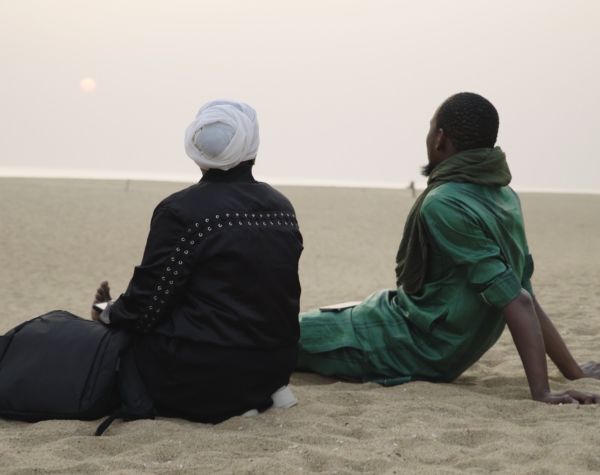
A group of African film students decide to make a film about sexual harassment in the workplace. They want it to be a comedy, as they believe humour is a more effective way of getting a serious message across. They discuss their plans with the sister of one of the crew members, and this young feminist starts to help them create a completely different story…“The Cinergie editors who gathered to select their prize among the Young Belgian Talents highlighted the originality of the subject, its relevance in a world where women still have to fight for respect, and the inventiveness of its treatment, awarding the prize to Sensitive Topic by Nina Hamzeh & Mathis Albet.” — The Millenium Festival
director: Mathis Albet, Nina Hamzeh
original title: Sujet Sensible
country: Belgium, Benin
year: 2025
running time: 23 min.
Small Talk
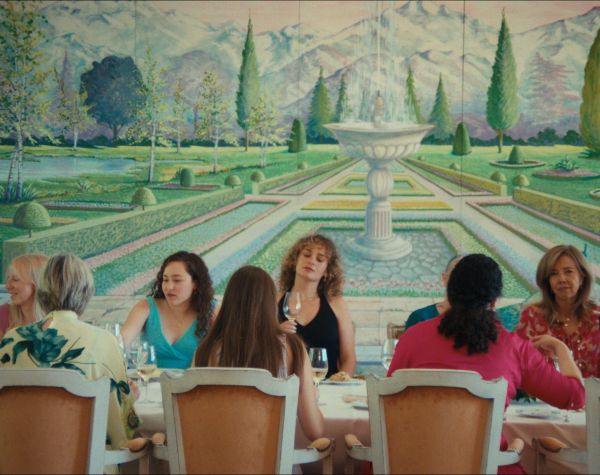
How does one behave properly in society, carry oneself with elegance and conduct a polite conversation? Charlie, a 35-year-old Frenchwoman, decides to change her career and sets off on a summer course at the last remaining school of etiquette. Surrounded by the Swiss countryside, she joins women from all corners of the world to learn the rules of dining, the art of hospitality and social etiquette. Through lessons and seemingly casual conversations, the students gradually grow closer, sharing their life stories and forming deep friendships. This sensitive and at times humorous film follows its likeable protagonist in an environment where an emphasis on elegance, discipline and good manners intertwines with conservative notions of the female role. Are the women here learning to conduct themselves confidently in society, or are they still expected, above all, to be perfect wives? With gentle irony, the film explores gender stereotypes and the tensions between tradition and modernity, asking what women’s emancipation actually means and to what extent women themselves can determine its form.“You feel free to do what you want because you’re successful.”
director: Mateo Ybarra
original title: Small Talk
country: Switzerland
year: 2026
running time: 95 min.
Some of You Fucked Eva
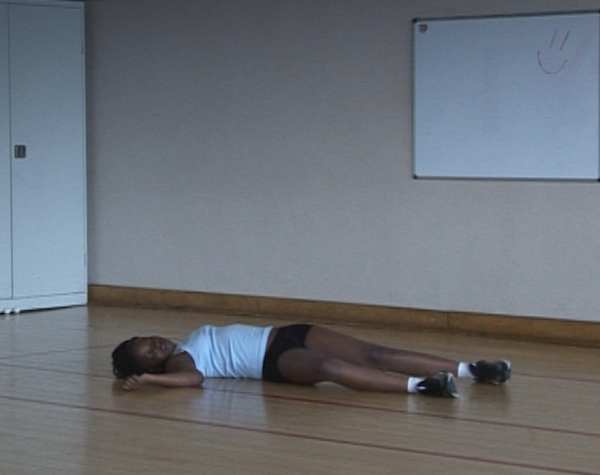
In 2002, a group of cheerleaders fainted en masse at a secondary school in North Carolina. However, this fifteen-minute film does not attempt to reconstruct the mysterious incident. Using found footage from the internet, it instead dissects the myths and rituals of American high schools. The whispers of adolescent voices, oppressive ambient sounds and deliberately distorted images of girls’ bodies in prescribed poses reveal layers of latent, gender-based violence. This Lynchian collage of fragments from collective memory frames the high school girls’ breakdown primarily as a form of physical resistance against the relentless demands and expectations of the system.“High schools remain the birthplace of a gendered, formatted, hierarchical world. (…) What I was interested in was how this soft power, these ordinary images deeply engraved in our collective imagination, were reinvested and distorted.” — Lilith Grasmug, from an interview for FID Marseille.
director: Lilith Grasmug
original title: Some of You Fucked Eva
country: France
year: 2025
running time: 15 min.
Stirring the Pot
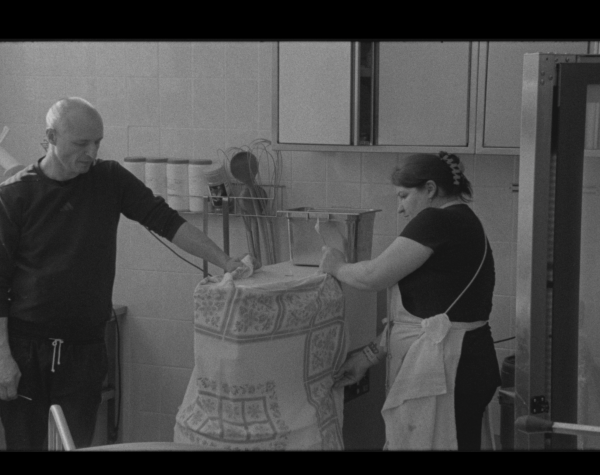
"The school cantine has always been a scary place, but it doesn't have to be that way."
director: Izabela Mahon
original title: Kolem horké kaše
country: Czech Republic
year: 2026
running time: 9 min.
The Case Against Space
NASA’s first space station was called Skylab, and three crews took turns aboard it over a total of 24 weeks in 1973 and 1974. The final crew made history, among other things, as the first astronauts ever to go on strike. Given the sensitive nature of the source material, the film takes the form of a documentary reconstruction, with actors performing on makeshift sets and a narrative structured by staged recreations of communications between Skylab and mission control. This only heightens the oppressive atmosphere of a workplace where people in a demanding profession are deliberately pushed beyond their limits.“For me, living is not just surviving. Living is having a life.” — Graeme ArnfieldSource: Business Doc Europe
director: Graeme Arnfield
original title: The Case Against Space
country: United Kingdom, France
year: 2026
running time: 73 min.
The Divided City of Mitrovica
Twenty-five years have passed since the war in Kosovo, yet Mitrovica’s Albanian majority and Serbian minority still do not speak to one another. The ruins of houses left unrepaired since the war, decadent poems about dying mothers and isolated young figures rooted in a landscape frozen by conflict speak of the past and of silence. Yet a blossoming cherry tree insistently grows through this hushed emptiness, its growth a subversive defiance of history’s course and human will, its scent intoxicating in the lyrical sunset. But history does not end in kitsch: the image breaks apart into a jumble of pixels until it loses all meaning. The void will only be filled by the future, which brings new meanings.“The main obstacle while filming was the lack of trust between the communities, which he [Marko Grba Singh] eventually used to his advantage because, he explained, ‘the film is about the lack of communication’.”— Xhorxhina Bami, Balkan Insight
director: Marko Grba Singh
original title: Podeljeni grad Kosovska Mitrovica/Qyteti i Ndarë i Mitrovicës
country: Serbia, Kosovo
year: 2025
running time: 17 min.
The Forest Code
Forests and fungi communicate just as people do. In this reflective documentary built around unfolding situations, the slopes above Val di Fiemme in the Italian Dolomites become the epicentre of a visionary experiment mapping communication between trees and other forest beings. Organic signals from trees, shrubs, animals and fungi offer the ecologists, foresters and scientists working there an opportunity both to study the behaviour of biological ecosystems and to save a damaged forest. After several years of devastation caused by nature (Storm Vaia) and human activity (bark beetle infestations resulting from drought), the film’s participants propose a systemic solution: we can save the trees and their unique ecosystem by understanding their language.“Nine years a meadow, nine years a forest, then comes the promised time, when what once was shall be again.”
director: Alessandro Bernard, Paolo Ceretto
original title: Il codice del bosco
country: Italy
year: 2025
running time: 93 min.
The Chronicle of Salaš
At a meeting of Salaš residents gathered around historical chronicles, the question arises of what is important to record from the present and preserve for future generations. Opinions differ, yet the chronicle inevitably creates only a single image and legacy of the village. The film thus follows not only the lives of individuals, but also the lives that emerge between them.
director: Šimon Gogola
original title: Kronika obce Salaš
country: Czech Republic
year: 2026
running time: 10 min.
The Leap
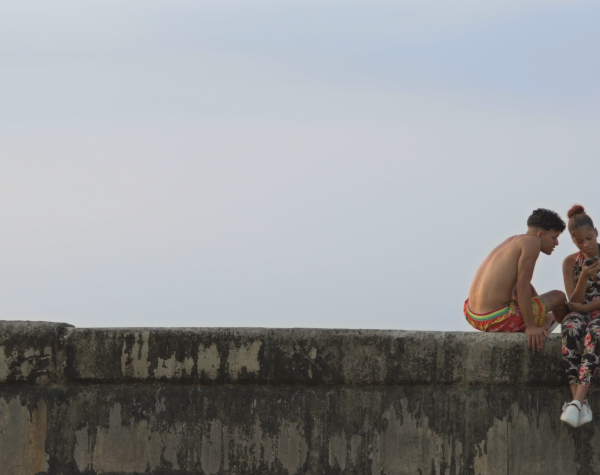
Josué is about to embark on a new chapter in his life. Together with his pregnant partner, he is preparing a room for their son and hanging photographs from the past on the walls – snippets of life from the family chronicle, to which they will soon add new chapters. Set against the backdrop of contemporary Cuba, a quiet social and relational drama centred on a young family on the threshold of an uncertain future unfolds in this delicate observation.“The Leap explores the fragility of memory and how we need it to navigate the uncertainties of the future.”
director: Pedro Junqueira
original title: El salto
country: Brazil, Cuba
year: 2026
running time: 15 min.
The Liminal Hum
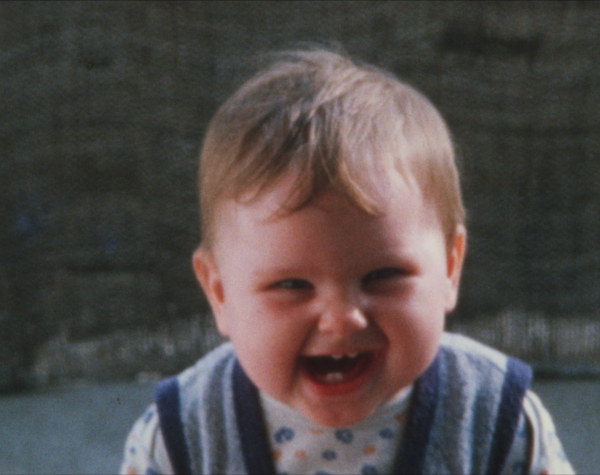
The first landscape we come to know is a landscape of sound. The low frequencies of a heartbeat and the flow of fluids in the womb create a world that is loud yet safe. The sounds that surrounded us before birth may remain etched within us as a memory of closeness and calm. They give us our first sense of home. Yet low tones carry another memory. For most of human history, they belonged to the forces of nature unleashed: earthquakes, storms, hurricanes, as well as large animals that posed a threat. The very frequencies that can lull a newborn to sleep can therefore also awaken unease, anxiety, and fear. The Liminal Hum inhabits the space between these two poles, suggesting that our relationship with drone sounds is ambivalent from birth. Through the eyes of innocent children, it explores moments of intense joy and imminent danger, searching for the point where these two states begin to merge.
director: Šimon Herrmann
original title: The Liminal Hum
country: Czech Republic
year: 2026
running time: 10 min.
The Lucias
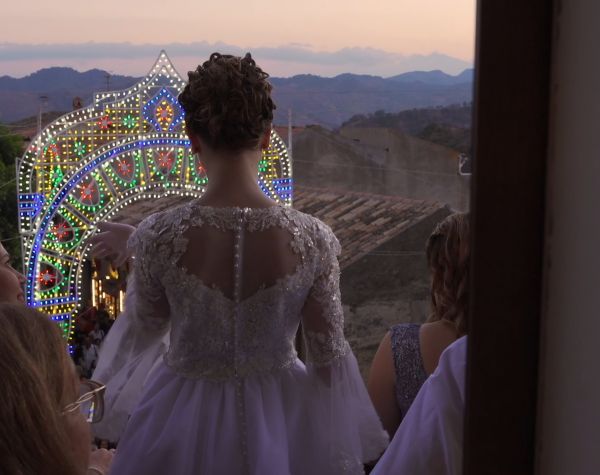
In the director’s native village in Sicily, it has been a tradition for centuries to hold a summer procession dedicated to the martyr Saint Lucy. A local girl is always chosen to portray the saint, who was repeatedly tortured by various male authorities during the Roman persecution of Christians. The filmmaker filmed a series of interviews here with women who have portrayed Saint Lucy over the years, complementing them with amateur period footage of the processions. In doing so, she not only shows how perceptions of the saint’s persona have evolved from the perspectives of women of different generations, but also generally presents the history of Sicilian women, to whom the documentary is dedicated.
director: Clizia Centorrino
original title: Les Lucia
country: France, Italy
year: 2026
running time: 80 min.
The Magic City – Birmingham According to Sun Ra
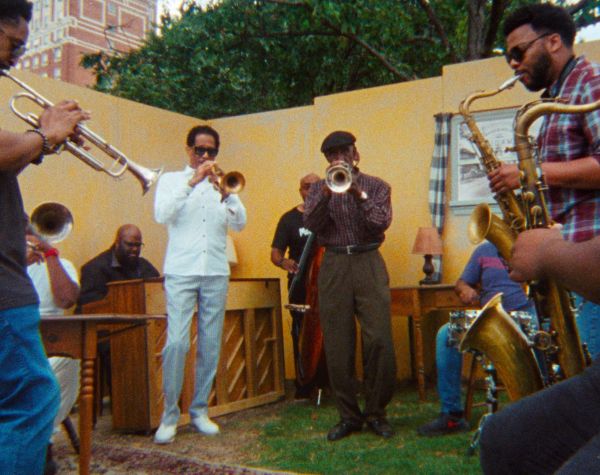
Sun Ra, a unique visionary of musical Afrofuturism, continues to inspire contemporary filmmakers long after his death. This film explores his youth in Birmingham, Alabama. Ra himself claimed to have come from Saturn, yet it was in Birmingham that he laid the foundations of his mystical thought and music, seeing in his city an extraordinary world full of signs. The Magic City is as much a portrait of an eccentric young artist as of the racially segregated urban cosmos itself – a world at once political and magical, mundane and fantastical, unsettling and fascinating.
director: Guillaume Maupin, Pablo Guarise
original title: The Magic City – Birmingham Selon Sun Ra
country: Belgium, Italy, France
year: 2025
running time: 100 min.
The Rules of the Flyswatter
In the kitchen that the author regularly “cleaned” of flies as a child, a multigenerational family conversation unfolds about the value of insect lives and the circumstances under which killing them is acceptable. What can we do when something trivial becomes a matter of life and death for someone?
director: Šimon Gogola
original title: Pravidla plácačky
country: Czech Republic
year: 2026
running time: 6 min.
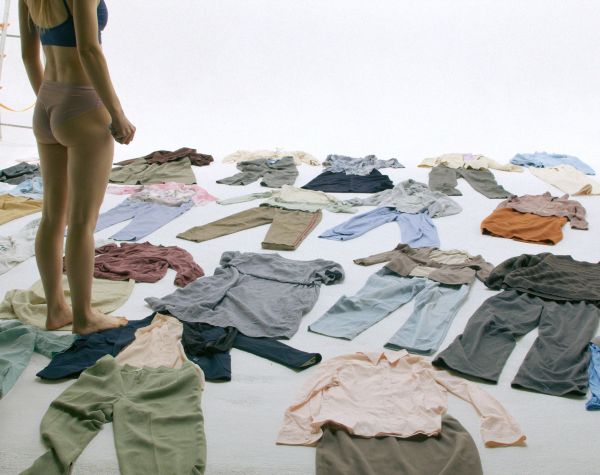
The Second Skin
Violence against women is a sensitive subject in itself, particularly in view of the psychological trauma suffered by the victims of these horrific acts. Nevertheless, three female filmmakers decide to make a radical artistic and civic gesture. Recordings of anonymous testimonies by rape survivors serve as the scripts for scenes in which the filmmakers reenact the assaults from the victims’ perspectives. With the perpetrators absent and the immersion growing increasingly intense, the staged experiences begin to bear a terrifying resemblance to the real ones. An experience that can neither be fully understood nor simulated speaks to us through the film’s participants in the language of visceral bodily reactions and genuine human emotions. “It was always with me. The desire to break the silence.” — Mariia Lapidus, Rephrase Mag Source
director: Mariia Lapidus
original title: The Second Skin
country: United States, Mexico
year: 2026
running time: 63 min.
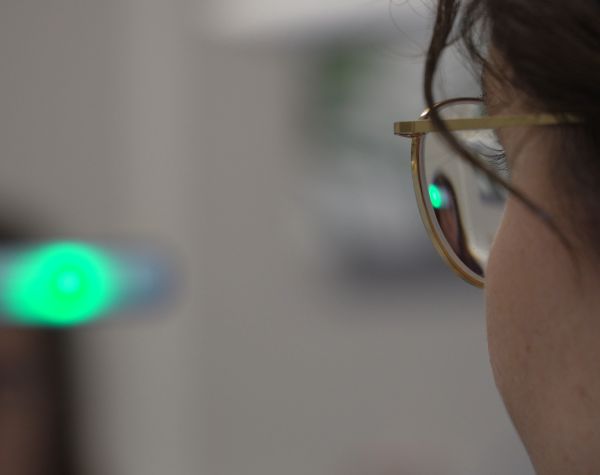
The Sessions
An intimate portrait of an eighteen-year-old girl with a concealed identity who has endured sexual violence and seeks a way forward with the help of therapists. Traumatised by rape, she finds support in sessions with experienced therapists. Gradually, she reclaims her life, gains confidence and prepares to confront reality. That confrontation takes the form of a trial, in which she must once again revisit the paralysing assault in depth. Both symbolically and literally, she regains her lost voice – one that may transform how she comes to terms with the past and change the lives of thousands of young girls who have endured similar experiences.
“We both know what happened. But I want you to know what happened to me afterwards.”
director: Sien Versteyhe
original title: The Sessions
country: Belgium
year: 2025
running time: 71 min.
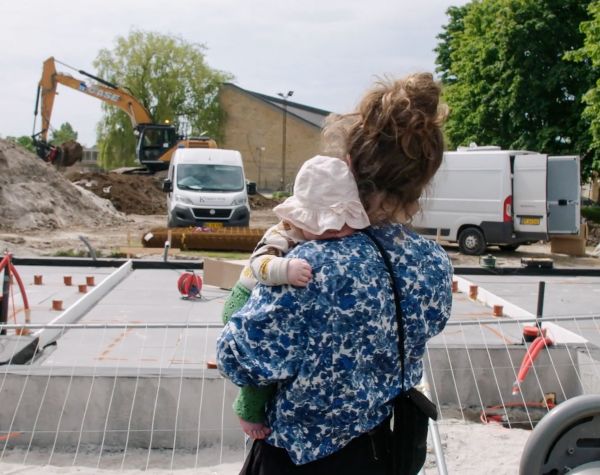
The Tingbjerg Experiment
Copenhagen’s Tingbjerg neighbourhood began as an ambitious social experiment. Urban planner and visionary Steen Eiler Rasmussen sought to realise a dream of bringing different social groups together in a welcoming setting of small apartment blocks surrounded by greenery. By the end of the twentieth century, the experiment had turned into a nightmare marked by outbreaks of ethnic violence, police repression and political demagoguery. In 2018, Copenhagen’s mayor launched a new experiment: moving selected families into new flats within the public housing estate, with the option to buy them at a favourable price. Four years later, the initial idealism has faded, and the young families take stock of what participating in the experiment has given them – and what it has cost them. Can a ghetto of privilege within another ghetto resolve such entrenched problems? “When you ask me, if Tingbjerg turned out how I envisioned it, I am compelled to answer yes. By and large, it looks like my vision on the surface. – But is there something under the surface that didn’t turn out that way? – Yes, very much so. The residents aren’t thriving as I had imagined.” — Steen Eiler Rasmussen
director: Louise Detlefsen
original title: Tingbjerg-eksperimentet
country: Denmark
year: 2026
running time: 84 min.
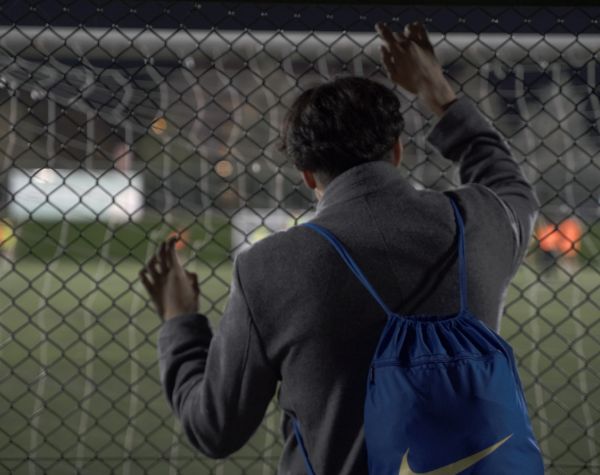
Third Land
A family of three from Iran has now spent thirteen years in exile in Turkey. Kian, Hamid and Hananeh left their homeland to escape the Iranian Revolutionary Guards. However, the promised asylum in the US remains a distant prospect, and even their last glimmer of hope is fading in the wake of the US elections. Director Farzad Khoshdast’s melancholic observational documentary captures their daily routine – from cleaning and working in a factory to visiting nightclubs and watching news reports of unrest in their homeland. The film thus offers an intimate insight into the lives of people trapped in a peculiar limbo, far enough from the state’s reach to be safe, yet too close to overcome their homesickness and build a new life. “You’re right. We can’t go to the USA or anywhere else. What’s your plan?”
director: Farzad Khoshdast
original title: Třetí země
country: Czech Republic
year: 2026
running time: 90 min.
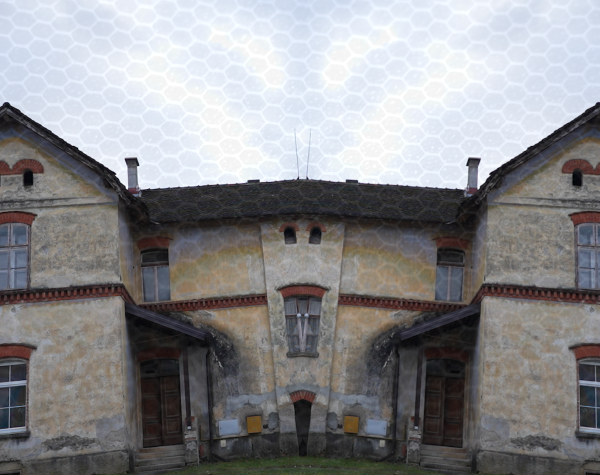
Thousands of Meters, Hundreds of Hours
The lace made by women in Lepoglava, Croatia, is some of the most beautiful in the world and regarded as a piece of cultural heritage in its own right. Yet it carries an even greater significance. In this small village, the lace weaves together – both figuratively and literally – thousands of metres of thread, binding together generations, families and a community of women devoted to quiet, meticulous work. “Driven by a desire to explore real stories and authentic experiences, she seeks through this film to connect the personal with the universal, creating space for narratives that emerge from everyday life.”
director: Iva Kunac
original title: Tisuće metara, stotine sati
country: Croatia
year: 2026
running time: 15 min.
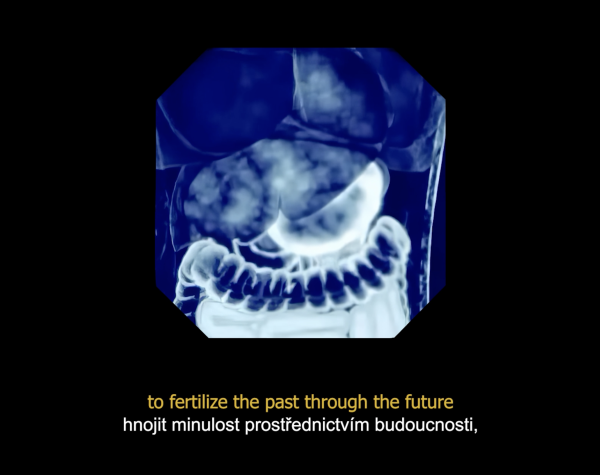
TO SH*T SOMEONE ELSE'S SH*T
The human being as a metabolic process: the human entrails take centre stage in a video essay that examines the digestive tract through the lens of contemporary philosophy and art theory. Named after a phrase that spontaneously emerged during a retreat of the CÉN choir, the film explores questions of how we relate to tradition and to a past we have not experienced ourselves, yet which continues to shape us. “If tradition consists of honoring the past and keeping it alive, never letting it die.”
director: Eliška Jelínková
original title: KADIT CIZÍ H*VNA
country: Czech Republic
year: 2026
running time: 9 min.
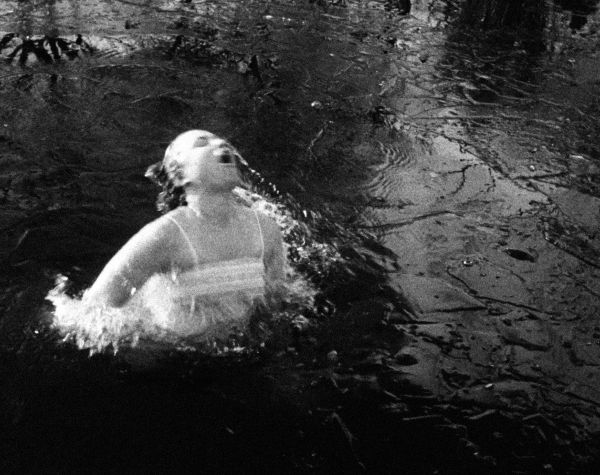
Two feet under
On a frozen lake, a mother guides her daughter through a raw and intimate ritual of cleansing. Through the touch of icy water, unbraided hair, and a symbolic burial, they find closure after the painful loss of an unborn child. In each other’s presence, they discover a path from grief to acceptance.
director: Anna Zubatá
original title: Dva metry pod
country: Czech Republic
year: 2026
running time: 3 min.

Under the Canopy
A participatory document from the Andean-Amazonian foothills challenges the colonial narrative of the jungle as an uninhabited wilderness and the victim of natural resource exploitation. Indigenous peoples are taking an active role, combining the knowledge of their ancestors with modern technologies. They see the rainforest as a place where the human and the non-human, the rational and the mystical, meet. “Audiovisual images become not only a means of documenting ecological practices, but also a way of thinking through the relationships between scientific knowledge, traditional ecological knowledge, and lived experience of the territory.”
director: Michał Krawczyk
original title: Bajo el Dosel
country: Colombia, Poland
year: 2026
running time: 21 min.
Upon the return
This personal documentary report explores the gulf between the front line and the tranquillity of home through the story of a Czech medic. In Ukraine, he experienced an intense sense of purpose. After returning home, he sinks into a profound emptiness, unable to find any meaning in everyday life.
director: Anna Zubatá
original title: Po návratu
country: Czech Republic
year: 2026
running time: 8 min.
Voices from Neptune
This experimental documentary conveys the traumatic experience of “enforced disappearances” in war-torn Colombia. We hear testimonies from the mothers of some of the dozens of missing young men. Their voices are accompanied by images of the empty places where the missing were last seen, alongside footage of fire and other elemental forces, abstract sequences of coloured blotches, or simply a black screen. Together, these elements create a devastating impression of absence, of inhospitable, abandoned spaces haunted by spectral memories of people whose fate remains a painful mystery. “Well, let me tell you something. God is the only one who can change this. How many times have they signed peace treaties? And yet, the massacres continue.”
director: Leinad Pájaro De la Hoz
original title: Voces de Neptuno
country: Colombia, Germany
year: 2026
running time: 86 min.
Wasteland Chronicles
Three female directors, three contaminated sites, three markedly different aesthetic approaches. The “triangle of death” in eastern Slovakia, formed by three local chemical plants, the tar pits in Predajná and Bratislava’s Vrakuňa, from where toxins spread towards Žitný ostrov (literally “Rye Island”) – the largest drinking water reservoir in Central Europe. This hybrid trilogy flows seamlessly from an investigative thriller and meditative essay on the relationship between the human and the non-human to a dystopian animated documentary. A report on systemic paralysis, the exhaustion of the local population and the inaction of politicians simultaneously evolves into a reflection on a future in which we may have no choice but to connect to a virtual mycelium. “People are tired. They don’t want to talk about it anymore, certainly not on camera, they don’t want to solve the problem. They don’t even want to protest – they are exhausted. We want to start this discussion again. That’s our ambition.” — producer Anna Mach Rumanová, Variety
director: Barbora Sliepková, Lucia Kašová, Viera Čákanyová
original title: Zóny nikoho
country: Slovakia, Czech Republic
year: 2026
running time: 102 min.
Water Wears Away
Doubts about her own past and the collapse of her former certainties lead Ukrainian director Kateryna Ruzhyna to revisit old amateur videos. As she looks back on her childhood in Zaporizhzhia, she discovers traces of Russian cultural influence and subjects her own memory to a process of decolonisation. This retrospective element is complemented by uncensored interviews from her time in exile in Prague. Together with friends from Ukraine and Russia, she asks whether it is possible to maintain friendships when one’s home countries are at war. This self-reflective essay on the search for a balance between the personal and the political makes room for vulnerability, anger and formal experimentation. “Life is about understanding what we can change, what we cannot change, and knowing how to tell the difference.”
director: Kateryna Ruzhyna
original title: Vyprahlá ústa kamene
country: Czech Republic
year: 2026
running time: 78 min.
We'll see each other again, right?
A breakup as a beginning, the closeness of someone drifting away, or a sense of freedom as we lose someone. An intimate, existential act of soul-searching immerses itself in the chaotic materiality of objects. Analogue footage, the clatter of a projector, a running strip of film and an empty room dance through a visual collage, caught in a swirl of feelings and thoughts in the wake of a breakup. “It was such a strange feeling: one moment we were breaking up, and the next I felt closer to him than ever, as though we were only just starting to date.”
director: Anna Zubatá
original title: Že se ještě uvidíme?
country: Czech Republic
year: 2026
running time: 7 min.
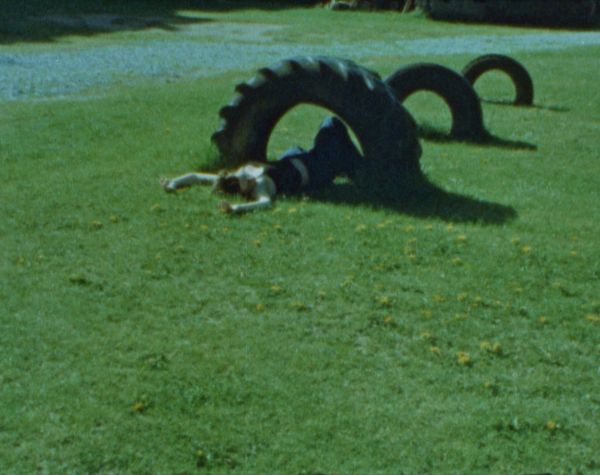
What if, what if
Everyday worries seep out into our surroundings and through us, across generations. A film about the worries, fears, and care of my grandmother and mother.
director: Aneta Skalická
original title: Co kdyby náhodou
country: Czech Republic
year: 2026
running time: 6 min.

What To Say
An animated portrait of solitude amidst a crowd and a longing for closeness, it speaks without words through the folds of dancing fabrics. The bold intimacy and shy sensuality of flowing hair, the shimmering fibres of a ball gown, the soothing whiteness of bed linen and the texture of bare human skin venture into realms where words fall short. “If only we could get to know each other without having to speak.”
director: Tereza Burianová
original title: Nevím, co říct
country: Czech Republic
year: 2026
running time: 6 min.
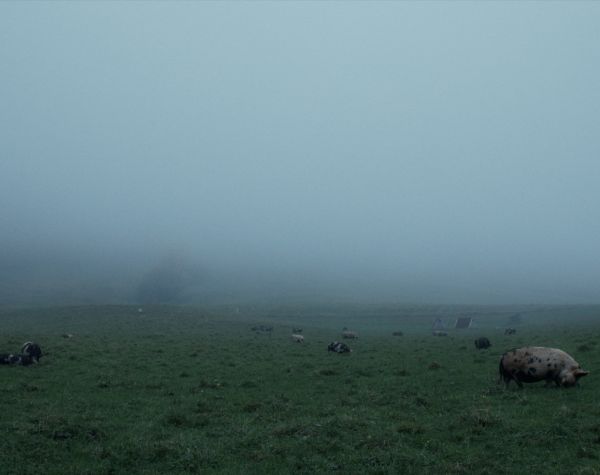
When Pigs Fly
Pigs have been humanity’s companions for millennia. The domestic pig has become livestock, food, a commodity for consumption. How has our relationship changed with creatures so close to us in evolutionary terms? This philosophical and anthropological exploration examines a new field of genetic engineering in practice: pigs have become growers of hearts for humans. How do we perceive a creature whose beating heart is destined for transplantation into a human body? Are the species drawing symbolically closer? The film opens up the prospect of ethical pig farming as the beginning of a new era of humanistic genetics. “Is your heart a defining part of who you are? Does it hold memories of first kisses, shattered dreams, summer days, and a life lived? Or is it just a muscle that pumps blood around your body?” Source of the quote.
director: Denise Riedmayr
original title: When Pigs Fly
country: Germany
year: 2026
running time: 79 min.